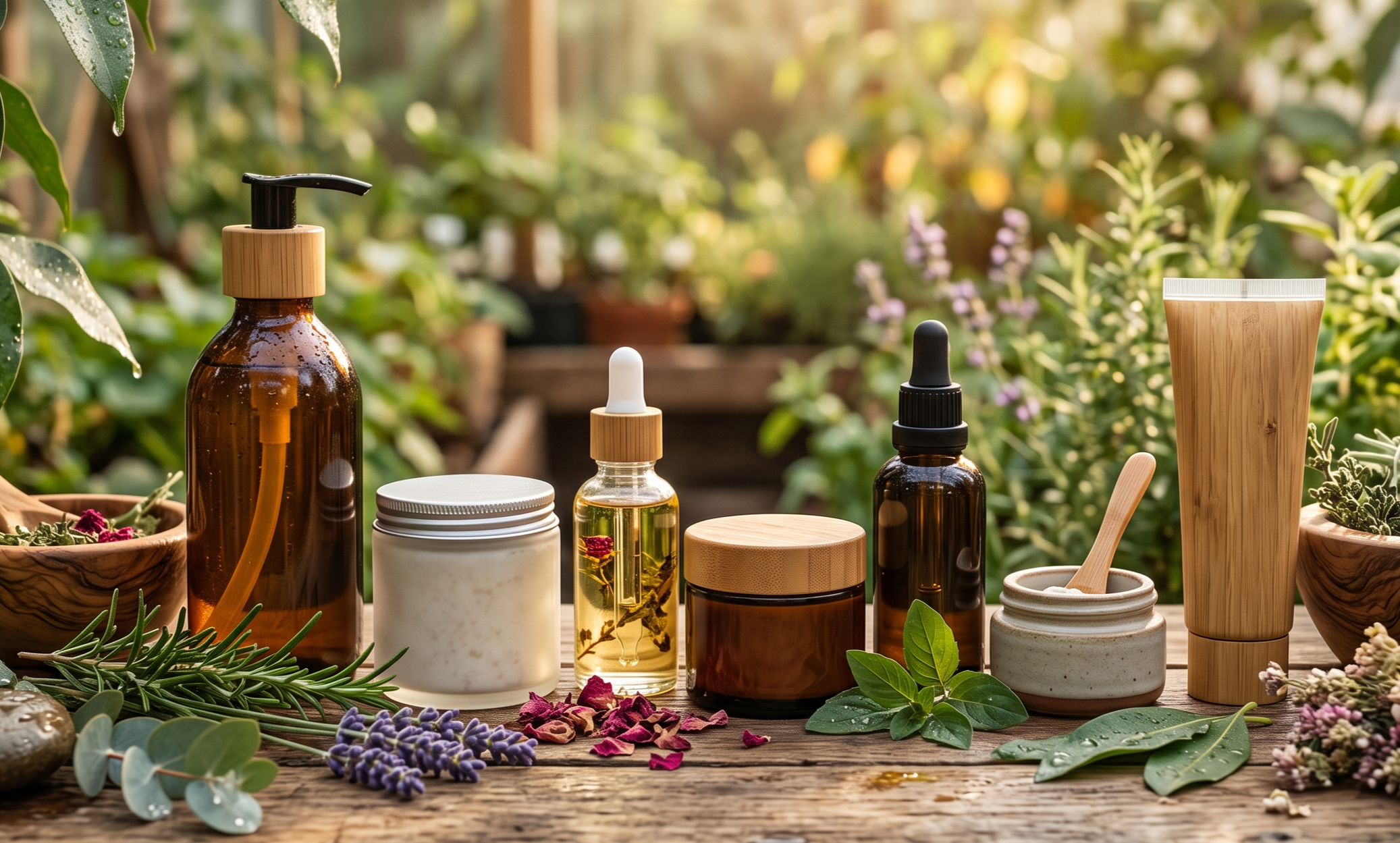
Perimenopause hair thinning happens because declining estrogen and progesterone let androgens like DHT have more influence on hair follicles, often causing gradual thinning at the crown and part line, or separately, diffuse shedding called telogen effluvium. Rosemary oil supports scalp circulation and has shown hair count improvements comparable to topical minoxidil 2% in clinical research. Pumpkin seed oil's phytosterols are linked to reduced 5-alpha reductase (DHT-converting enzyme) activity. Neither reverses genetic hair loss alone, but both support a healthier scalp environment, best paired with a gentle, regular scalp ritual and a doctor's evaluation for sudden or severe shedding.
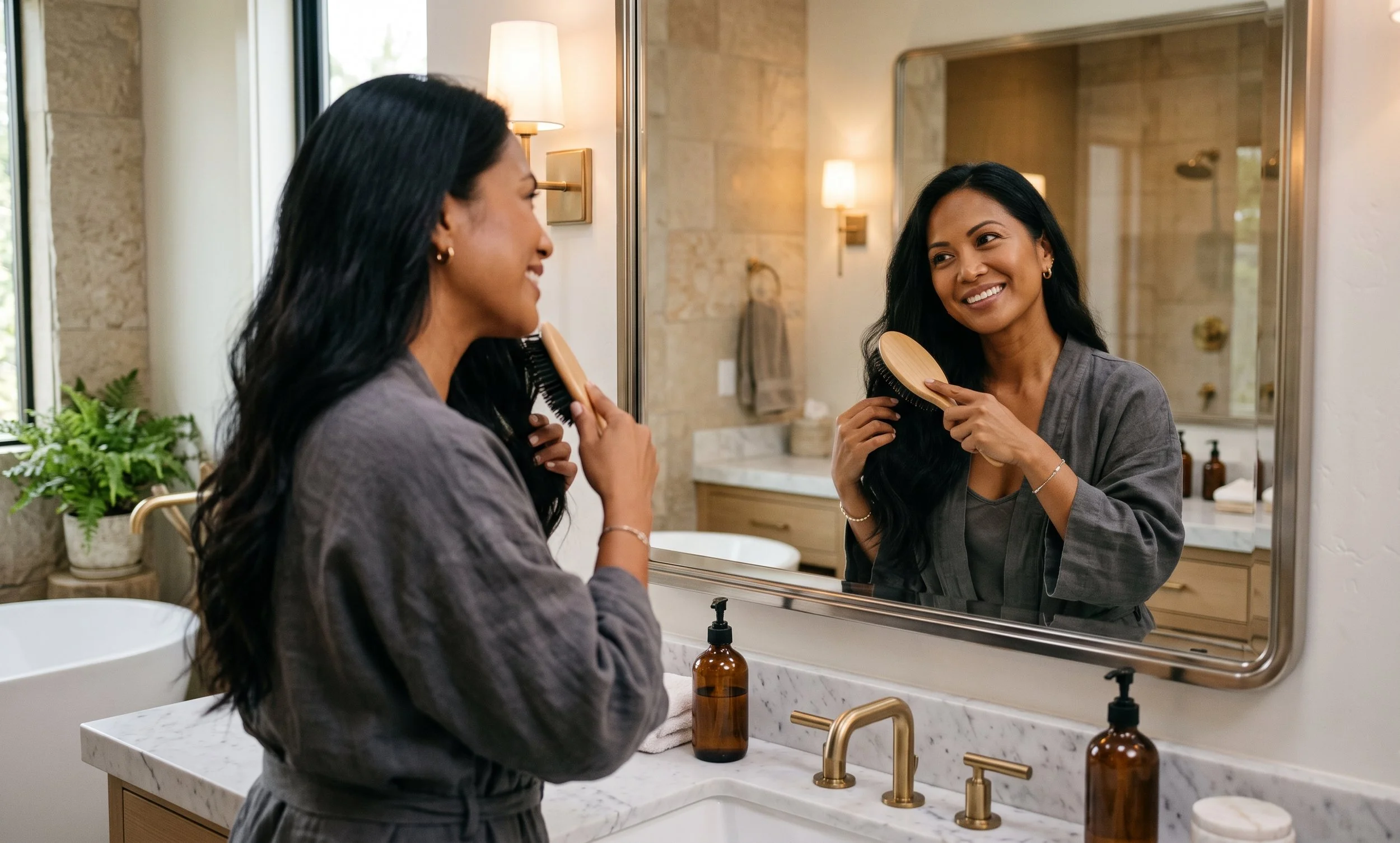
Your hair feels thinner, your part looks wider, and your brush seems to hold more than it used to. If you're in your 40s or early 50s, this is not in your head. It's your hormones.
You notice it first in the shower. The drain catches more than it used to. Then it's the part line, wider than you remember, or the ponytail that feels thinner in your hand. You didn't change your shampoo. You didn't change your diet. So why does your hair suddenly feel like it belongs to someone else?
For a lot of women, the answer arrives around the same time as irregular periods, disrupted sleep, and hot flashes. Perimenopause changes hormone levels years before menopause itself, and hair is one of the first places the body shows it. Understanding what's actually happening gives you a real place to start, rather than another product that promises everything and explains nothing.
What's Actually Happening Hormonally
Estrogen does more for your hair than most people realize. It promotes hair growth and helps keep hair in its growth phase for extended periods, while progesterone balances the effects of androgens that can otherwise lead to thinning. During perimenopause, both estrogen and progesterone begin an uneven decline, and that shift changes the balance your follicles depend on.
As estrogen drops, androgen signals like DHT gain more relative influence, and in genetically susceptible follicles, that shift can cause miniaturization over time. This is often described as female pattern hair loss, and it tends to show up as gradual thinning across the crown and part line rather than a receding hairline. Hair may also feel drier and more prone to breakage during this transition, since the hormonal shift affects the scalp and follicles together, not just density.
A second, separate pattern shows up too. Telogen effluvium is a different kind of shedding, one that happens diffusely across the whole scalp rather than in one area, and it's often triggered by hormonal swings or physical and emotional stress. The two conditions can overlap, which is part of why perimenopausal hair loss can feel confusing to pin down. A dermatologist can help distinguish between the two, and ruling out thyroid or iron issues is worth doing before assuming hormones are the only cause.
Circulation, DHT, and Where Botanicals Actually Fit
Here's the honest picture. No topical oil replaces hormone therapy, and no botanical blend reverses genetic miniaturization on its own. What botanicals can do is support the scalp environment your follicles are working in, and for many women, that support matters.
Rosemary oil has the strongest human data behind it. A six-month randomized trial found that rosemary oil produced a hair count increase comparable to topical minoxidil 2%, with fewer reports of scalp itching along the way. Researchers believe rosemary works in part by prolonging the hair's active growth phase and improving circulation to the follicle, which is a mechanism worth understanding on its own terms, separate from any claim of matching a pharmaceutical treatment. We scope our claim to what the study actually shows: rosemary oil supports scalp circulation and the conditions healthy follicles need.
Pumpkin seed oil works through a different pathway. Its phytosterols, particularly beta-sitosterol, appear to reduce the activity of 5-alpha reductase, the enzyme that converts testosterone into DHT. The most cited clinical trial used an oral supplement in men, not a topical application in women, so we're careful not to overstate what a face-and-scalp oil can promise. What the ingredient does bring, reliably, is a formula built to support the scalp against the same enzyme pathway implicated in hormonal thinning, alongside real anti-inflammatory benefit for an irritated scalp.
Then there's gugo bark, a botanical that predates any of this research by generations. Filipino households have used gugo to cleanse and care for the scalp long before anyone isolated a phytosterol or ran a randomized trial. It doesn't promise regrowth. It offers what it has always offered: a gentle, saponin-rich cleanse that clears the scalp without stripping it, creating a calmer foundation for everything else to work.
What Actually Helps
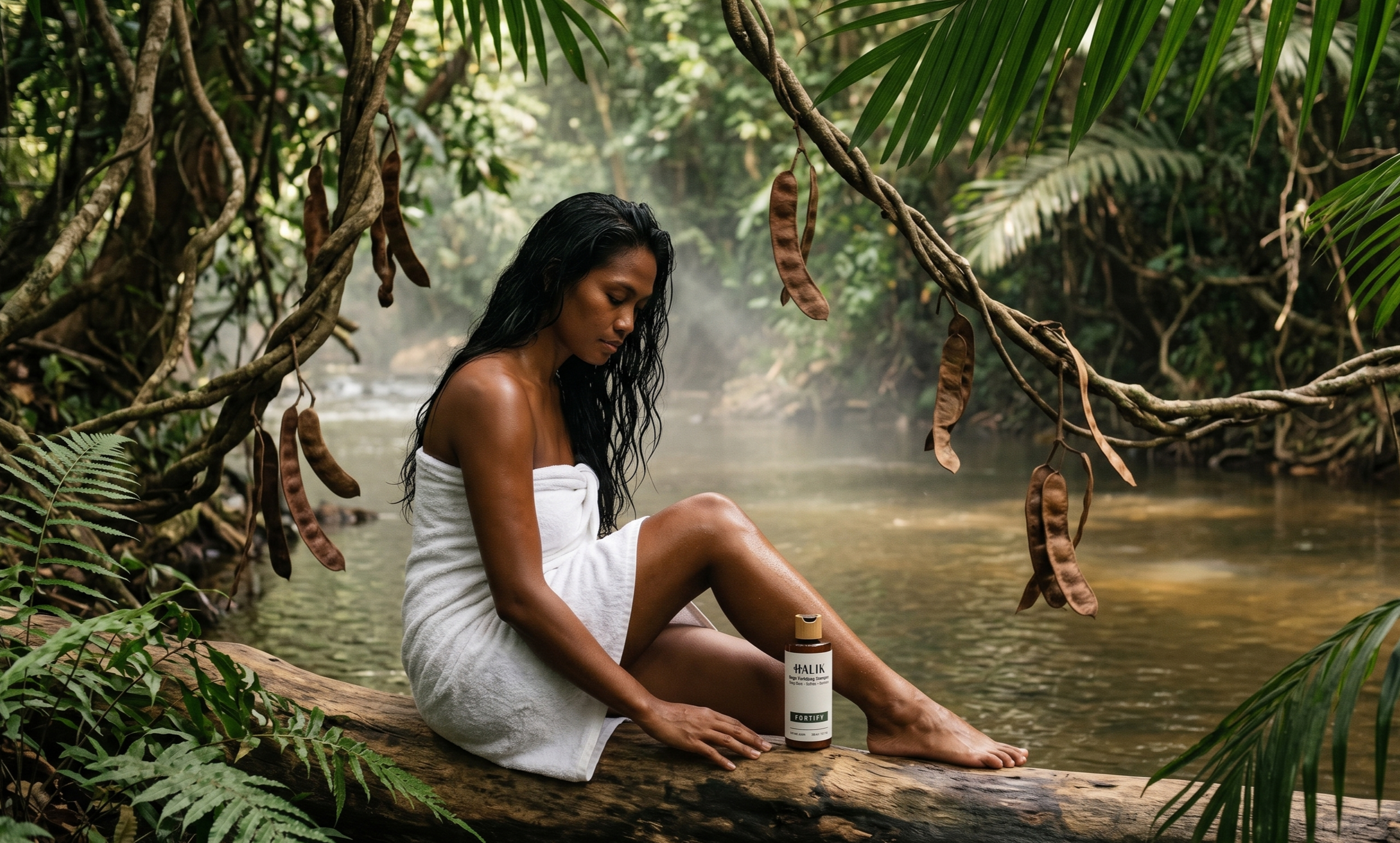
Start with the scalp itself. A clean, balanced scalp environment gives whatever else you're doing a better chance to work. Our Gugo Fortifying Shampoo cleanses with gugo bark alongside coffee extract and rosemary oil, supporting circulation at the follicle level with every wash.
Layer in circulation support directly. Our Restorative Hair & Scalp Oil combines rosemary oil with pumpkin seed oil and bamboo extract in a scalp treatment you can massage in two to three times a week. Massage itself adds a mechanical circulation boost, so take your time with the application rather than rushing through it.
Follow with strand support. Thinning hair often feels more fragile, and our Gugo Restorative Conditioner brings malunggay seed oil and hydrolyzed baobab protein to reinforce strands that have grown more prone to breakage. Stronger strands hold onto length while your scalp does its work underneath.
None of this replaces a conversation with your doctor if shedding is sudden or severe. But for the gradual thinning that so often marks this transition, a consistent scalp ritual is one of the few things fully within your control.
A Ritual for This Season
Perimenopause asks a lot of your body, often quietly and all at once. Your hair doesn't need to be one more thing you fight. Three times a week, take the extra few minutes. Massage the oil in slowly. Let the shampoo sit for its full minute before rinsing. This isn't about chasing the hair you had at twenty-five. It's about giving the hair you have now what it needs to hold on and feel like yours again.
FAQ
-
Not necessarily. Diffuse shedding tied to hormonal swings, known as telogen effluvium, often improves once hormone levels stabilize. Female pattern thinning tends to be more gradual and persistent, so early, consistent care matters more the longer it goes unaddressed.
-
Female pattern thinning tends to concentrate at the crown and part line and progresses slowly. Telogen effluvium shows up as sudden, diffuse shedding across the whole scalp, often a few months after a hormonal shift or stressful event.
-
The evidence supports a real role for both. Rosemary oil has shown hair count improvements comparable to topical minoxidil 2% in clinical research, and pumpkin seed oil's phytosterols are linked to reduced 5-alpha reductase activity. Neither reverses genetic hair loss on its own, but both support the scalp environment that healthy follicles depend on.
-
Hair growth research generally looks at three to six month windows, since that's how long it takes for changes at the follicle to show up as visible hair. Give any new ritual a full growth cycle before judging whether it's working.
Sources
Paloma Health, "Hair Loss in Perimenopause and Menopause," https://www.palomahealth.com/learn/hair-loss-perimenopause-menopause
Take Care by Hers, "Perimenopause Hair Loss," https://www.forhers.com/conditions/perimenopause-hair-loss
GoodRx, "Hair Loss Due to Menopause: What to Do About It," https://www.goodrx.com/conditions/menopause/hair-loss-in-menopause
Dermatology of Seattle, "Hormone Replacement Therapy for Hair Loss: When It Helps," https://dermatologyseattle.com/hormone-replacement-for-hair-loss/
Panahi et al., "Rosemary oil vs minoxidil 2% for the treatment of androgenetic alopecia: a randomized comparative trial," PubMed, https://pubmed.ncbi.nlm.nih.gov/25842469/
Perfect Hair Health, "Pumpkin Seed Oil for Hair Growth," https://perfecthairhealth.com/pumpkin-seed-oil-for-hair-growth/
Related Reading