Everyday Environmental Toxins in Personal Care That Can Affect Egg Quality and Ovulation
Yes, some personal care ingredients are linked to egg quality and ovulation. Peer-reviewed studies associate phthalates and parabens with lower antral follicle count and reduced AMH, while cyclic silicones D4 and D5 have been shown to blunt the LH surge that triggers ovulation. Sulfates are a separate, barrier-related concern and are not classified as endocrine disruptors.
Phthalates, parabens, BPA, heavy metals, cyclic silicones, and synthetic musks all show up in ordinary personal care products. Peer-reviewed research links these ingredients to lower antral follicle counts, reduced AMH, and disrupted ovulation signaling. The exposure is common, and it is mostly avoidable. Here is what the science actually shows, and what to look for on a label if egg quality is on your mind.
You check the label on your prenatal vitamin. You track your cycle. You cut back on caffeine and alcohol. Then you reach for the same shampoo, lipstick, body lotion, and fragrance spray you have used for years, without reading those labels at all.
That gap matters more than most people realize. The skin absorbs what touches it, and personal care products are used daily, often several times a day, for decades. Researchers who study reproductive health now treat this steady, low-dose exposure as a real variable in ovarian aging and fertility. Below is a plain look at what that research has found, across seven categories worth knowing.
The Science: What Personal Care Chemicals Do Inside the Ovary
Phthalates and a Shrinking Egg Reserve
Phthalates are used to help fragrance stick to skin and hair, and they show up in nail polish, hairspray, and lotion as plasticizers and solvents. Once inside the body, they act as endocrine disruptors.
Multiple studies of women at fertility clinics have found that higher phthalate levels track with a lower antral follicle count, the ultrasound measure doctors use to estimate how many eggs remain available in a given cycle. In one cohort from the EARTH Study at Massachusetts General Hospital, women with higher urinary DEHP metabolites had a notably lower average antral follicle count than women with lower exposure, showing a negative association between DEHP and this marker of ovarian reserve. The same research group found that phthalate exposure was linked to lower AMH levels in the fluid surrounding developing eggs, suggesting the exposure may speed up follicle loss.
A separate long-term study followed over a thousand women for nearly a decade and found that women with higher phthalate exposure during pregnancy had lower AMH levels six and nine years later, pointing to a lasting effect on ovarian reserve. The researchers were careful to note that this evidence needs to be confirmed in further studies before it can be treated as settled.
BPA and BPS: What Leaches from the Bottle
BPA lines cans, coats thermal receipt paper, and forms many hard plastics. BPS, marketed as the "BPA-free" alternative, shows up in the same places. Both leach out of packaging and into the products, and the people, they touch.
A study of women at an infertility clinic in Northern China found that urinary BPS was negatively associated with AMH, and that higher BPA and BPS exposure both raised the risk of diminished ovarian reserve. A Polish cohort of 511 women found a negative association between urinary BPA and both AMH and antral follicle count. A 2024 review of the broader literature concluded that BPA alters reproductive hormones and reduces oocyte quality, oocyte levels, and ovarian reserve overall. Switching to "BPA-free" packaging does not necessarily solve the problem, since BPS appears to carry similar risk.
Parabens and Follicle Count
Parabens preserve products against bacteria and mold, and they appear in everything from shampoo to sunscreen. Because they can mimic estrogen at the cellular level, researchers have started asking whether they affect the follicles that hold the body's egg supply.
A Massachusetts General Hospital study of women seeking fertility treatment found a suggestive link between higher propylparaben levels and both a lower antral follicle count and higher day-3 FSH, a hormone that tends to rise as ovarian reserve declines. A larger Polish cohort of over 500 women reached a similar conclusion, finding that higher propylparaben exposure was tied to a lower antral follicle count, lower estradiol, and higher FSH. In a related IVF cohort, higher butylparaben exposure was associated with a meaningful drop in the number of mature eggs retrieved during treatment.
None of these studies proves that parabens cause infertility on their own. But the pattern across several independent research groups points in the same direction, and it is worth paying attention to.
Heavy Metals in Color Cosmetics
Lead, cadmium, and other heavy metals turn up in lipstick, eyeshadow, and face powder, sometimes as an intentional pigment and sometimes as a contaminant in raw materials. Cadmium in particular has a deep yellow to orange color that makes it useful as a pigment in lipstick and face powder. The FDA has tested hundreds of cosmetics for lead and found levels ranging up to 14 parts per million, prompting guidance that recommends keeping lead in lip products and externally applied cosmetics under 10 parts per million.
The reproductive concern is not theoretical. A review of the evidence found that cadmium exposure has been tied to menstrual disorders, follicular atresia, hormonal imbalance, impaired oocyte growth, and female infertility. A South Korean cohort study of premenopausal women found a measurable association between blood cadmium and AMH levels. At the cellular level, laboratory research on rat granulosa cells found that both lead and cadmium reduced the cells' ability to bind gonadotropin hormones and altered the enzymes that produce steroid hormones. Color cosmetics are used repeatedly on skin that stays in contact with the product for hours, which is part of why this category draws ongoing regulatory attention.
Cyclic Silicones (D4 and D5) and the Signal That Triggers Ovulation
D4 and D5, listed on labels as cyclotetrasiloxane and cyclopentasiloxane, give hair serums and conditioners their glide and shine. The European Union classifies D4 as a substance with confirmed reproductive toxicity and has restricted it and its close relative D5 from cosmetics, first in rinse-off formulas and now, on a rolling timeline through 2027, in leave-on products too.
The mechanism is worth understanding. Ovulation depends on a hormone signal called the LH surge, which tells the ovary to release a mature egg. Laboratory research has shown that D4 can blunt this LH surge by changing the fluidity of hormone-producing cell membranes in the brain, cutting off the signal that triggers ovulation. That is a direct line from a common hair care ingredient to the exact process that has to work correctly each month for ovulation to happen.
Synthetic Fragrance: The Ingredient List You Cannot Read
The word "fragrance" on a label can legally stand in for dozens, even hundreds, of individual chemicals. Under the Fair Packaging and Labeling Act, the FDA does not require companies to list the individual components of a fragrance blend on the product label. Phthalates are one of the most common ingredients hidden inside that word, since they are widely used as carriers and solvents that help synthetic musks and other scent molecules stick to skin and hair.
Independent lab testing has confirmed how much this hides from consumers. A Campaign for Safe Cosmetics and Environmental Working Group analysis of 17 name-brand fragrance products found 38 undisclosed chemicals across the group, an average of 14 hidden ingredients per product. A person trying to avoid phthalates by reading labels carefully can still bring them home in a bottle marked simply "fragrance."
Synthetic Musks: The Scent That Lingers in the Body
Synthetic musks like galaxolide and tonalide give perfume and lotion their long-lasting base note. They also bioaccumulate in fat tissue, and research on their hormonal activity has moved from a footnote to a regulatory flashpoint.
Galaxolide and tonalide have been shown to alter estrogen activity and to inhibit androgen and progesterone from binding to their receptors. A biomonitoring review found the ovarian relevance directly: galaxolide and tonalide inhibited enzyme activity in ovarian as well as hepatic and testicular tissue in laboratory studies. In 2025, the French health agency ANSES proposed classifying galaxolide as a Category 1B reproductive toxicant under the EU's chemical classification regulation, a designation reserved for substances presumed to impair human fertility. Galaxolide remains widely used in soap, shower gel, lotion, shampoo, and conditioner sold in the United States.
What About Sulfates?
Sulfates get lumped into this conversation often, but the concern with sulfates is different from the ones above. Sulfates like sodium lauryl sulfate are strong cleansing agents that can strip the skin and scalp barrier, leading to dryness, irritation, and a compromised moisture barrier over time. That is a real issue, but it is a barrier concern, not an endocrine one. Sulfates are not classified as endocrine disruptors, and lumping them in with phthalates and parabens overstates what the current evidence shows.
Why We Formulate Without These at Halik
Every Halik formula starts from the same standard: no parabens, no phthalates, no synthetic fragrance, and no D4 or D5. This is not a marketing checklist. It shapes which ingredients we can use at all.
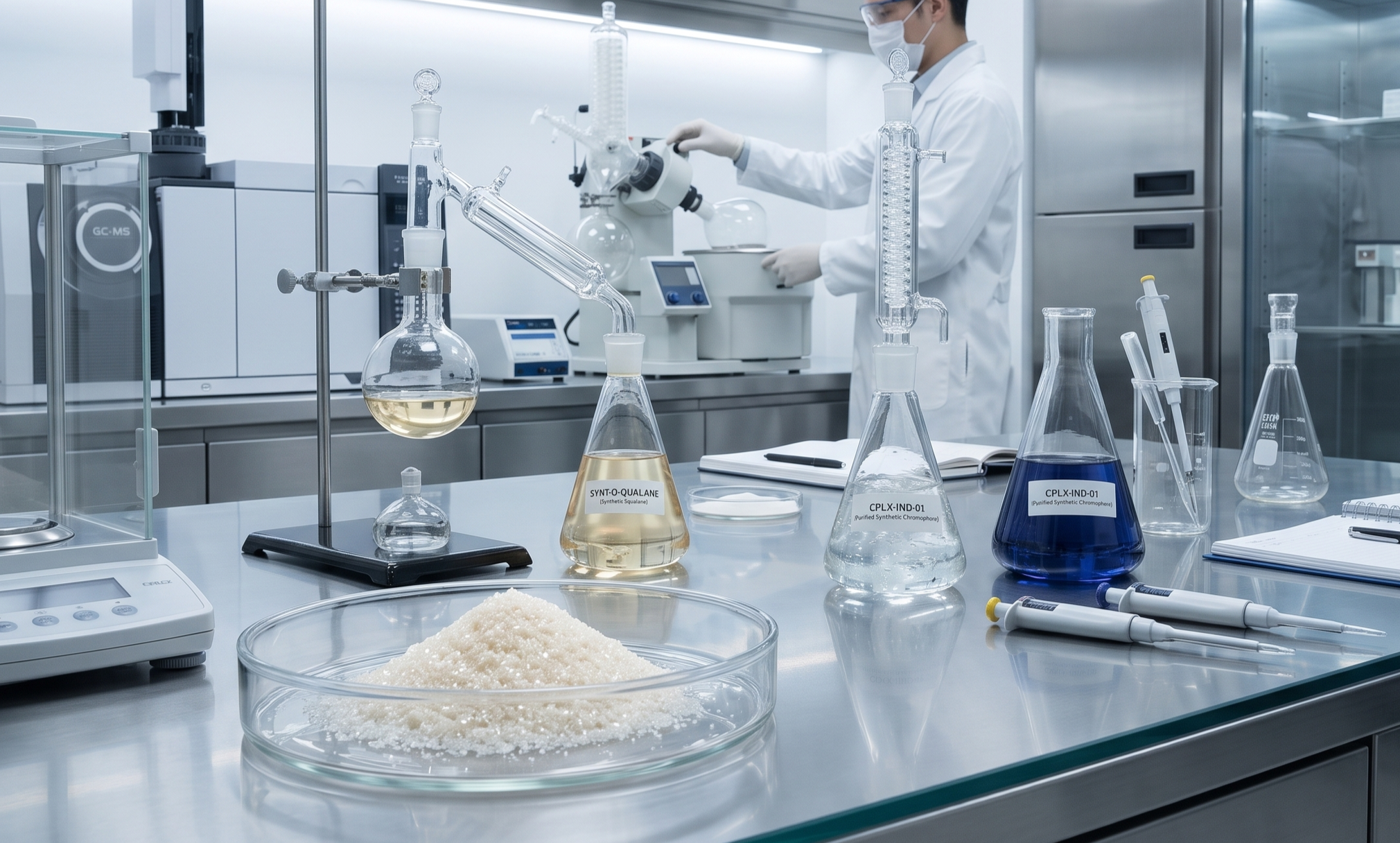
The Sampaguita Anti-Aging Face Oil relies on sacred frankincense, sampaguita, and sugarcane-derived squalane to deliver its scent and its texture, without a synthetic fragrance blend standing in for the work the botanicals already do. The Bayabas Nourishing Face Cream uses a ceramide complex and cupuaçu butter to hold moisture in the skin, an approach that does not depend on cyclic silicones for its glide. The Gugo Fortifying Shampoo cleanses with sodium methyl oleoyl taurate and sodium lauryl sulfoacetate, gentle surfactants chosen specifically to be sulfate-free without giving up a genuine lather.
We built the brand around ingredient transparency because the research above makes clear why that transparency matters.
Conventional vs. Bio-Compatible: A Side-by-Side Look
| Common Ingredient | What It's Linked To | What to Look for Instead |
|---|---|---|
| Phthalates (fragrance, nail polish, hairspray) | Lower antral follicle count, reduced AMH | Fragrance-free or essential oil blend formulas |
| BPA / BPS (packaging, receipts) | Lower AMH and AFC, diminished ovarian reserve | Glass packaging, or verified BPA- and BPS-free plastic |
| Parabens (methyl-, propyl-, butylparaben) | Lower AFC, altered FSH and estradiol | Phenoxyethanol-based or plant-derived preservation |
| Heavy metals (lead, cadmium in pigments) | Follicular atresia, altered AMH, impaired oocyte growth | Mineral pigments from brands that publish heavy metal testing |
| Cyclic silicones (D4, D5) | Blunted LH surge, disrupted ovulation signal | Sugarcane squalane, botanical oils for slip and shine |
| Synthetic "fragrance" | Undisclosed phthalates and musks | Essential oil blends, "no added fragrance" labeling |
| Synthetic musks (galaxolide, tonalide) | Altered estrogen and androgen receptor activity | Fragrance-free formulas or natural musk alternatives |
| Sulfates (SLS, SLES) | Barrier disruption, dryness, irritation | Coco glucoside, sodium lauroyl lactylate |
A Closer Look at Your Shelf
Egg quality and ovulation depend on a long list of factors, most of them outside anyone's control. But the products sitting on a bathroom shelf are one of the few daily inputs a person can actually change. Reading past the word "fragrance," checking a lipstick's brand transparency, and knowing what D4 and D5 mean on a label are small habits that add up over years of use, which is exactly the timeline that matters for ovarian aging.
Halik was built so that ritual would not require a chemistry degree to feel safe. Every formula, from the first ingredient to the last, is meant to support the body rather than quietly work against it. A kiss from Mother Earth.
FAQ
-
Peer-reviewed studies have found associations between phthalate, paraben, BPA, and heavy metal exposure and markers of ovarian reserve like antral follicle count and AMH. These are associations, not proven cause-and-effect, but the pattern shows up across many independent research groups.
-
Look for phthalates, parabens (especially propylparaben and butylparaben), BPA and BPS, heavy metals in pigmented makeup, cyclic silicones D4 and D5, and synthetic musks like galaxolide and tonalide. Also check for the word "fragrance" or "parfum," which can hide undisclosed phthalates and musks.
-
Not necessarily. BPS, the most common BPA substitute, has been linked to lower AMH in the same way BPA has. Glass packaging avoids the concern entirely.
-
No. Sulfates are linked to skin and scalp barrier disruption, not endocrine or reproductive effects. That is a separate concern from phthalates, parabens, and synthetic musks.
-
Research shows D4 can blunt the LH surge, the hormone signal that triggers the ovary to release an egg each cycle, by altering the fluidity of hormone-producing cell membranes.
-
Synthetic musks are one category of ingredient found inside fragrance blends. Regulators have flagged musks like galaxolide individually, separate from the broader fragrance disclosure issue, because of their own hormonal activity.
-
No. "Unscented" products can still contain fragrance ingredients added to mask other smells. "Fragrance-free" means no fragrance ingredients were added at all.
About Halik
Halik is a clean, premium skincare brand inspired by Filipino botanicals and the healing power of natural ingredients. All Halik products are formulated without parabens, PEGs, phthalates, silicones, sulfates and synthetic fragrances.
Sources
Urinary phthalate metabolite concentrations and follicular fluid AMH — ScienceDirect
Urinary phthalate metabolites and ovarian reserve among women seeking infertility care — PMC, National Institutes of Health
Associations of bisphenol and phthalate exposure and AMH levels in women of reproductive age — PMC, eClinicalMedicine
Urinary bisphenol A and S are associated with diminished ovarian reserve — ScienceDirect
Urinary Bisphenol A Concentrations and Parameters of Ovarian Reserve — PMC
The impact of Bisphenol-A on human reproductive health — ScienceDirect
Urinary paraben concentrations and ovarian aging among women from a fertility center — PMC
Parameters of ovarian reserve in relation to urinary concentrations of parabens — Environmental Health
Urinary concentration of nonpersistent EDCs and reproductive outcomes — Environmental Science and Pollution Research
Analysis of Heavy Metals in Lipstick by Various Physio-Chemical Methods — IOSR Journal of Applied Chemistry
Lead in Cosmetics — U.S. FDA
Cadmium as an ovarian toxicant: A review — Journal of Applied Toxicology
Association between cadmium and anti-Mullerian hormone in premenopausal women — PMC
Simultaneous effect of lead and cadmium on granulosa cells — PubMed
Alteration of pituitary and hypothalamic membrane fluidity... octamethylcyclotetrasiloxane — PMC
Cyclosiloxanes — European Chemicals Agency (ECHA)
Multicomponent analytical methodology to control phthalates, synthetic musks, fragrance allergens and preservatives in perfumes — ScienceDirect
Fragrances in Cosmetics — U.S. FDA
Not So Sexy: Hidden Chemicals in Perfume and Cologne — Environmental Working Group
Synthetic Musks — Campaign for Safe Cosmetics
Synthetic Polycyclic Musks — Biomonitoring California
ANSES proposes classifying galaxolide as toxic for reproduction — Agence nationale de sécurité sanitaire (ANSES, France)
Related Reading