7 Essential Skincare Ingredients to Support Skin During PCOS Flares
For PCOS-related acne, dermatology research points to barrier-repairing, low-comedogenic ingredients such as niacinamide, ceramides, calendula, rice ferment filtrate, and squalane, since PCOS breakouts are driven by androgen-stimulated sebum and a compromised skin barrier rather than surface dirt alone.
PCOS acne behaves differently than typical breakouts. It clusters along the jawline, resists standard treatments, and flares in sync with a hormonal cycle rather than a skincare routine. The ingredients that help most are the ones that calm inflammation and rebuild the skin barrier, not the ones that strip oil away. Here are seven worth knowing, and what the research says about each one.
Most acne advice treats oily skin as a problem to solve with stronger cleansers and drying spot treatments. For someone with polycystic ovary syndrome, that approach usually backfires. PCOS acne has a hormonal engine behind it, and stripping the skin only pushes it to produce more oil in defense. A gentler, barrier-first approach tends to hold up better over time.
Why PCOS skin behaves differently
PCOS is an endocrine condition marked by elevated androgens, and those androgens act directly on the sebaceous glands. Research on PCOS-associated acne explains that testosterone and its more potent derivative, DHT, stimulate the sebaceous glands directly, increasing oil output and altering the way skin cells shed inside the follicle. Together these changes create the clogged, inflamed environment where breakouts take hold.
Insulin resistance, which affects a large share of people with PCOS, compounds the issue. It raises androgen production in the ovaries and adrenal glands and lowers the protein that normally binds testosterone in the bloodstream, which leaves more free testosterone available to stimulate the skin. A related growth signal, IGF-1, adds to the effect by further increasing oil production and disrupting normal skin cell turnover. A large meta-analysis of PCOS and acne found this same pattern across study populations, linking androgen exposure to enlarged sebaceous glands and abnormal skin cell growth. In practice, that means the skin barrier of someone with PCOS is often working overtime: producing more oil, shedding cells unevenly, and staying in a low-grade inflammatory state.
This is why skincare for PCOS breakouts should be judged on two questions. Does it calm inflammation without irritating the skin further? And does it support the barrier instead of stripping it? The ingredients below were chosen with both in mind.
01. Niacinamide
Niacinamide is one of the more thoroughly studied ingredients for oily, breakout-prone skin, and the research is specific about what it does and does not do. Clinical trials using topical niacinamide at a 2 percent concentration measured a real drop in both sebum output and pore size after four weeks of daily use, a result confirmed across separate study groups. Reviews of the broader research note that niacinamide in the 2 to 5 percent range consistently reduces sebum production while also calming inflammation and limiting acne-causing bacteria, giving it a dual role in managing breakouts.
It's worth being precise about the mechanism. Niacinamide reduces oil by modulating lipid synthesis inside the sebaceous gland, not by blocking androgen receptors, so it complements rather than replaces any hormonal treatment a person may already be using. It has an added benefit for barrier-compromised skin: research shows niacinamide supports ceramide synthesis and improves the skin's ability to retain moisture, which matters for anyone managing the dryness that often comes with acne treatment.
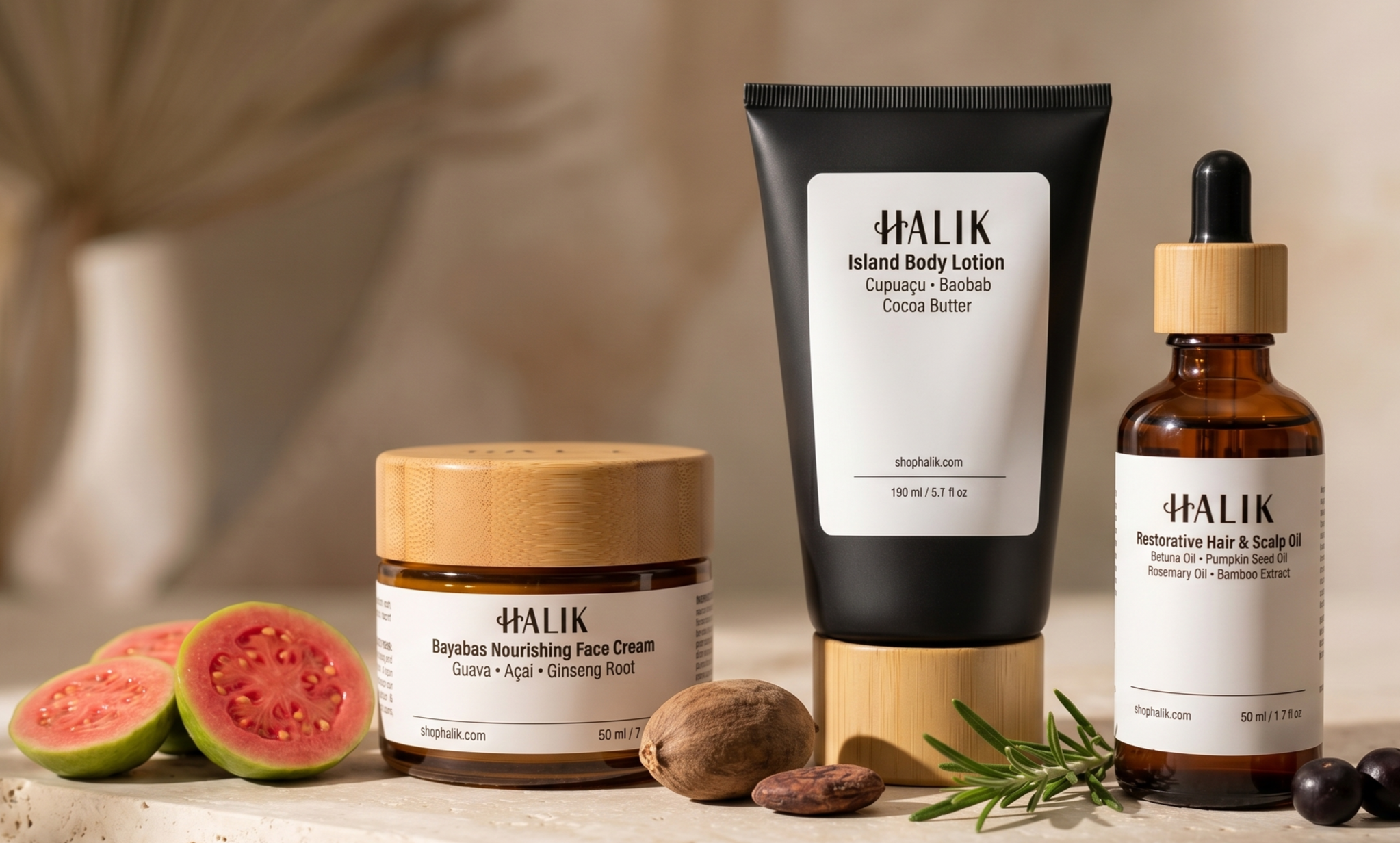
Where to find it:Bayabas Nourishing Face Cream pairs niacinamide with a ceramide complex, so the same application addresses oil regulation and barrier repair together.
02. Ceramide Complex
Ceramides are the lipids that hold the outer layer of skin together, and acne-prone skin tends to run low on them. A double-blind clinical study looked at what happens when a ceramide-based moisturizer is layered under a standard adapalene and benzoyl peroxide acne regimen, a combination known for causing dryness and irritation. Over twelve weeks, the group using the ceramide formula held onto significantly more moisture, reported less dryness at every checkpoint, and even showed fewer inflammatory breakouts than the control group. The study's authors point out that acne itself involves a weakened skin barrier and reduced ceramide levels in the outermost layer of skin, which helps explain why barrier-first care can be part of a well-rounded approach even for oily skin.
For PCOS skin specifically, this matters because breakouts, prescription treatments, and hormonal fluctuation can each independently weaken the barrier. Replacing ceramides helps the skin hold onto hydration and tolerate active ingredients with less irritation.
Where to find it: the same Bayabas Nourishing Face Cream that carries niacinamide also includes a plant-based ceramide complex, reinforcing the barrier while it works.
03. Calendula Oil
Calendula has a long history in skin care for inflamed, reactive skin, and modern research backs up much of that reputation. A recent review of calendula's role in wound healing found that it supports skin cell growth and new tissue formation while lowering several inflammatory markers in the skin. A separate systematic review of clinical and animal studies found that skin treated with calendula extract moved through the inflammation phase of healing faster and generated more new tissue than untreated skin, supporting its traditional use for calming irritation. That anti-inflammatory effect is largely attributed to calendula's concentration of flavonoids and phenolic compounds, and topical calendula preparations have a long documented history of use for acne, general skin inflammation, and irritated tissue.
For PCOS breakouts, which tend to be inflamed and slow to resolve, an ingredient that shortens the inflammatory phase without any drying side effects is a meaningful addition to a gentle first cleanse.
Where to find it: the Calendula Facial Cleansing Balm is anchored by calendula oil that's cold-infused in-house, dissolving oil-based buildup as the first step of a double cleanse.
04. Geranium Oil
Sebum-regulating ingredients don't have to strip oil to be effective, and geranium oil is a useful example. It works as a botanical multitasker on sebaceous activity, helping balance output on both oily and dry areas of the face rather than forcing a single response across the whole complexion. Alongside that regulating effect, geranium brings anti-inflammatory properties that make it a fitting companion to calendula in a first-cleanse formula, especially for skin that swings between oily patches and dry, sensitized areas, a pattern common in PCOS skin.
Where to find it: the Calendula Facial Cleansing Balm also includes geranium oil, working alongside calendula to help balance sebum production during the cleansing step.
05. Rice Ferment Filtrate
Fermented rice is a long-standing staple of East Asian skincare, and current research is starting to explain why it holds up. Fermentation breaks rice's larger starch and protein molecules down into smaller amino acids, peptides, and organic acids that the skin can use more directly, and a review of rice fermentation products found that this process meaningfully improves hydration by supporting the skin's own moisture-retaining compounds. That same review linked rice fermentation products to antioxidant and anti-inflammatory effects, both relevant for skin that runs hot and reactive, as PCOS-prone skin often does.
For oily and breakout-prone skin specifically, rice ferment filtrate has a practical advantage: it's water-based rather than oil-based, so it delivers amino acids and barrier-supportive compounds without adding any pore-clogging weight. That makes it a useful hydration step for PCOS skin that needs moisture without more oil.
Where to find it: the Buko Pandan Radiance Toner combines rice ferment filtrate with fermented coconut, hydrolyzed rice protein, and a ceramide complex, layering hydration and barrier support into a lightweight, water-based step.
06. Sugarcane-Derived Squalane
Squalane has earned a reputation as one of the few facial oils considered genuinely safe for oily and acne-prone skin, and the comedogenicity research supports that reputation. Multiple sources rate squalane at 0 to 1 on the standard 5-point comedogenic scale, and it's frequently recommended specifically for clog-prone skin because its molecular structure closely mirrors the skin's own sebum. That similarity means the skin absorbs it readily instead of treating it as a foreign, pore-clogging oil, which is part of why it pairs well with active ingredients like niacinamide without adding to congestion.
For PCOS skin already producing excess oil, a lightweight, barrier-supportive lipid like squalane can replace heavier plant oils without the comedogenic risk some of those oils carry.
Where to find it: sugarcane-derived squalane appears in both the Sampaguita Anti-Aging Face Oil and the Bayabas Nourishing Face Cream, sealing in hydration without adding weight.
07. Frankincense (Boswellia Sacra) Oil
Frankincense's anti-inflammatory reputation traces back to its boswellic acid content, and the mechanism has since been studied directly. The boswellic acids in frankincense block an enzyme called 5-lipoxygenase, which is responsible for producing the inflammatory compounds behind the redness and swelling that come with acne lesions. That pathway is distinct from how most conventional acne treatments work, which is part of why frankincense functions well as a complementary calming ingredient rather than a primary acne treatment. Formulations built around boswellic acids have also been used to reduce inflammation and redness tied to acne, alongside broader applications for conditions like psoriasis and eczema.
For PCOS acne, which tends to run inflamed and slow to fade, an ingredient that quiets the inflammatory cascade at the follicle level, rather than simply drying out the surface, addresses more of what's actually happening under the skin.
Where to find it: sacred frankincense oil is a foundational ingredient in the Sampaguita Anti-Aging Face Oil, working alongside sampaguita and papaya oil to calm redness and support skin renewal.
Barrier-first care versus stripping treatments
Many over-the-counter acne products are built to absorb oil and dry out breakouts fast. That approach can work in the short term, but it often triggers the skin to produce even more sebum in response, a cycle that's especially counterproductive for androgen-driven skin. The ingredients above take a different route: they work with the skin's own lipid barrier instead of against it, calming inflammation, replacing depleted ceramides, and regulating oil production through gentler biological mechanisms rather than surface-level stripping. That distinction matters most for PCOS skin, which is already managing a heavier internal inflammatory and hormonal load than typical acne.
None of this replaces medical care. PCOS acne originates from hormonal signals inside the body, and a dermatologist or endocrinologist is the right resource for addressing that root cause, whether through targeted treatment, insulin management, or other approaches suited to an individual's diagnosis. Skincare's role is narrower and still valuable: keeping the skin barrier intact and calm while the underlying hormonal picture is being managed elsewhere.
Building a gentle lineup for PCOS-prone skin
A simple sequence works best for skin already managing inflammation and excess oil. Start with a first cleanse that dissolves buildup without stripping, like the Calendula Facial Cleansing Balm, then follow with the Buko Pandan Radiance Toner to deliver lightweight, water-based hydration before anything heavier goes on. From there, a barrier-supportive moisturizer such as the Bayabas Nourishing Face Cream reinforces the skin through the day or night. For skin that tolerates a facial oil well, the Sampaguita Anti-Aging Face Oil can close out an evening lineup, sealing in the work of the earlier steps. Consistency matters more than intensity here. Introducing one new product at a time makes it easier to see what's actually helping and gives reactive PCOS skin time to adjust without added stress.
FAQ
-
No. PCOS acne starts with hormonal signals inside the body, so skincare cannot resolve the underlying cause. Topical ingredients can calm inflammation, support the barrier, and make the skin more resilient, but a dermatologist or endocrinologist should guide treatment of the hormonal drivers.
-
PCOS is linked to higher levels of circulating androgens, which stimulate the sebaceous glands directly and increase sebum output. Insulin resistance, common in PCOS, adds to this by raising free testosterone and amplifying oil production, so breakouts tend to be more persistent and concentrated along the jawline and chin.
-
Halik's face care is formulated without harsh sulfates or synthetic fragrance, which makes it a gentle complement to prescription treatments like retinoids or benzoyl peroxide that can dry and irritate the skin. Introduce one new product at a time and check with your prescribing doctor if you have questions about combining actives.
-
Heavy, pore-clogging oils and harsh sulfate cleansers can worsen breakouts by trapping sebum or stripping the barrier, which triggers reactive oil production. Look for low-comedogenic, barrier-supportive formulas instead of anything that promises to strip oil completely.
-
Barrier-repairing ingredients like ceramides and calendula tend to show visible calming within a few weeks of consistent use, while sebum-regulating ingredients like niacinamide typically take about four weeks to show a measurable change.
Sources
The effect of 2% niacinamide on facial sebum production, Journal of Cosmetic and Laser Therapy / PubMed
Mechanistic Insights into the Multiple Functions of Niacinamide, PMC
Ceramide-Containing Adjunctive Skin Care for Skin Barrier Restoration During Acne Vulgaris Treatment, Journal of Drugs in Dermatology / PubMed
An Update of Phytotherapeutic Advances of Marigold (Calendula officinalis L.) in Wound Healing, PMC
A systematic review of Calendula officinalis extract for wound healing, PubMed
Boswellic acids - frankincense, Cosmacon
Frankincense Oil for Skin: Anti-Aging, Acne & Scars, Frankincense Oil Institute
Squalane comedogenic rating (0–1/5), ScanSkinAI
Squalane, a comedogenic ingredient?, Typology
Biologically Active Components and Skincare Benefits of Rice Fermentation Products: A Review, MDPI Cosmetics
About Halik
Halik is a clean, premium skincare brand inspired by Filipino botanicals and the healing power of natural ingredients. All Halik products are formulated without parabens, PEGs, phthalates, silicones, sulfates and synthetic fragrances.
Related Reading