Preconception Beauty Habits to Change Before Starting IUI or IVF Cycles
A 30-to-90-Day Clean Beauty Checklist
To lower total chemical load before IVF or IUI, audit body wash, body oil, face cream, and toner for parabens, phthalates, oxybenzone, and cyclic silicones D4/D5, starting with rinse-off products in the first 30 days and completing leave-on swaps within 60 to 90 days, aligning with the roughly 90-day maturation window of eggs and sperm.
Before egg retrieval or embryo transfer, the products in your bathroom matter more than most patients realize. Personal care items are a major daily source of phthalates, parabens, and other endocrine-disrupting chemicals, and multiple IVF cohort studies link higher levels of these compounds to fewer mature oocytes, lower fertilization rates, and reduced odds of live birth. The good news: research shows the body clears many of these chemicals within days of switching products, which is why a structured 30-to-90-day preconception audit of your body wash, body oil, face cream, and toner can meaningfully lower your total chemical load before a cycle begins.
You've booked the baseline bloodwork. You've started the prenatal vitamin. You've read every article on AMH and antral follicle counts. But most preconception checklists skip the bottle sitting in your shower and the jar on your nightstand, even though you touch them every single day. If you're preparing for IUI or IVF, this is the moment to look closely at what's actually landing on your skin.
Why Your Bathroom Cabinet Matters Before Egg Retrieval
Skin is not a barrier that stops everything. It absorbs. Ingredients in body wash, lotion, and face cream enter the bloodstream through the skin and show up in urine, blood, and follicular fluid within hours of application.
A group of chemicals called endocrine disruptors are of particular concern before assisted reproductive technology (ART). These compounds mimic or block the body's own hormones, and phthalates and parabens are two of the most common classes found in personal care products. Phthalates are often used to make synthetic fragrance last longer, while parabens act as preservatives in lotions, cleansers, and creams.
The research connecting these chemicals to IVF outcomes has grown substantially over the past decade. A paternal exposure study out of a Boston fertility center found that higher DEHP-related chemical mixture scores in male partners were associated with a greater probability of failing to reach live birth, with the strongest effects showing up between implantation and clinical pregnancy. A separate review of multiple cohorts, ranging from 136 to 663 women across the US and Asia, found that elevated phthalate metabolites were consistently linked to fewer total oocytes retrieved, fewer mature eggs, and lower fertilization rates during IVF cycles.
It's worth being precise about what this evidence does and does not show. These are observational studies, not randomized trials, since researchers cannot ethically assign one group of patients to higher chemical exposure. Results are also not fully consistent across every study or every phthalate metabolite, and some research on paraben mixtures specifically has found no significant association with pregnancy outcomes. What the body of evidence does support is a consistent pattern: higher total chemical load correlates with worse intermediate IVF outcomes across multiple independent cohorts, which is reason enough to reduce exposure during a preconception window where you have direct control.
The Non-Toxic Audit: Body Wash, Body Oil, Face Cream, and Toner
A total chemical load, or TCL, audit means reviewing every product that touches your skin daily and identifying which ingredients belong to the classes most studied in relation to fertility and IVF outcomes. Start with these four categories, since they're used every day and often left on the skin for hours.
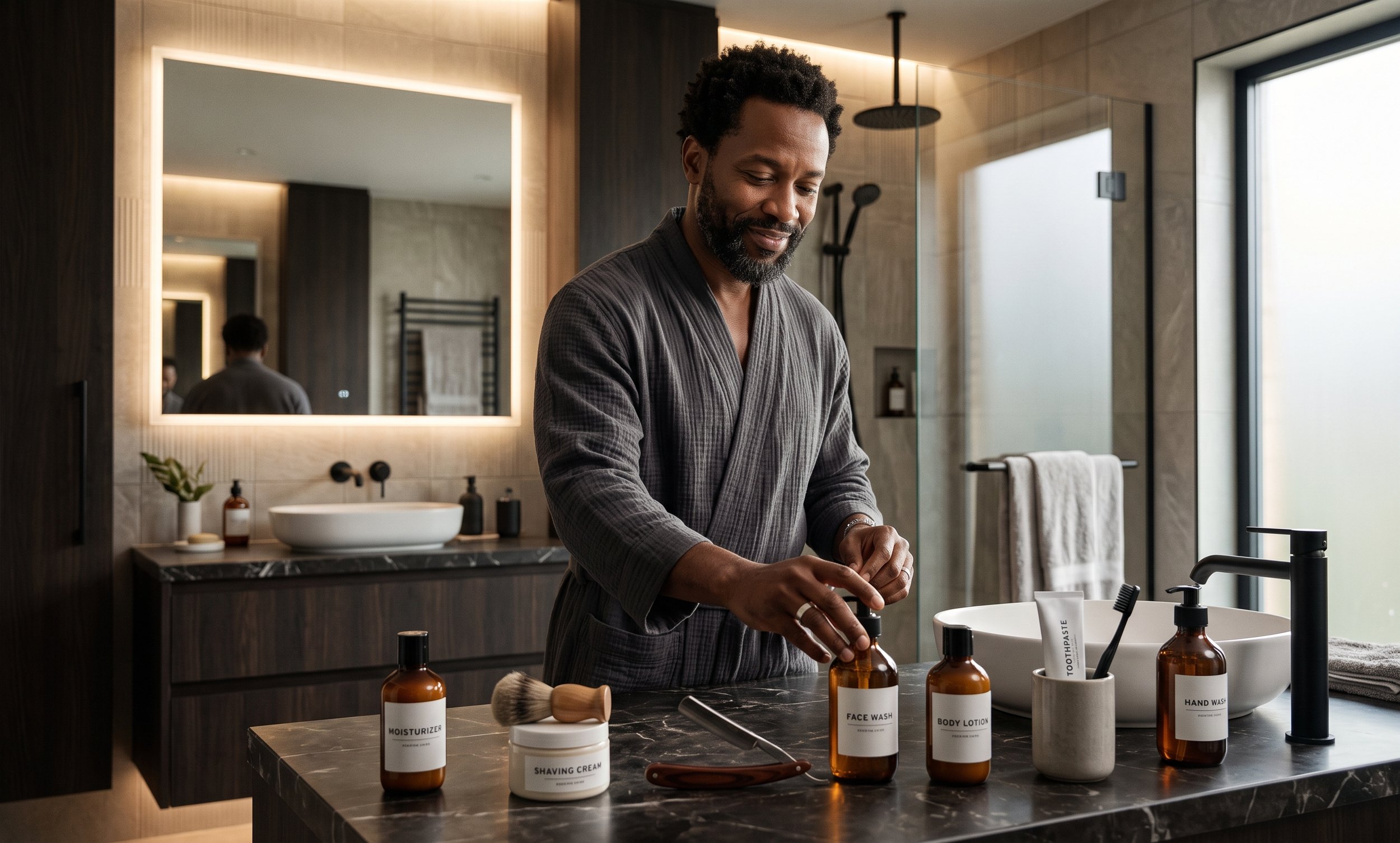
Body wash and cleansers (rinse-off products)
Even though rinse-off products have shorter skin contact time than leave-on formulas, they're used daily and are a documented source of exposure. Check labels for:
Parfum or fragrance, an umbrella term that can legally hide phthalates without listing them by name
Sodium lauryl sulfate (SLS) and sodium laureth sulfate (SLES), harsh surfactants linked to skin barrier disruption and irritation, though not to endocrine effects
Parabens, listed as methylparaben, propylparaben, butylparaben, or ethylparaben
Triclosan, an antibacterial agent found in some antibacterial body washes
Body oils and lotions (leave-on products)
Leave-on products stay on skin for hours and generally allow for greater cumulative absorption than rinse-off formulas. This makes body oil and lotion a priority category in a preconception audit. Watch for:
Cyclic silicones D4 and D5 (cyclotetrasiloxane and cyclopentasiloxane), used for silky slip in some lotions and serums
Synthetic fragrance and parfum
Parabens and phthalate esters like DEP, DBP, and DEHP
PFAS, sometimes present in long-wear or waterproof formulas under names like "perfluoro" or "PTFE"
Face cream and serums
Facial skin is thinner than body skin and often shows higher absorption rates for some ingredients. Review your night cream, day cream, and any face oils for:
Oxybenzone (benzophenone-3), a UV filter found in some daytime moisturizers and sunscreens
Retinoids and hydroquinone, which most fertility clinics ask patients to pause before and during a cycle regardless of endocrine concerns
Parabens and phthalates, again often hidden inside "fragrance"
Formaldehyde-releasing preservatives like DMDM hydantoin or quaternium-15
Toner
Toner sits between cleansing and moisturizing, and its thin, watery texture can make it easy to overlook during a product audit even though it's applied directly to bare skin. Review your toner for:
Alcohol denat and witch hazel at high concentrations, which can strip the skin barrier and increase permeability to other applied ingredients
Synthetic fragrance and parfum
Parabens, used as a preservative in many water-based formulas
Artificial dyes and colorants, which add no functional benefit and are an easy first ingredient to flag
The 30-to-90 Day Transition Timeline
You don't need to empty your bathroom cabinet in a single afternoon. Research on how quickly the body clears these chemicals actually supports a staged approach, and understanding the biology behind egg and sperm development explains why a longer runway matters most.
Days 1 to 30: Start with rinse-off products.
A landmark UC Berkeley study called HERMOSA had 100 participants swap their usual personal care products for phthalate-, paraben-, and oxybenzone-free versions for just three days. Urinary paraben concentrations dropped by 44% and 45% for two common paraben types, and the fragrance-linked phthalate metabolite MEP fell by 27%. A separate five-day intervention study in Grenoble, France, found similar results: bisphenol A dropped by roughly 39%, parabens by 30%, and phthalates by 22%. This is strong evidence that swapping body wash, shampoo, and hand soap first produces a fast, measurable drop in body burden. Use this month to replace your daily rinse-off products and to read labels on everything else in your routine.
Days 31 to 60: Swap leave-on products, including toner.
Move to your body oil, lotion, face cream, and toner next, since these sit on skin longest and have the most cumulative exposure. A 2023 pilot study called REDUXE had women switch to paraben- and phthalate-free personal care products for 28 days and found not just a drop in urinary chemical levels but favorable shifts in gene expression within healthy breast tissue. By the end of this window, aim to have fully replaced every leave-on product in your routine.
Days 61 to 90: Hold steady through the biological window that matters most.
This timing lines up with the biology of your cycle. Human eggs undergo their final maturation process, called folliculogenesis, over roughly 90 days before ovulation or retrieval. Sperm go through a similar roughly three-month maturation cycle called spermatogenesis. A 90-day preconception window, held consistently on both sides of the partnership, gives developing eggs and sperm the benefit of a lower chemical load through their full maturation window rather than just the final weeks before a cycle.
If your retrieval or transfer date is closer than 90 days away, don't skip the audit. Even a partial swap in the final 30 days, prioritized toward daily leave-on products, produces a measurable reduction based on the intervention research above.
Why We Chose Bio-Compatible Formulation
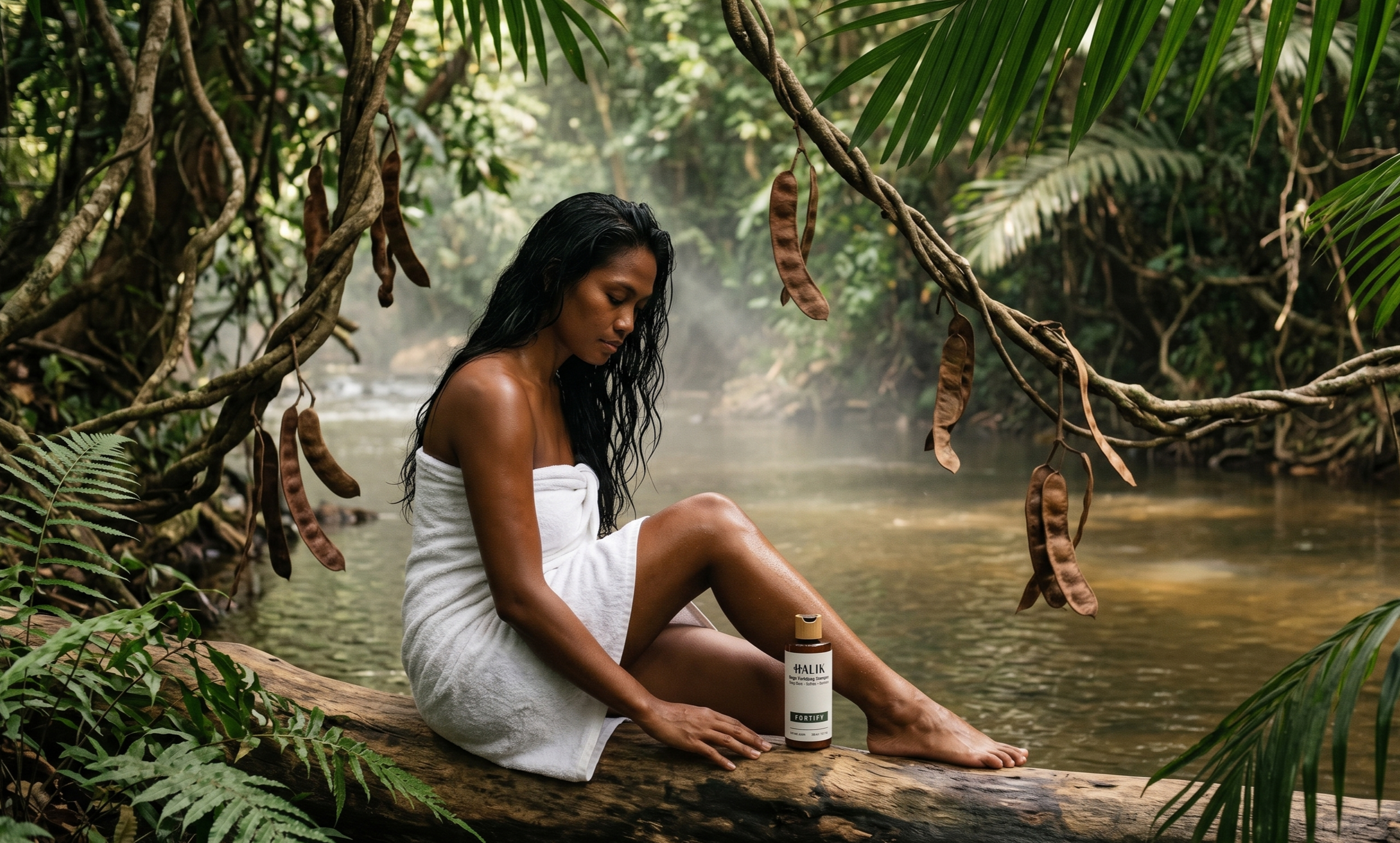
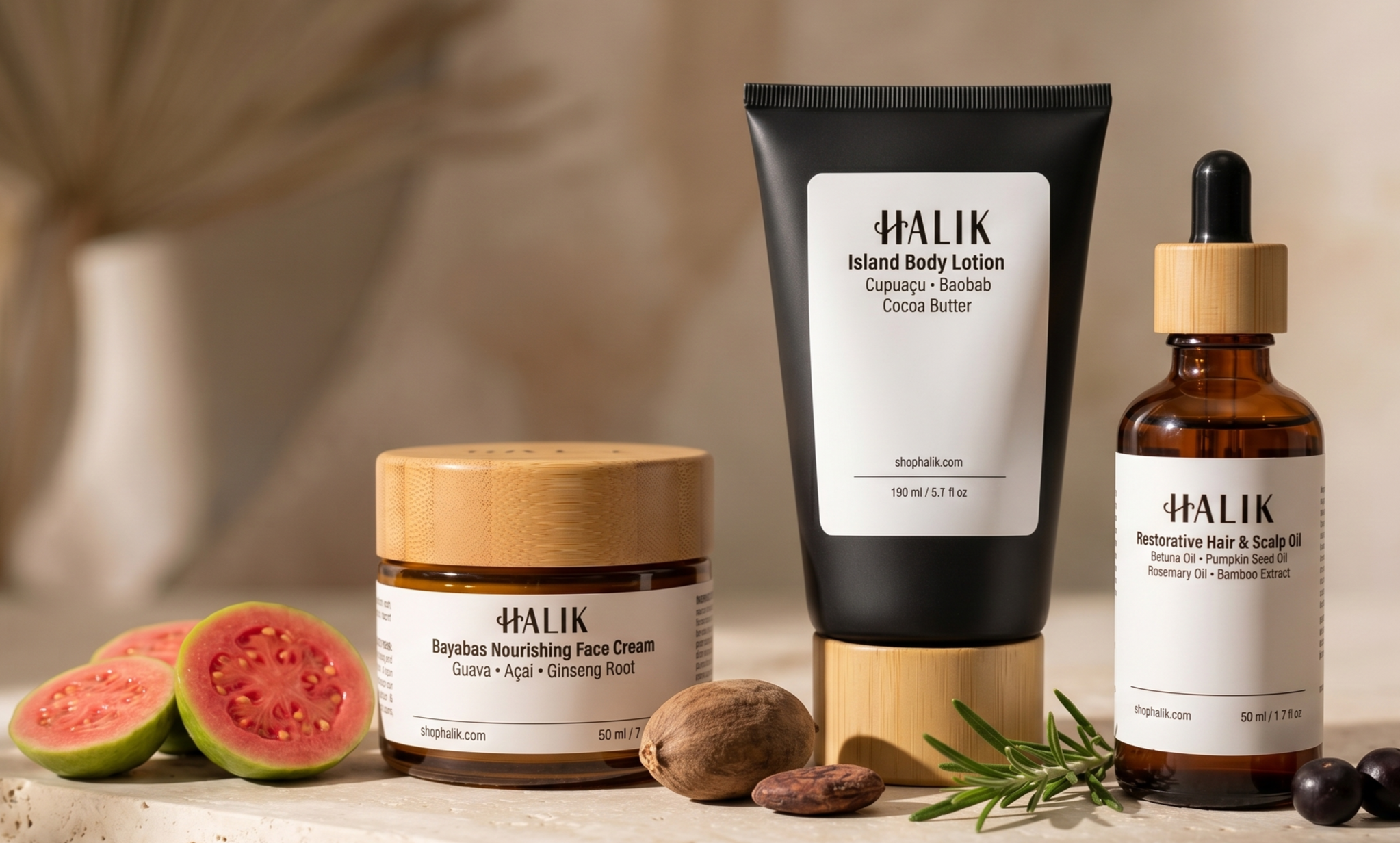
Halik products are formulated without parabens, phthalates, PEGs, cyclic silicones D4 and D5, sulfates, and synthetic fragrance, which is the reason many patients preparing for ART find our lineup useful during a preconception audit. Our Bayabas Nourishing Face Cream and Sampaguita Anti-Aging Face Oil rely on botanical actives like guava seed oil, sugarcane-derived squalane, and plant ceramides instead of synthetic fragrance carriers or preservative systems built on parabens. Our Island Body Lotion and Paradise Whipped Body Butter use cupuaçu and mango butter for their moisture-locking properties, formulated without D4 or D5 for slip and without phthalate-based fragrance oils.
Our newest addition to the face category, the Buko Pandan Radiance Toner, was formulated with this same audit in mind. It pairs pandan hydrosol with fermented coconut, rice ferment filtrate, and a ceramide complex, delivering a barrier-supportive toning step without added dyes, synthetic fragrance, or parabens.
This is professional, ingredient-transparent formulation, built to professional cosmetic chemistry standards and grounded in botanical science, not a substitute for medical guidance from your fertility clinic. Always share your full skincare and supplement routine with your reproductive endocrinologist before and during a cycle.
Conventional Swap vs. Clean Alternative
A Kiss from Mother Earth, Through Every Step of the Cycle
Preparing for IUI or IVF asks a lot of your body already. Lowering your total chemical load is one of the few parts of this process you can control completely, starting today, with the products already in your hands. Give your body the full 90 days when you can, start with the rinse-off swaps this week, and let the rest follow. A kiss from Mother Earth, for every step of this journey.
FAQ
-
Research supports starting at least 90 days before egg retrieval, since human eggs go through their final maturation process over roughly three months. Intervention studies show urinary chemical levels drop within days of switching products, so even a shorter window still helps, but 90 days lines up with the full biological window that matters most.
-
No. Start with rinse-off products like body wash and shampoo in the first 30 days, since research shows these produce fast, measurable drops in chemical levels. Move to leave-on products like body oil, lotion, face cream, and toner in the following month, since these have longer skin contact time and higher cumulative absorption.
-
There's a growing body of peer-reviewed, observational research on this topic. Multiple cohort studies from fertility clinics in the United States, Europe, and Asia have found associations between urinary phthalate and paraben levels and IVF outcomes including oocyte count, fertilization rate, and live birth. These are epidemiological studies, not randomized trials, and results are not fully consistent across every chemical studied, but the overall pattern is well documented.
-
Prioritize parfum or synthetic fragrance, since it can legally hide phthalates without listing them by name. Parabens, cyclic silicones D4 and D5, and oxybenzone in sunscreens are the next highest priority based on the research reviewed above.
-
Yes. Paternal exposure studies have found associations between phthalate and chemical mixture levels in male partners and IVF outcomes, including live birth rates. Sperm undergo a maturation cycle of roughly the same length as eggs, so a shared 90-day preconception window benefits both partners.
-
No. This checklist is educational information about total chemical load and is not medical advice. Share your full personal care routine, supplements, and any product changes with your reproductive endocrinologist before and during your cycle.
Sources
Mínguez-Alarcón L, et al. "Paternal mixtures of urinary concentrations of phthalate metabolites, bisphenol A and parabens in relation to pregnancy outcomes among couples attending a fertility center." Environment International, 2020. sciencedirect.com/science/article/pii/S0160412020321267
"Phthalates Disrupt Female Reproductive Health: A Call for Enhanced Investigation into Mixtures." PMC. pmc.ncbi.nlm.nih.gov/articles/PMC11969576
Machtinger R, et al. "Urinary concentrations of biomarkers of phthalates and phthalate alternatives and IVF outcomes." PMC, 2018. pmc.ncbi.nlm.nih.gov/articles/PMC5800972
Harley KG, et al. "Reducing Phthalate, Paraben, and Phenol Exposure from Personal Care Products in Adolescent Girls: Findings from the HERMOSA Intervention Study." Environmental Health Perspectives, 2016. ehp.niehs.nih.gov/doi/10.1289/ehp.1510514
"Levers to decrease exposure to harmful chemicals: the case of Personal Care Products and cosmetics" (Grenoble five-day intervention study). ScienceDirect. sciencedirect.com/science/article/pii/S0160412026002011
Dairkee SH, et al. "Reduction of daily-use parabens and phthalates reverses accumulation of cancer-associated phenotypes within disease-free breast tissue of study subjects." Chemosphere, 2023. sciencedirect.com/science/article/pii/S0045653523002813
Gougeon A. "Dynamics of follicular growth in the human: A model from preliminary results." Human Reproduction, 1986, as cited in Williams CJ, Erickson GF. "Morphology and Physiology of the Ovary." Endotext (NCBI Bookshelf). ncbi.nlm.nih.gov/books/NBK278951
This content is educational and is not a substitute for individualized medical advice. Preconception patients should consult their reproductive endocrinologist regarding any changes to their personal care or supplement routine before and during an IUI or IVF cycle.
About Halik
Halik is a clean, premium skincare brand inspired by Filipino botanicals and the healing power of natural ingredients. All Halik products are formulated without parabens, PEGs, phthalates, silicones, sulfates and synthetic fragrances.
Related Reading