What's Not in Your Halik: The Six Ingredients We Chose to Leave Behind
Halik products are formulated without six categories of commonly used synthetic cosmetic ingredients: parabens (preservatives linked to endocrine disruption), PEGs (petroleum-derived compounds that may carry carcinogenic manufacturing byproducts), phthalates (plasticizers and fragrance fixatives associated with reproductive harm), silicones (surface-coating polymers with environmental persistence concerns), sulfates (aggressive surfactants that disrupt the skin and scalp barrier), and synthetic fragrances (undisclosed chemical blends responsible for the majority of cosmetic allergen reactions). Each is replaced in Halik formulas with a plant-derived, ingredient-transparent alternative.
At Halik, the full ingredient list isn't an afterthought; it's the point. Every Halik product is formulated without parabens, PEGs, phthalates, silicones, sulfates, and synthetic fragrances. Not as a marketing claim, but as a formulation philosophy grounded in botanical transparency and endocrine safety. Understanding what these ingredients are, why the conversation around them matters, and what we use instead is part of knowing exactly what you're putting on your body and your family's. This is that conversation.
Parabens
What they are
Parabens are synthetic preservatives that have been used in cosmetics, pharmaceuticals, and food products since the 1920s. They extend shelf life by inhibiting the growth of bacteria, mold, and yeast, and they're inexpensive to source. On ingredient labels, they appear as methylparaben, ethylparaben, propylparaben, butylparaben, and similar variations.
Why the concern
The conversation around parabens centers on their classification as endocrine-disrupting chemicals (EDCs). A 2018 peer-reviewed paper published in Molecular and Cellular Endocrinology by researchers at the Medical University of Bialystok reviewed the body of current literature and concluded that parabens act as EDCs, with estrogenic effects most commonly reported. The review found that in animal models, parabens interfere with the function of multiple organs and biological processes. A 2023 review published in the journal International Journal of Molecular Sciences further documented associations between paraben exposure and disruptions of the hypothalamic-pituitary-thyroid axis, including evidence from both epidemiological and experimental models that exposure to parabens may interfere with thyroid hormone regulation.
Dermal absorption is a key part of why these findings are relevant to cosmetic use specifically. Research published in NCBI/PubMed confirms that after topical application, parabens are hydrolyzed and metabolized in the body, and that paraben metabolites may play a role in the endocrine disruption observed in experimental animals.
It's worth noting that regulatory bodies including the EU Scientific Committee on Consumer Safety, the US Cosmetic Ingredient Review, and Health Canada have assessed methylparaben and ethylparaben as safe at concentrations up to 0.4% in cosmetics. The science on long-chain parabens and cumulative exposure, however, remains a subject of ongoing study.
Our position: when questions remain, we choose alternatives.
What Halik uses instead
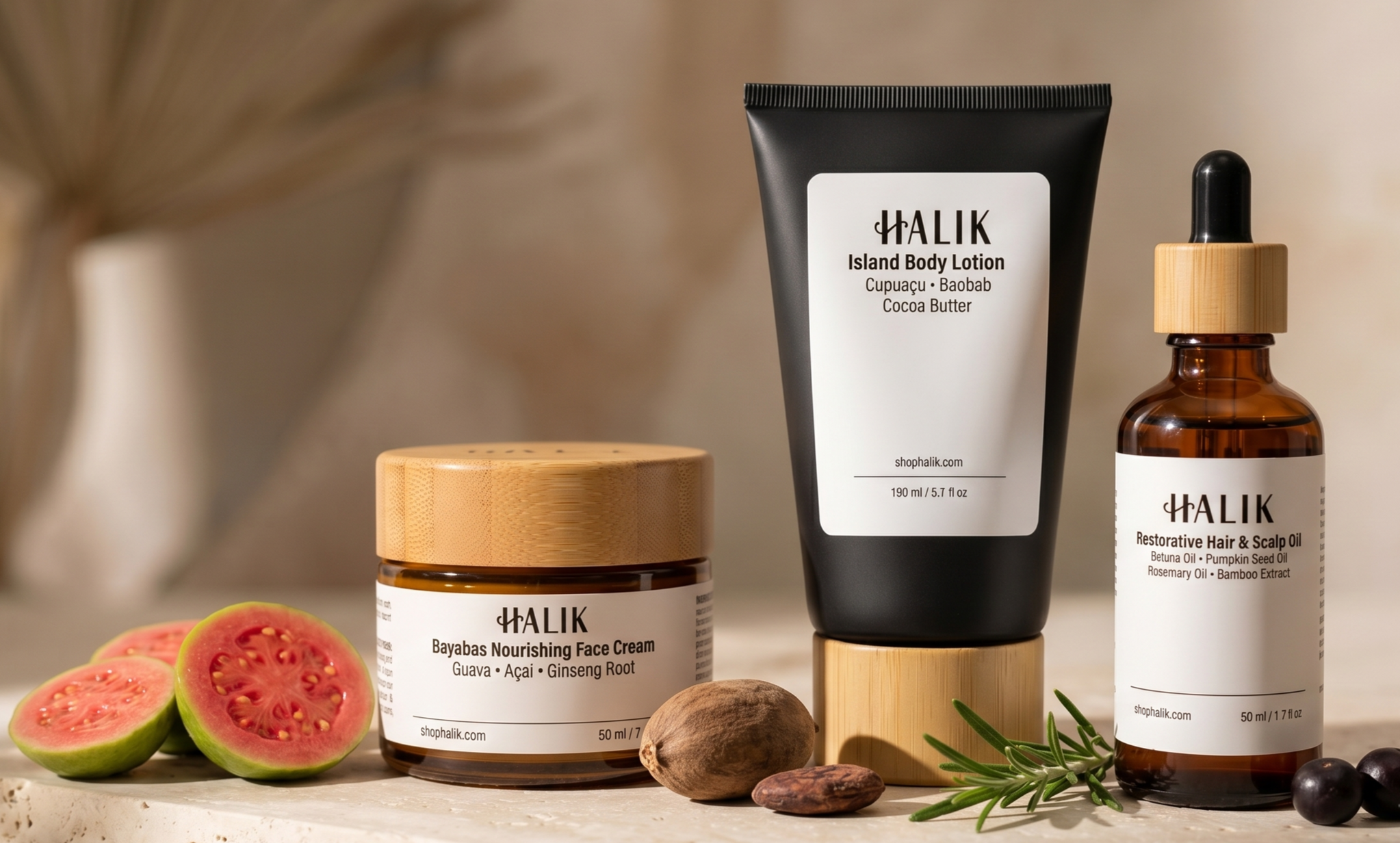
Our preservative system relies on banana leaf & trunk extract, benzyl alcohol, glyceryl caprylate, glyceryl undecylenate, and phenoxyethanol, which appear in our Bayabas Nourishing Face Cream, Payson Dog Shampoo, and Buggin' Out Insect Repellent, among others. These ingredients support microbial safety without the endocrine concerns associated with parabens. In anhydrous formulas (those without water), where preservation is less critical, we lean on the natural antimicrobial properties of ingredients like beeswax, tocopherol (vitamin E), and the botanicals themselves.
PEGs (Polyethylene Glycols)
What they are
PEGs are a broad family of over 600 petroleum-derived compounds produced through a process called ethoxylation, in which ethylene oxide is reacted with other compounds to create water-soluble emulsifiers, thickeners, penetration enhancers, and conditioning agents. On labels, they appear with the prefix "PEG" followed by a number (PEG-40, PEG-100, etc.), or as ingredients ending in "-eth-" or "-oxynol-."
Why the concern
The concern with PEGs is not the compounds themselves so much as what may accompany them. The ethoxylation process can leave behind trace amounts of 1,4-dioxane and residual ethylene oxide, both recognized carcinogens. The FDA has documented that 1,4-dioxane is a potential human carcinogen and that it can penetrate human and animal skin when present in certain preparations, including lotions. The National Toxicology Program (NTP) classifies 1,4-dioxane as "reasonably anticipated to be a human carcinogen" based on sufficient evidence from animal studies. The FDA periodically monitors its presence in cosmetics and has observed some improvement over time, but the contamination risk remains, particularly in products from manufacturers where ethoxylation controls vary.
Because 1,4-dioxane is a manufacturing byproduct rather than an intentional ingredient, it will never appear on an ingredient label, even when present. This opacity is a core part of why PEGs conflict with Halik's commitment to ingredient transparency.
PEGs are also classified as penetration enhancers, meaning they increase the skin's permeability. In a clean formulation, this could theoretically improve absorption of beneficial actives, but it also means that any impurities present will be absorbed more readily. PEG compounds are additionally prohibited in certified organic cosmetics under COSMOS standards, and their persistence in wastewater raises environmental concerns.
What Halik uses instead
We use plant-derived emulsifiers and solubilizers across the line: polyglyceryl-4 oleate and cetearyl alcohol in the Calendula Facial Cleansing Balm; cetearyl glucoside (a glucose-derived emulsifier) in the Bayabas Face Cream; and sorbitan oleate decylglucoside crosspolymer in the Buggin' Out Insect Repellent and Harry Deodorizing Spray. These ingredients perform the same formulation functions, without the contamination risk or transparency gap.
Phthalates
What they are
Phthalates are a group of synthetic chemicals used primarily as plasticizers to increase flexibility in materials, and as solvents and fixatives in fragrance formulations. In cosmetics, they most commonly appear as diethyl phthalate (DEP), dibutyl phthalate (DBP), and dimethyl phthalate (DMP). They are also frequently found in products labeled simply as "fragrance," since fragrance formulas are protected as trade secrets in the US and do not require individual ingredient disclosure.
Why the concern
Phthalates are among the most extensively studied endocrine-disrupting chemicals, and the research is substantial. The European Commission has determined that DBP and DEHP lead to endocrine disruption in living organisms and classifies them as reproductive toxicants. A comprehensive 2020 review published in International Journal of Environmental Research and Public Health documented that phthalates can modify the release of hypothalamic, pituitary, and peripheral hormones, and at the intracellular level interfere with nuclear receptors, membrane receptors, and intracellular signaling pathways associated with reproduction.
Research published by the National Institutes of Health (NIH/NIEHS) has linked phthalate exposure to decreased gestational age and increased risk of preterm birth in pregnant women. A 2025 review in Toxicology and Environmental Health Sciences notes that phthalate and metabolite exposure has been detected in human blood, urine, breast milk, saliva, and amniotic fluid, with documented disruption of thyroid, estrogen, and androgen hormone processes. The EPA has identified DEHP as a probable human carcinogen.
Women are particularly vulnerable: research published in PMC (National Institutes of Health) has found that women tend to be exposed to higher levels of phthalates than men through their more extensive use of personal care and cosmetic products. A 2025 systematic review specifically linked phthalate exposure in women to impairments in ovarian function, uterine function, and pregnancy outcomes.
Phthalates are banned from cosmetics in the European Union. In the US, they remain legal and prevalent.
What Halik uses instead
Halik formulas contain no phthalate-based plasticizers or fixatives. Our scent comes from pure botanical essential oils and plant-derived sources: vanilla planifolia fruit oil, rosemary leaf oil, sandalwood oil, lavender oil, and the natural fragrance signatures of the active botanicals themselves. Nothing is hidden under "fragrance." Everything is named.
Silicones
What they are
Silicones are synthetic polymers composed of silicon, oxygen, and carbon, used in cosmetics to create a smooth skin feel, add shine to hair, improve product spreadability, and provide a temporary filling effect on pores and fine lines. They appear on labels as dimethicone, cyclopentasiloxane, cyclomethicone, polydimethylsiloxane, and compounds ending in "-siloxane."
Why the concern
The concern with silicones is twofold: how they behave on skin and hair, and what they do to the environment.
On the skin and hair, silicones function by creating a coating on the surface. This coating can produce an immediate, aesthetically pleasing result (smoothness, shine, reduced frizz), but it works by creating an occlusive film rather than genuinely improving the skin or strand's biology. Over time, silicone accumulation in the hair can leave strands feeling heavy, lifeless, and reliant on the silicone itself to appear smooth. On skin, occlusive silicones may trap bacteria, sebum, and impurities beneath the film, contributing to congestion and breakouts in some users. The improvements in skin and hair texture that silicones deliver are surface-level rather than restorative.
The environmental picture is more straightforward. Certain cyclic silicones, particularly D4 and D5, have been classified by the European Chemicals Agency (ECHA) as persistent, bioaccumulative, and toxic (PBT) substances. D4 is additionally classified as toxic to reproduction, category 2. In the European Union, it's estimated that approximately 205 tonnes of D5 and 4.7 tonnes of D4 are discharged into surface waters annually, with wash-off personal care products identified as the primary source. Research published in PMC confirmed that cyclic siloxanes can diffuse through the skin, including into the epidermis and dermis. The EU has restricted D4 and D5 in rinse-off cosmetics at concentrations of 0.1% or greater since January 2020, and the push to extend these restrictions continues.
What Halik uses instead
We achieve silicone-like slip and smoothness through botanicals that deliver it naturally, such as meadowfoam seed oil, which provides a silky, silicone-like finish on the hair shaft without synthetic chemistry. You might also see sugarcane-derived squalane, and the plant-derived olive eco silicone hydrogenated ethylhexyl olivate, an ingredient derived from olive oil that mimics silicone's smoothing performance with a fraction of the environmental footprint. Across the face and body line, squalane derived from sugarcane serves a similar role: bio-compatible, featherlight, and structurally identical to the skin's own natural lipids.
Sulfates
What they are
Sulfates are aggressive surfactants used in shampoos, cleansers, and body washes to create lather and strip oil, dirt, and product buildup from the skin and hair. The most common are sodium lauryl sulfate (SLS) and sodium laureth sulfate (SLES). They're derived from petroleum or, in some cases, coconut oil processed through a harsh chemical reaction. Their effectiveness as cleansers is not in dispute. What's in dispute is the cost of that effectiveness on the skin and scalp barrier.
Why the concern
SLS is so well-established as a skin irritant that it is the benchmark irritant used in dermatological research to intentionally induce barrier disruption in study subjects. A study published in the journal Cosmetics (2021) found that application of SLS significantly increased transepidermal water loss (TEWL) and decreased stratum corneum hydration and skin barrier function, and further documented that SLS disrupted the skin's microbiome, increasing the relative abundance of taxa containing potential pathogens. A 2023 open-access study published in Longdom Publishing confirmed that SLS disrupts cell membranes, binds to and damages cell proteins, and impairs immunological responses in the skin, with even 0.1% concentrations causing moderate irritant effects in animal studies.
SLS penetrates the skin's lipid barrier, strips the natural oils that protect the scalp and hair shaft, and has been used in drug formulations specifically because of its ability to enhance the absorption of other chemicals, a property that becomes concerning when those chemicals include the other synthetic compounds commonly found alongside it in conventional personal care products.
For the hair specifically, SLS causes the cuticle to swell and open, accelerating color fade and increasing susceptibility to breakage and dryness with regular use.
What Halik uses instead
The Gugo Fortifying Shampoo uses a precision-formulated surfactant blend of sodium methyl oleoyl taurate, sodium lauryl sulfoacetate, and cocamidopropyl betaine. These are mild, amino acid-derived and plant-based surfactants that cleanse effectively, produce a satisfying lather, and respect the scalp barrier. Sodium lauryl sulfoacetate, despite sharing a partial name with SLS, is a significantly larger molecule, meaning it cannot penetrate the skin, and is widely recognized as one of the gentlest cleansing surfactants available. The Calendula Facial Cleansing Balm takes a different approach entirely, using oil-based cleansing, with apricot kernel oil and cold-infused calendula oil dissolving impurities without any surfactant contact with the skin whatsoever.
Synthetic Fragrances
What they are
"Fragrance" or "parfum" on an ingredient label is a legally protected trade secret in the United States. It is a single listed ingredient that can represent a blend of dozens to hundreds of individual chemicals, with no disclosure required about what those chemicals are. An estimated 3,000 or more chemical compounds are used across the fragrance industry.
Why the concern
The opacity of the "fragrance" label is itself a transparency concern, but the health concerns are increasingly specific. Fragrances are the most prevalent cosmetic allergen category. Research published in Contact Dermatitis and reviewed in a 2025 PMC systematic review identified fragrance components as the single most important sensitizing culprits in cosmetic products, responsible for a significant portion of allergic contact dermatitis cases. A study of over 800 cosmetic records found that a large portion of reactions could be traced to fragrance ingredients present in the products used.
Beyond allergenicity, a 2017 review published in Environmental Research documented the accumulation of synthetic fragrance compounds in the environment, wildlife, and human tissue, and noted that many fragrance compounds belong to chemical families with phthalates and synthetic musks that function as endocrine disruptors. The EU has taken a more proactive stance than the US on this issue, mandating that 26 specific fragrance allergens must be individually listed on product labels if their concentration exceeds defined thresholds.
The problem is not scent. The problem is synthetic scent manufactured from undisclosed chemical compounds, designed to perform commercially rather than to be safe, transparent, or bio-compatible.
What Halik uses instead
Every scent in Halik's formulas comes from a named botanical source. Vanilla planifolia fruit oil (vanilla, derived from the orchid) appears in several products and is listed by its full INCI name. Rosemary, lavender, geranium, cedarwood, sandalwood, frankincense, citronella, and lemongrass oils are all listed individually and serve functional roles beyond fragrance, contributing anti-inflammatory, antimicrobial, and scalp-stimulating properties to the formulas they appear in. When a Halik product has a scent, you know exactly where it's coming from.
The Full Picture
Choosing to formulate without parabens, PEGs, phthalates, silicones, sulfates, and synthetic fragrances isn't a marketing decision. It's a formulation constraint that demands more from every ingredient that does make it into a Halik product: more functional depth, more botanical intelligence, more transparency.
It's why the full ingredient list is published on every Halik product page, in plain language, with every INCI name visible. It's why we verify the cultural and linguistic accuracy of every botanical we source. And it's why the ritual doesn't begin with what Halik promises to do for your skin; it begins with what Halik chooses not to put on it.
FAQ
-
Parabens are synthetic preservatives classified by researchers as endocrine-disrupting chemicals (EDCs). Peer-reviewed studies have found that parabens exhibit estrogenic activity and may interfere with thyroid hormone regulation. Halik uses an alternative preservative system including phenoxyethanol, benzyl alcohol, glyceryl caprylate, and glyceryl undecylenate, which maintain microbial safety without the endocrine concerns associated with parabens.
-
PEGs (polyethylene glycols) are petroleum-derived compounds produced through a process called ethoxylation. This process can leave behind trace amounts of 1,4-dioxane, a potential human carcinogen documented by the FDA and classified as "reasonably anticipated to be a human carcinogen" by the National Toxicology Program. Because 1,4-dioxane is a manufacturing byproduct, it will never appear on an ingredient label, even when present. Halik uses plant-derived emulsifiers including polyglyceryl-4 oleate, cetearyl glucoside, and sorbitan oleate decylglucoside crosspolymer instead.
-
Yes. Phthalates are endocrine-disrupting chemicals banned from cosmetics in the European Union. Research from the NIH/NIEHS and multiple peer-reviewed studies has linked phthalate exposure to disruptions in reproductive hormones, reduced sperm quality, impaired ovarian function, and adverse pregnancy outcomes. Phthalates are commonly hidden under the ingredient label "fragrance." Halik uses no phthalate-based compounds, and every scent in Halik formulas comes from a named botanical essential oil.
-
Certain cyclic silicones (D4 and D5) have been classified by the European Chemicals Agency as persistent, bioaccumulative, and toxic substances, and D4 is classified as toxic to reproduction. Silicones also create surface coatings that provide an immediate aesthetic effect without genuinely restoring the skin or hair. Halik achieves similar smoothness and slip through broccoli seed oil, sugarcane-derived squalane, tsubaki oil, meadowfoam seed oil, and the plant-derived olive eco silicone hydrogenated ethylhexyl olivate.
-
Sulfates like sodium lauryl sulfate (SLS) and sodium laureth sulfate (SLES) are aggressive surfactants that strip the scalp and hair of natural oils, disrupt the skin barrier, increase transepidermal water loss (TEWL), and alter the skin's microbiome. SLS is so well-established as an irritant that dermatological researchers use it as a benchmark irritant to intentionally induce barrier disruption in study settings. Halik's shampoo uses mild, amino acid-derived and plant-based surfactants, including sodium methyl oleoyl taurate and cocamidopropyl betaine, that cleanse effectively while respecting the scalp barrier.
-
The single ingredient listed as "fragrance" or "parfum" can legally represent hundreds of undisclosed chemicals in the United States. Fragrance is the most prevalent cosmetic allergen category, and synthetic fragrance compounds can include phthalates and synthetic musks classified as endocrine disruptors. Halik uses only named botanical essential oils — vanilla planifolia, rosemary, lavender, cedarwood, frankincense, and others — all of which are individually listed on the full ingredient label and serve functional roles beyond scent.
Sources & Further Reading
Nowak K, et al. "Parabens and their effects on the endocrine system." Molecular and Cellular Endocrinology, 2018.ScienceDirect
Rutkowska M, et al. "Environmental Endocrinology: Parabens Hazardous Effects on Hypothalamic–Pituitary–Thyroid Axis." International Journal of Molecular Sciences, 2023.MDPI
Frederiksen H, et al. "Possible endocrine disrupting effects of parabens and their metabolites." PubMed/NIH, 2010.PubMed
U.S. Food and Drug Administration. "1,4-Dioxane in Cosmetics: A Manufacturing Byproduct."FDA.gov
MADE SAFE. "Chemical Profile: Polyethylene Glycol Compounds (PEGs)."MadeSafe.org
Campaign for Safe Cosmetics / SafeCosmetics.org. "Phthalates."SafeCosmetics.org
Przybyla J, et al. "Effects and Mechanisms of Phthalates' Action on Reproductive Processes and Reproductive Health: A Literature Review." International Journal of Environmental Research and Public Health, 2020.PMC
National Institute of Environmental Health Sciences. "Endocrine Disruptors."NIEHS.nih.gov
Phthalates Disrupt Female Reproductive Health, Frontiers in Endocrinology, 2025.PMC
Dhruv D. "The Study of Sodium Lauryl Sulfate (SLS) Toxicity." Longdom Publishing, 2023.Longdom.org
Guéniche A, et al. "Effect of Sodium Lauryl Sulfate Applied as a Patch on Human Skin Physiology and Its Microbiota." Cosmetics, 2021.MDPI
Berrou A, et al. "Fragrance allergens in specific cosmetic products." Contact Dermatitis.PubMed
Chun Wai Leong CW, et al. "Neurotoxicity of fragrance compounds: A review." Environmental Research, 2017.ScienceDirect
U.S. Food and Drug Administration. "Allergens in Cosmetics."FDA.gov
Katic N, Kostic A. "Silicones in cosmetics and their impact on the environment." CosmEthically Active Journal, 2021.CosmeEthicallyActive.com
Czub M, et al. "Ex Vivo Human Skin is not a Barrier for Cyclic Siloxanes: Evidence of Diffusion, Bioaccumulation, and Risk of Dermal Absorption." PMC/NIH, 2020.PMC
Related Reading