Bayabas: The Healing Heart of the Filipino Garden
Bayabas (guava) holds a central place in Filipino heritage as a medicinal plant, culinary ingredient, and spiritual tool. Its leaves have been used for centuries to treat wounds, skin irritations, and digestive complaints. Ripe guava forms the base of sinigang sa bayabas, a regional sour soup tradition. Folk healers known as albularyo incorporated bayabas into cleansing ceremonies and healing rituals. The Philippine Department of Health formally recognizes bayabas as a traditional herbal medicine. Halik draws on this legacy through the use of cold-pressed guava seed oil in the Bayabas Nourishing Face Cream.
There is a tree that grows in nearly every barangay in the Philippines. It asks for very little: a patch of earth, a measure of rain, the warmth of a tropical sun. In return, it offers almost everything. Shade. Fruit. Medicine. Memory.
The Filipinos call it bayabas. The world knows it as guava.
For generations before modern pharmacies, before imported skincare, and before the language of "wellness" entered everyday life, bayabas was already doing its quiet, faithful work. It grew in backyards and beside rivers, along the edges of rice fields and beneath the windows of bahay kubo. Lolas knew its leaves by touch. Healers knew its bark by taste. Children knew its fruit by the way it perfumed the air when it finally ripened.
To understand bayabas is to understand something essential about the Filipino relationship with the natural world: that the earth does not simply feed us. It tends to us.
Medicinal and Therapeutic Uses
Long before guava leaf extract appeared in scientific journals, Filipino folk knowledge had already mapped its healing properties with remarkable precision.
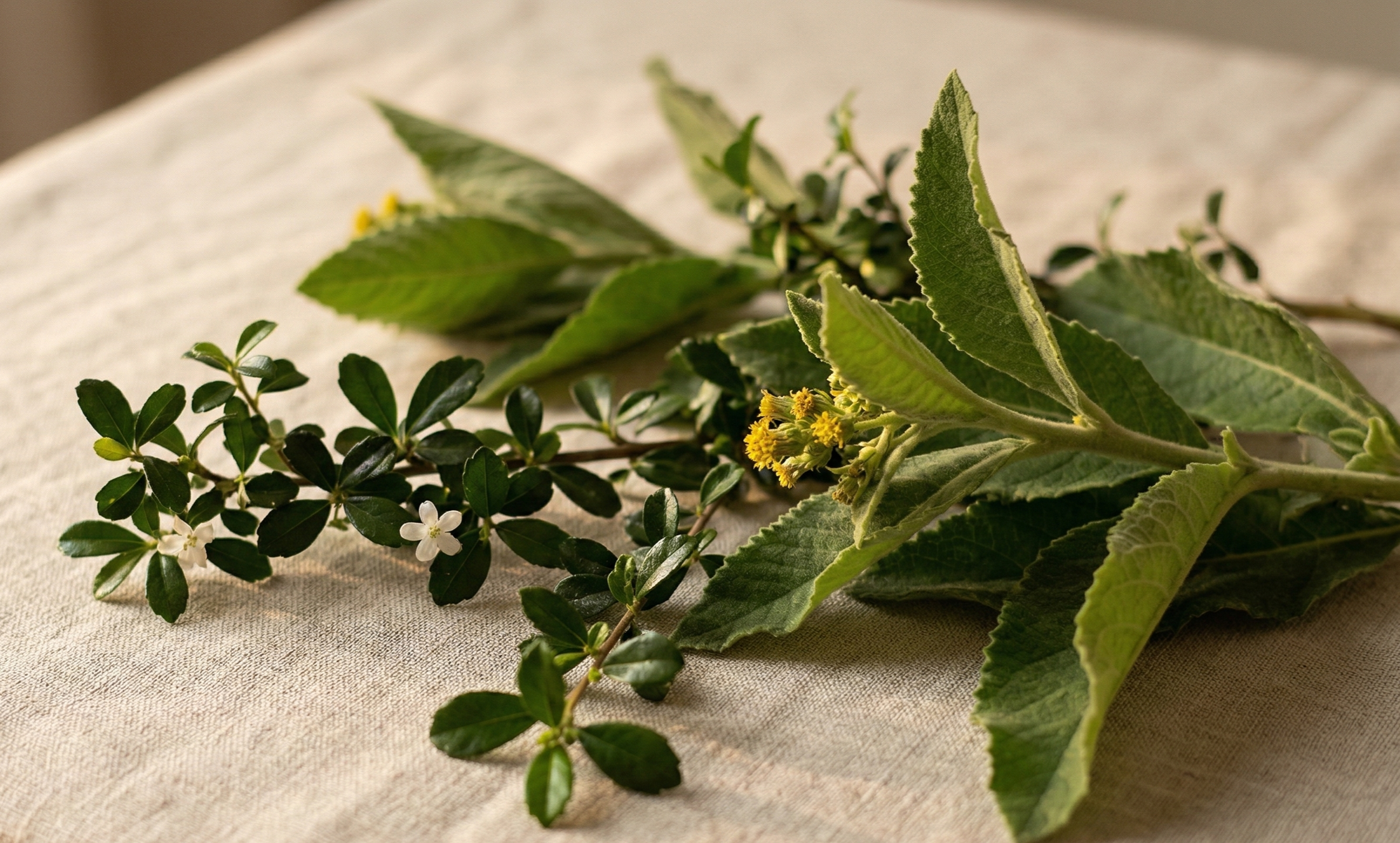
Wound healing and antiseptic care may be the most enduring of bayabas's medicinal applications. A decoction of young bayabas leaves, boiled in water and cooled, has been used for centuries to cleanse cuts, minor wounds, and skin irritations. This practice is so well-documented and consistently effective that the Philippine Department of Health formally recognized bayabas as one of the country's ten traditional medicinal plants, validating what generations of healers had long understood: the leaves carry potent antimicrobial and astringent properties, largely attributed to their concentration of tannins, flavonoids, and phenolic compounds.
Oral care and gum health was another area where bayabas proved indispensable. Before commercial toothpaste reached rural communities, many Filipinos chewed young guava leaves or used a leaf decoction as a mouth rinse to address toothache, bleeding gums, and oral infections. The same tannin-rich profile that made the leaves effective for wound care made them equally useful here, tightening soft tissue and creating an inhospitable environment for bacteria.
Digestive complaints, particularly diarrhea and stomachache, were commonly treated with a tea made from dried bayabas leaves or bark. Traditional knowledge held that the tree's compounds could calm an unsettled stomach and firm loose stools, a use that modern research on guava's antidiarrheal properties has since examined with genuine interest.
Fever and respiratory discomfort also drew on the bayabas tradition. Leaves were sometimes brewed into a medicinal tea, or the steam of a simmering pot was inhaled to ease congestion. In some communities, crushed leaves were applied topically to the forehead as part of broader fever-management care.
The skin, too, was tended with bayabas. Leaf baths, or paligo preparations steeped with guava leaves, were a common remedy for rashes, insect bites, and minor infections. This is a practice that connects directly to Halik's own formulation philosophy: the understanding that what touches the body should work with it, not against it.
Culinary Uses
In the Filipino kitchen, bayabas moves freely between the savory and the sweet, the everyday and the celebratory.
Sinigang sa bayabas is perhaps the most beloved culinary expression of this fruit. Sinigang, the quintessential Filipino sour soup, is traditionally associated with tamarind as its souring agent. But in the Batangas region and in many homes across Luzon, ripe guava is the preferred souring base. The result is a broth that is softer and more fragrant than its tamarind counterpart, with a fruit-forward brightness that pairs beautifully with pork, particularly bone-in cuts whose richness the guava gently cuts through. This regional variation is a reminder that Filipino cuisine, like Filipino culture, is not monolithic; it is a living, regional conversation.
Minatamis na bayabas, guava preserved in sugar syrup, is a staple of the Filipino sweet pantry. The fruit is simmered low and slow until it becomes translucent and deeply fragrant, the syrup thick and jewel-toned. It is eaten with pandesal in the morning, spread over rice cakes, or layered into simple desserts. Like many Filipino preserves, it began as a way to capture abundance before the next harvest and became a taste so specific to childhood that it functions almost as memory itself.
Bayabas jam and jelly followed a similar logic: fruit that ripens quickly and generously, transformed through sugar and patience into something that could be kept, shared, and given as an expression of care. Homemade guava jam remains a common gift brought from the provinces to city relatives.
Fresh bayabas is eaten in two distinct ways, depending on ripeness and preference. The unripe fruit, pale green and firm, is favored for its crunch and tartness, often dipped in salt or a vinegar-based sawsawan. The ripe fruit, yellow-skinned and fragrant, is eaten as is, seeds and all, the flesh giving way to a perfumed sweetness that no imported fruit quite replicates.
In juice form, bayabas has long been a household staple, its vitamin C content part of common knowledge long before nutritional labeling made it official.
Spiritual and Cultural Uses
In the Philippines, the line between the medicinal and the spiritual has never been rigidly drawn. Healing, in the traditional Filipino worldview, was always a matter of the whole person: body, spirit, and relationship to the natural and supernatural world.
Albularyo, the folk healers of the Philippines, incorporated bayabas into their practice in ways that were simultaneously physical and ceremonial. The preparation of a leaf decoction was not simply a botanical procedure; it was often accompanied by prayer, intention, and a specific understanding of timing, when to gather, when to prepare, when to apply. The healer's knowledge was passed down within families and communities, making the bayabas tree part of a lineage of care that connected the living to their ancestors.
Hilot, the Filipino tradition of therapeutic touch and massage, sometimes incorporated bayabas preparations as part of its broader healing approach. A healer practicing hilot might use plant-infused water or oils as part of a session intended to restore balance, relieve pain, or support a woman after childbirth. Bayabas, with its accessibility and its established association with cleansing and healing, found a natural place in this tradition.
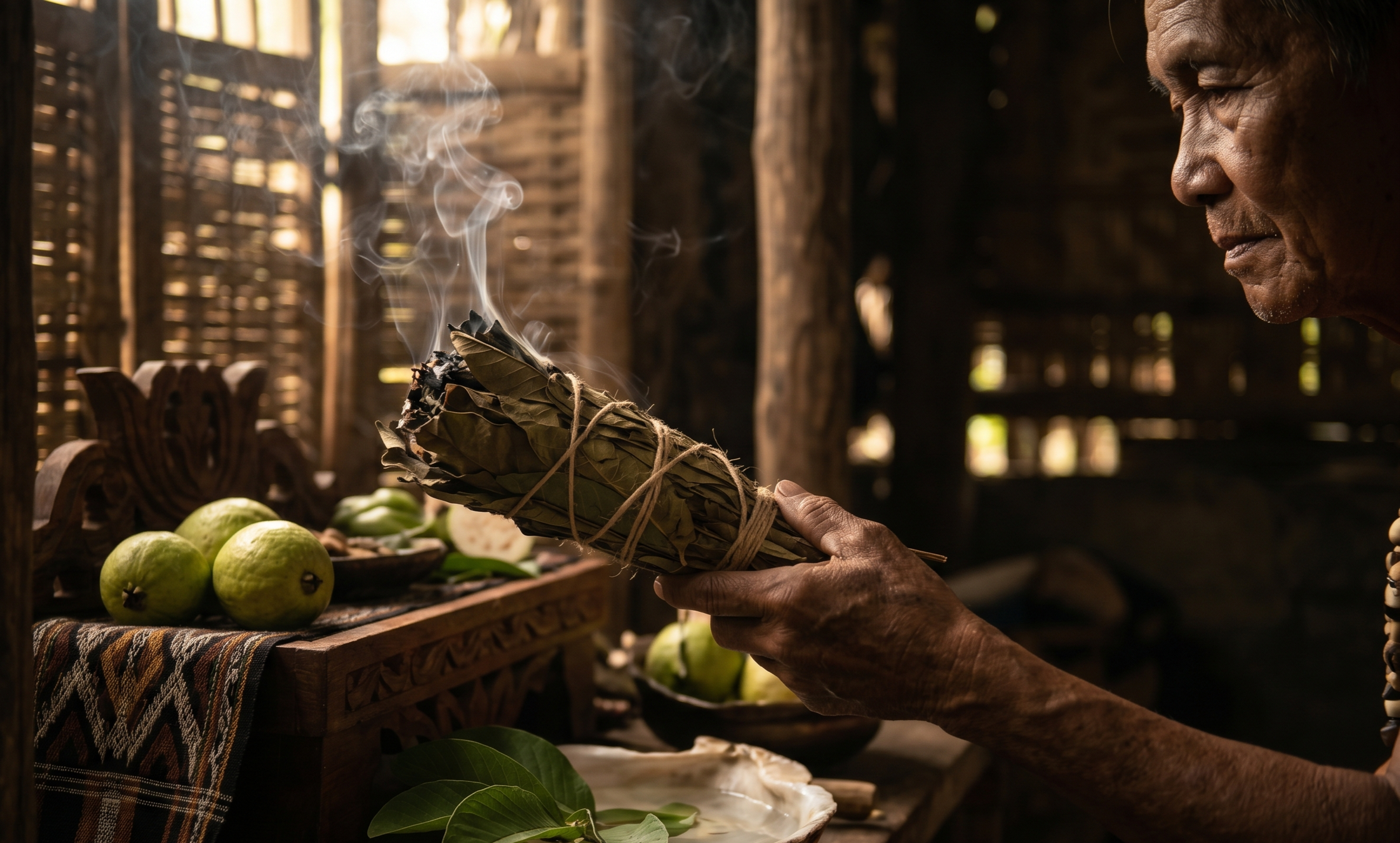
Pausok, the Filipino practice of botanical smoke cleansing, is perhaps the most energetically intentional use of bayabas in the traditional repertoire. Dried guava leaves are burned to produce a fragrant, clearing smoke that is moved through a space or around the body to purify the auric field, release lower-vibration energies, and open a channel to ancestral wisdom. Similar in intention to smudging practices found across many of the world's indigenous traditions, pausok is rooted in the understanding that plants carry a vibrational intelligence, and that smoke is a medium through which that intelligence can travel. Bayabas was not the only plant used in pausok, but its deep association with cleansing, protection, and biological integrity made it a natural choice for practitioners seeking to clear what could not be seen or touched.
Ritual cleansing with botanical preparations extended beyond smoke into water. Baths steeped with medicinal plants, including bayabas, were used in ceremonies intended to purify, protect, or restore. The act of bathing with botanically prepared water was understood not merely as hygiene but as a rite, a way of bringing the body back into alignment with the natural world and the ancestral knowledge embedded in it.
Bayabas as a symbol of abundance and provision is woven into the everyday: the tree that gives fruit without asking, that grows without much tending, that provides shade and medicine and food to whoever lives nearby. In a culture where the concept of damayan, of community care and mutual support, is foundational, a plant that gives so generously without expectation is understood as something more than botanical. It is a kind of grace.
Bayabas and Halik
The Bayabas Nourishing Face Cream carries this lineage forward. Formulated with cold-pressed guava seed oil, an ingredient rich in lycopene, vitamin C, and beta-carotene, it draws on the same plant that Filipino healers recognized as regenerative and restorative long before the language of skincare existed. The cream is an act of translation: taking what lolas knew by practice and offering it in a form suited to the present, without losing what made it meaningful in the first place.
This is what Halik means by heritage. Not nostalgia. Not aesthetics borrowed from a culture for visual effect. Heritage, in this context, is accountability: to the knowledge, to the land, and to the people who stewarded both before we arrived.
FAQ
-
Bayabas is the Tagalog word for guava. It refers to the fruit and tree of the species Psidium guajava, which grows abundantly throughout the Philippines and much of tropical Asia. The word is used across many regional languages in the Philippines, though specific dialects may have their own names.
-
Both. Filipino folk medicine recognized the therapeutic properties of guava leaves centuries before clinical research examined them. Contemporary studies have since identified compounds in guava leaves, including quercetin, tannins, and phenolic acids, that support their traditional uses in wound care, antimicrobial applications, and digestive health. The Philippine Department of Health formally included bayabas in its list of approved traditional herbal medicines. Folk knowledge and scientific inquiry are not in opposition here; the folk knowledge came first.
-
Sinigang sa bayabas is a Filipino sour soup that uses ripe guava as its souring agent rather than the more common tamarind. It is particularly associated with the Batangas region. The guava broth is softer and more floral than tamarind-based sinigang, and it pairs especially well with pork. It is a deeply regional, deeply personal dish, the kind that people from Batangas feel strongly about.
-
Guava seed oil is cold-pressed from the seeds of the guava fruit. It is distinct from preparations made with the leaves or pulp. The seed oil is particularly rich in lycopene, a carotenoid antioxidant, as well as vitamin C and beta-carotene. It is used in skincare for its antioxidant, brightening, and skin-supporting properties. Halik uses cold-pressed guava seed oil in the Bayabas Nourishing Face Cream.
-
Halik features guava seed oil as a key ingredient in the Bayabas Nourishing Face Cream. The product is named directly for the Tagalog word, a deliberate choice to honor the ingredient's Filipino origins and the generations of knowledge that established its value long before it appeared in a skincare context.
-
Pausok is a traditional Filipino smoke cleansing practice in which dried plant material, including guava leaves, is burned to purify a space or person's energetic field. The smoke is used to clear lower-vibration energies, protect the auric field, and invite connection with ancestral wisdom. It is among the more spiritually intentional uses of bayabas in Filipino tradition, and it reflects a broader indigenous understanding that plants carry vibrational properties extending beyond their physical compounds.
-
Access was one factor, but it was not the only one. Filipino folk medicine, like many traditional healing systems, developed a sophisticated, place-based pharmacopoeia because the plants were genuinely effective and because the knowledge of how to use them was carefully cultivated and passed down. Bayabas was not a second-best option; for most of Philippine history, it was the first and most trusted one.
Halik is a clean beauty brand rooted in Filipino heritage and endocrine-safe formulation. The Heritage Series explores the botanical and cultural traditions that inform our ingredient choices and our understanding of what it means to care for the body with intention.
Related Reading