
Sampaguita: Uses, Benefits, and Why It’s Special in Skincare
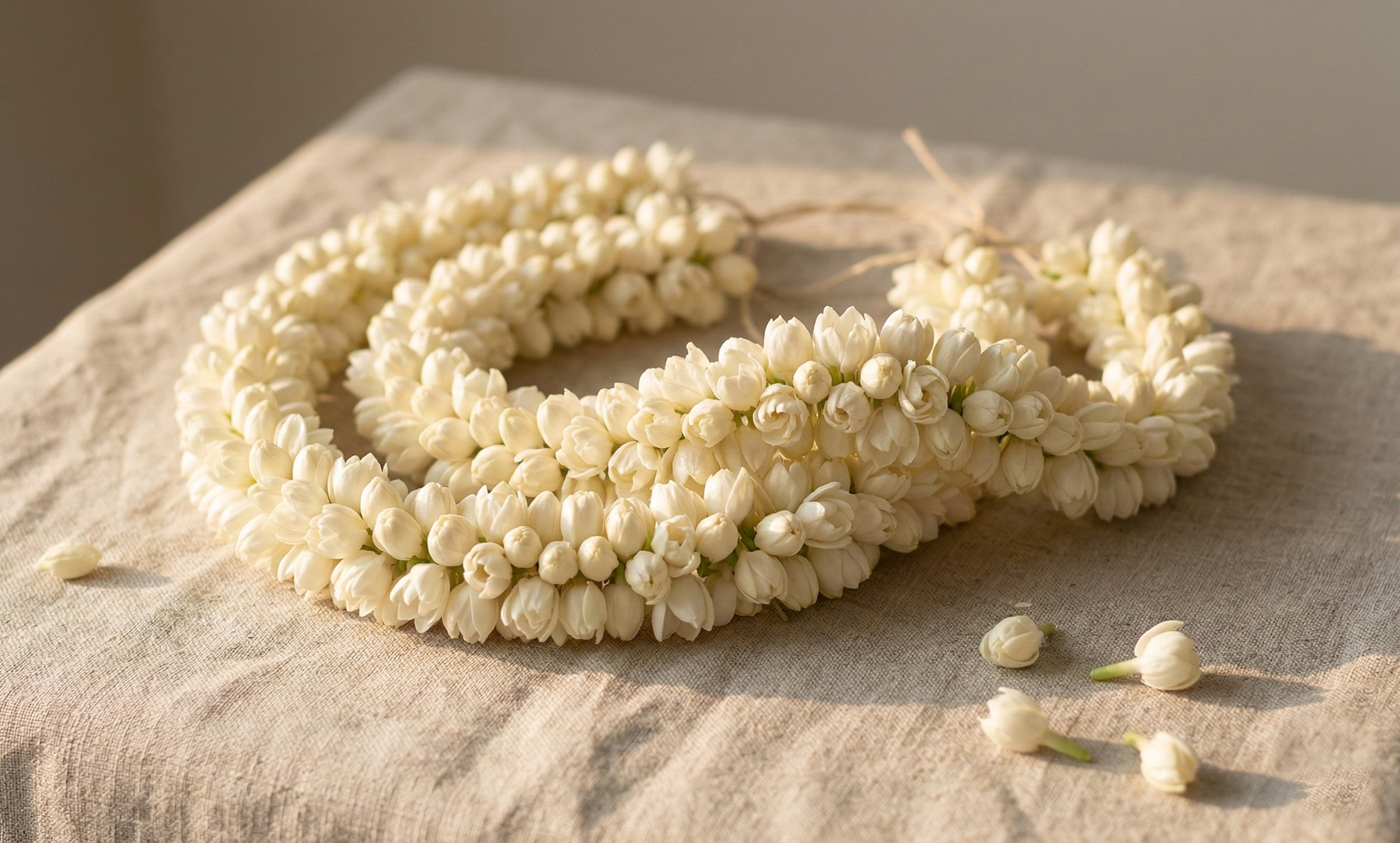
Sampaguita is the national flower of the Philippines, a small, intensely fragrant white blossom scientifically known as jasminum sambac. Beyond its deep cultural roots in Filipino tradition, modern research has identified real antioxidant compounds in jasmine extracts, including phenolic acids and triterpenes shown to reduce oxidative stress in skin cells. Sampaguita is the heart of our Sampaguita Anti-Aging Face Oil, carrying both the weight of heritage and a genuine, studied benefit for skin.
Some flowers are admired. Sampaguita is something closer to trusted. In the Philippines, it has been declared, named, and woven into ceremony for nearly a century, not because it is the showiest bloom, but because its small white petals and unmistakable scent have meant something to generations of Filipinos who came before.
This is the story of sampaguita. And why a flower once strung into garlands now finds its way into a bottle of facial oil.
What Is Sampaguita?
Sampaguita is a small, star-shaped white flower scientifically classified as jasminum sambac, a member of the jasmine family. It was officially declared the national flower of the Philippines on February 1, 1934, by Governor-General Frank Murphy, chosen for its popularity, fragrance, and the role it plays in Filipino legend and tradition.
The name itself carries meaning. Popular tradition holds that "sampaguita" comes from the Tagalog phrase sumpa kita, meaning "I promise you," tied to an old custom in which young couples exchanged sampaguita garlands as a pledge of love, not unlike the exchange of rings today.
The Cultural Significance of Sampaguita
In the Philippines, sampaguita symbolizes purity, humility, and devotion. Its white petals are woven into garlands used in church offerings, welcoming ceremonies, and graduations, and the flower's scent has been part of Filipino daily life for so long that street vendors selling sampaguita garlands outside churches remain a familiar sight across the country to this day.
This cultural weight is part of why sampaguita belongs in Halik's story specifically, not as a borrowed botanical trend, but as a flower with its own century of meaning in the country our founder calls her roots.
The Science, Simply Told
01. Real Antioxidant Compounds, Now Studied
A peer-reviewed study examined an extract derived from Jasminum sambac and found it contains phenolic acid derivatives, lignans, and triterpenes, compounds known for their ability to scavenge free radicals, the unstable molecules that contribute to skin aging when left unchecked. In testing on skin cells, the extract reduced oxidative stress and helped limit the formation of advanced glycation end products, a process linked to skin aging through stiffened collagen.
This matters because sampaguita's reputation in skincare has historically rested on fragrance and tradition alone. Modern research is beginning to show there is real chemistry behind the flower, not just scent.
02. Support for Collagen in Skin's Structure
The same study found that the jasmine extract increased type I collagen production in skin tissue, the structural protein responsible for skin's firmness and resilience. As collagen naturally declines with age, ingredients that support its production are of particular interest in formulations designed for aging skin.
This research focused on a specific cell-culture extract studied under laboratory conditions, not a direct study of Halik's formulation, so it speaks to the species' potential rather than a guaranteed result from any one product. Still, it gives sampaguita's place in an anti-aging formula a real scientific basis.Aromatherapy Benefits
The natural scent of sampaguita is known for its uplifting and relaxing qualities. This sensory aspect can transform skincare into a more mindful ritual.
03. A Calming Aromatic Profile
Beyond its measurable compounds, sampaguita carries the same soothing, calming aromatic qualities widely associated with jasmine more broadly. This sensory quality is part of why facial oils built around sampaguita tend to double as a moment of ritual, not just a treatment step. The scent itself becomes part of what makes the application feel restorative.
Sampaguita vs. Other Jasmine Varieties
Jasmine spans many species, and not all of them carry the same cultural or chemical profile. Jasminum sambac, the species behind sampaguita, is distinct from Jasminum grandiflorum, the variety more commonly used in French perfumery. Sampaguita's scent tends to be lighter and sweeter, and its cultural identity is rooted specifically in the Philippines rather than the broader jasmine family.
How Halik Uses Sampaguita
At Halik, sampaguita plays a central role in our Sampaguita Anti-Aging Face Oil. This facial oil blends sampaguita with other botanical ingredients chosen for their ability to support healthy, resilient skin, carrying forward the same flower that has scented Filipino homes, churches, and celebrations for generations.
How to Use Sampaguita Oil in a Ritual
Facial oils containing sampaguita are typically used as the final step in an evening ritual, after the skin has been cleansed and prepared to receive it.
A Simple Night Ritual
Cleanse skin
Apply toner or essence
Apply moisturizer
Massage a few drops of Sampaguita Anti-Aging Face Oil into skin
The oil helps seal in hydration from the steps before it while delivering its own botanical benefits.
FAQ
Is sampaguita good for sensitive skin?
Jasmine-based botanicals are generally considered gentle, and most skin types tolerate them well. As with any new botanical, a patch test is a good first step for sensitive skin.
Does sampaguita help with aging skin?
Research on Jasminum sambac extract has found antioxidant compounds that reduce oxidative stress and support collagen production in skin cells, both relevant to the visible signs of aging. This research was conducted on the species generally, not Halik's specific formulation.
Does sampaguita smell like jasmine?
Yes. Sampaguita is a type of jasmine, with a sweet, delicate floral scent that is often described as lighter than other jasmine varieties.
Why is sampaguita the national flower of the Philippines?
Sampaguita was declared the national flower in 1934 for its popularity, fragrance, and deep ties to Filipino legend and tradition, qualities that still hold true today.
A Flower with Beauty and Meaning
Sampaguita represents more than just a fragrance. It embodies cultural heritage, natural beauty, and botanical skincare tradition. By incorporating this cherished flower into modern formulations, Halik celebrates both nature and the rituals of island-inspired skincare.
Sources
PMC (National Library of Medicine) — Jasminum sambac Cell Extract as Antioxidant Booster against Skin Aging – https://pmc.ncbi.nlm.nih.gov/articles/PMC9774971/
National Museum of the Philippines — Philippine National Flower: Sampaguita – https://www.nationalmuseum.gov.ph/2021/11/10/philippine-national-flower-sampaguita/
Related Reading


About Halik
Halik is a clean, premium skincare brand inspired by Filipino botanicals and the healing power of natural ingredients. All Halik products are formulated without parabens, PEGs, phthalates, silicones, sulfates and synthetic fragrances.
