
Ingredient Spotlight: Cupuaçu Butter – Science, Uses & Why We Love It
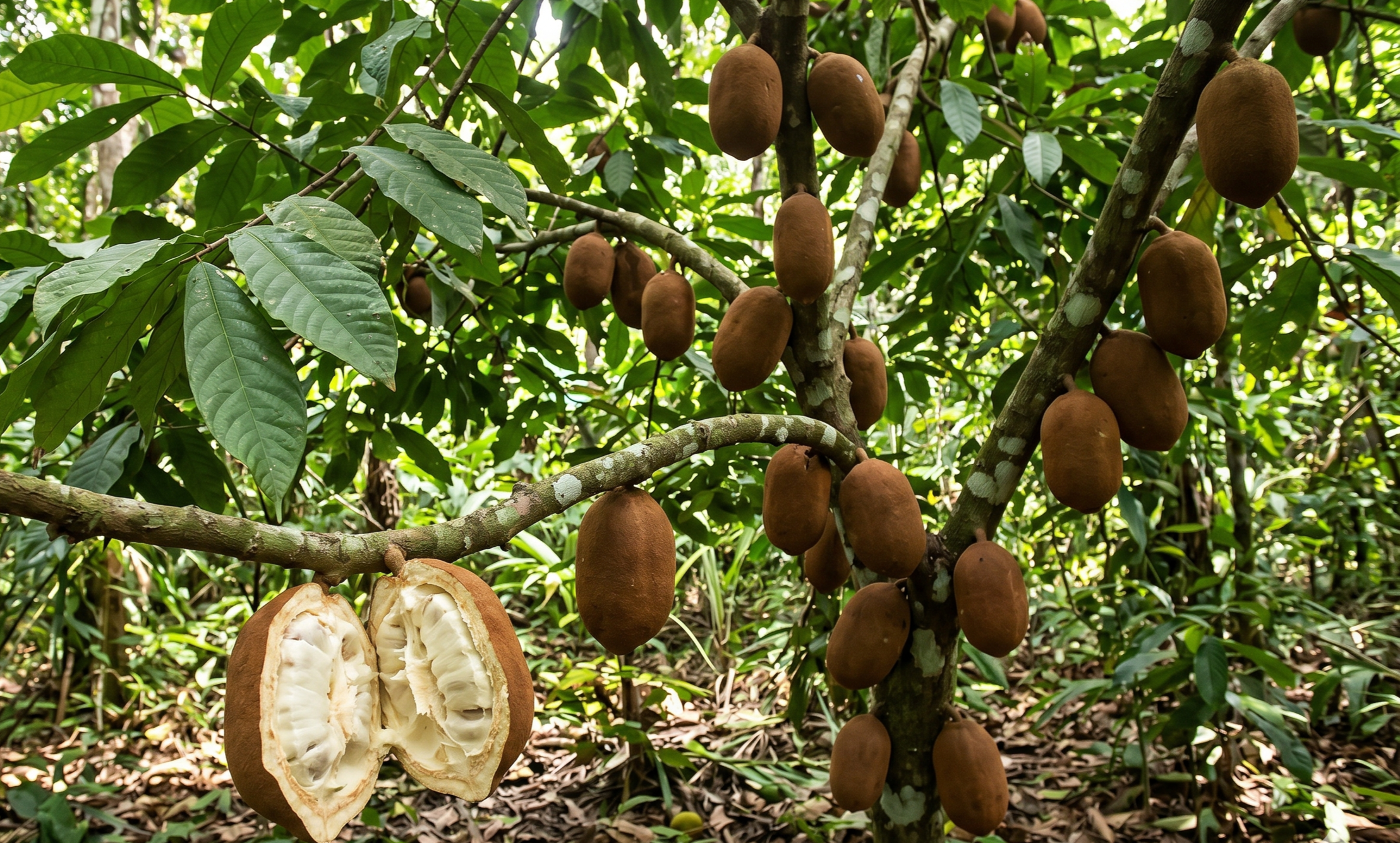
Cupuaçu butter is a plant-based butter cold-pressed from the seeds of the Amazonian cupuaçu fruit (theobroma grandiflorum), a botanical cousin of cacao. It is best known for an unusually high water-binding capacity, a fatty acid profile rich in oleic and stearic acid, and a dense concentration of phytosterols and polyphenols that support the skin barrier and long-term elasticity. Because it absorbs quickly and never leaves a greasy film, it has become a hero butter in premium body care, prized for delivering deep, lasting hydration without weight.
Some botanicals announce themselves with fragrance or color. Cupuaçu announces itself with texture: a butter so light it seems to disappear into skin on contact, and so absorbent it can hold many times its own weight in water. Sourced from the Amazon and used for generations by the communities who first understood its value, cupuaçu is the kind of ingredient that earns its reputation slowly, through results rather than marketing.
This is the story of cupuaçu butter. And why it we use it in our Paradise Whipped Body Butter, Island Body Lotion and Bayabas Nourishing Face Cream.
What Is Cupuaçu Butter?
Cupuaçu butter comes from the seeds of theobroma grandiflorum, a tree native to the Amazon rainforest and a close botanical relative of the cacao tree. After harvesting, the seeds are cold-pressed into a soft, pale butter that melts at close to body temperature, which is why it glides onto skin rather than sitting on top of it.
Indigenous communities across the Amazon basin have used cupuaçu for generations, both as food and as a skin remedy for sun exposure and dryness. Modern formulators have simply caught up to what that tradition already knew.
Why We Chose It
Halik formulates around three questions for every ingredient: is it bio-compatible, is it endocrine-safe, and does it genuinely restore rather than mask. Cupuaçu butter answers all three. It requires no synthetic stabilizers to perform, it carries no known endocrine-disrupting compounds, and its hydration benefits are structural rather than cosmetic; they come from how the butter interacts with the skin barrier itself.
When we built Paradise Whipped Body Butter, we wanted a butter that could anchor a full-body ritual without ever feeling heavy. Cupuaçu was the only answer.
The Science, Simply Told
01. An Exceptional Capacity to Bind Water
Cupuaçu butter's defining trait is its water absorption capacity. Laboratory comparisons have found it can hold several times its own weight in water, far surpassing shea butter and even lanolin, the animal-derived emollient it is often used to replace. This is why cupuaçu butter has earned the nickname "vegetable lanolin" among formulators.
In practical terms, this means cupuaçu does not just sit on the skin's surface the way a purely occlusive butter does. It draws moisture in and holds it at the barrier, which is part of why skin treated with cupuaçu tends to stay hydrated longer than skin treated with most other plant butters alone.
02. A Fatty Acid Profile Built for the Skin Barrier
Cupuaçu butter is rich in oleic acid and stearic acid, two fatty acids that play different but complementary roles. Oleic acid softens and improves absorption, helping the butter melt into skin rather than sit on it. Stearic acid helps reinforce the skin's barrier and supports its ability to hold onto moisture once it is there.
Together, this fatty acid profile is part of why cupuaçu feels rich without feeling greasy. The butter delivers real emollience, but it absorbs at a pace that leaves skin soft rather than coated.
03. Phytosterols That Support Elasticity
Cupuaçu butter carries a notable concentration of phytosterols, including beta-sitosterol. These plant sterols are structurally similar to compounds already present in skin, which allows them to integrate easily into the barrier and support its function from within.
Phytosterols have long been associated with improved skin elasticity and resilience, particularly in skin that has become dry, dehydrated, or environmentally stressed. This is one reason cupuaçu is often recommended for skin that needs more than surface-level moisture; it works at the level of structure, not just sensation.
04. Polyphenols for Antioxidant Protection
Beyond its fatty acids and sterols, cupuaçu butter contains polyphenol antioxidants that help defend skin against everyday environmental stress. Antioxidants work by neutralizing free radicals, the unstable molecules generated by sun exposure, pollution, and ordinary metabolic processes that contribute to premature aging over time.
This antioxidant content does not replace a dedicated sun care practice. But it does mean cupuaçu is doing quiet, background work every time it is applied, supporting skin's resilience rather than only its softness.
05. Endocrine Integrity, Preserved
Many conventional body lotions rely on synthetic emulsifiers and penetration enhancers to achieve the texture cupuaçu delivers naturally. Cupuaçu butter requires none of that. It is inherently stable, naturally protected by its own antioxidant content, and structurally suited to skin absorption without synthetic intervention.
For a brand built on endocrine safety, that is not a small detail. It is the entire point.
How Cupuaçu Compares to Other Plant Butters
Cupuaçu Butter vs. Shea Butter
Shea butter is deeply nourishing and remains one of our favorite botanicals, but cupuaçu's water-binding capacity gives it an edge specifically for long-lasting hydration. Where shea excels at sealing moisture in, cupuaçu actively draws moisture to the skin first.
Cupuaçu Butter vs. Cocoa Butter
Cocoa butter is firmer and highly occlusive, forming a protective layer on the skin's surface. Cupuaçu has a lower melting point and a lighter feel, which is why it absorbs faster and leaves less of a film behind.
The Ritual of Paradise
Paradise Whipped Body Butter was never meant to be a quick swipe of lotion. It is built to be a full-body ritual, the kind of moment where care is the point, not just the outcome.
Cupuaçu sits at the center of that ritual because it does the kind of work that compounds. It is not designed for one dramatic application. It is designed for the tenth, the fiftieth, the hundredth, each one restoring a little more of what the skin lost to the day before it.
A kiss from Mother Earth. Held, this time, in a butter that knows how to hold onto her.
FAQ
-
Cupuaçu butter is used in body butters, lotions, and hair treatments to provide deep, lasting hydration. Its high water absorption capacity and rich fatty acid profile make it especially effective for dry, dehydrated, or environmentally stressed skin.
-
Both are valuable botanicals, but cupuaçu is generally considered more hydrating because of its exceptional water-binding capacity. Shea butter is more occlusive and seals moisture in, while cupuaçu actively draws moisture to the skin.
-
Yes. Its combination of oleic and stearic acid, phytosterols, and water-binding capacity makes it especially well-suited to restoring moisture in dry or compromised skin.
-
Cupuaçu absorbs quickly and is generally well tolerated, including by those with normal to dry skin types. As with any rich butter, those with very oily or acne-prone skin may want to patch test first.
-
Yes. Cupuaçu butter is a naturally occurring botanical with no known endocrine-disrupting properties, and it requires no synthetic stabilizers to remain stable in formulation.
-
Cupuaçu butter is cold-pressed from the seeds of Theobroma grandiflorum, a tree native to the Amazon rainforest and a botanical relative of cacao.
Discover Halik products with cupuaçu butter:
Related Reading



About Halik
Halik is a clean skincare brand inspired by Filipino botanicals and the healing power of natural ingredients.
All Halik products are formulated without parabens, PEGs, phthalates, silicones, sulfates and synthetic fragrances.
