
Why Calendula Is One of the Best Ingredients for Sensitive Skin
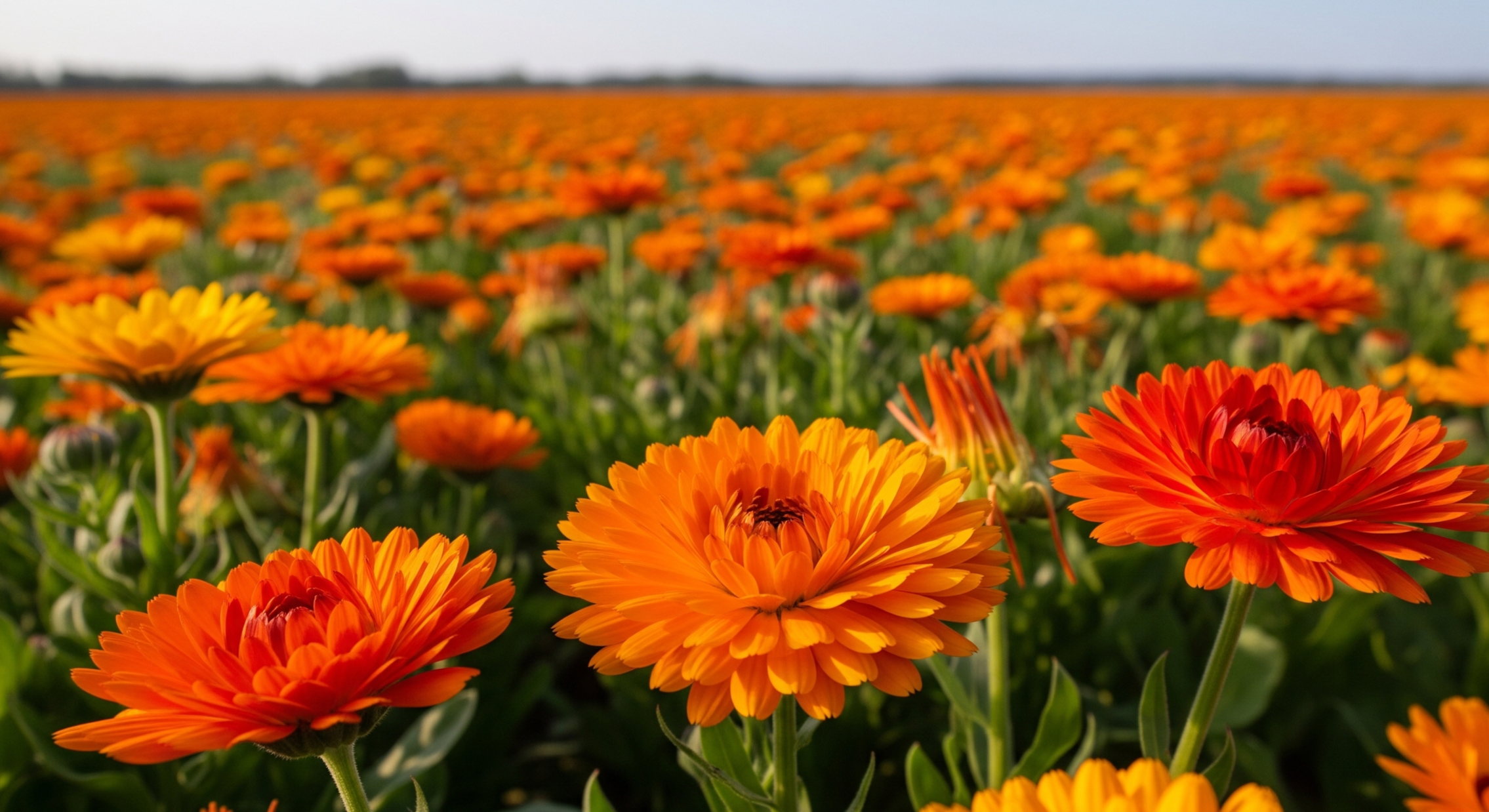
Calendula (calendula officinalis) is a marigold-derived botanical shown in research to reduce inflammatory markers, support wound healing, and provide antioxidant protection against UV-related oxidative stress. It is widely used in cleansing balms and formulas for sensitive skin because it calms redness without disrupting the skin barrier. People with ragweed or daisy allergies should patch test first, since calendula belongs to the same plant family.
Calendula calms redness, strengthens the skin barrier, and supports gentle cleansing, backed by research into its anti-inflammatory, wound-healing compounds.
A marigold does not look like a medicine. But calendula, the bright orange bloom of calendula officinalis, has held a place in herbal cabinets since at least the 12th century. Healers reached for it to calm burns, close wounds, and settle irritated skin, long before a lab could explain why. Today, that same flower shows up in facial cleansers, balms, and baby care for one simple reason. It works with sensitive skin instead of against it.
At Halik, calendula grows close to home. We cold-infuse our own oil in-house, then build it into the first step of a mindful double cleanse. Here is what the science says about why this ingredient earns its place.c
01. What Calendula Actually Is
Calendula comes from the petals of the pot marigold, a plant in the daisy family native to the Mediterranean. Skincare formulas draw on it in a few forms, most commonly: Calendula-infused oils, made by steeping the petals in a carrier oil Flower extracts, concentrated from the plant's water- or oil-soluble compounds Dried petals or tinctures, used in traditional and DIY preparations Each form carries a share of the plant's flavonoids, carotenoids, and triterpenoids, the compounds responsible for most of its skin benefits.
02. The Anti-Inflammatory and Wound-Support Science
Calendula's reputation for calming skin is not just folklore. A 2023 review in the journal Plants found that calendula extract reduces key inflammatory markers, including the cytokines IL-6, IL-1β, and TNF-alpha, and lowers inflammation in skin cells exposed to irritation. Older animal studies back this up at the tissue level. Research published in Evidence-Based Complementary and Alternative Medicine found that calendula extract supported new blood vessel formation and tissue repair in wound models, alongside measurable antibacterial activity. Human data points the same direction. One clinical study cited in a broader review found that a calendula ointment sped healing of venous leg ulcers compared to a control treatment, with a statistically significant reduction in wound size after three weeks. None of this makes calendula a treatment for a diagnosed skin condition. But it explains why the plant has held its place in gentle, barrier-focused formulas for so long.
03. Antioxidant Protection Against Everyday Stressors
Skin faces a steady drip of oxidative stress from sun exposure, pollution, and daily life. A 2012 study on calendula essential oil found that a cream containing the extract reduced markers of oxidative damage in skin tissue exposed to UV-B radiation, while boosting the skin's own antioxidant defenses, including catalase and glutathione levels. That antioxidant activity is one reason calendula is often paired with other barrier-supportive ingredients rather than used to treat active sun damage after the fact.
04. Where It Fits in a Sensitive-Skin Cleanse
Cleansing is often the step that leaves sensitive skin feeling tight, dry, or reactive, especially with formulas built around harsher surfactants. Calendula's anti-inflammatory and skin-conditioning properties make it a natural fit for the first step of a cleanse, where it can help offset that stripped-down feeling without adding weight or residue. This is the role it plays in our own Calendula Facial Cleansing Balm, where cold-infused calendula oil is joined by apricot kernel and geranium oil to dissolve makeup and impurities while the skin barrier stays intact.
05. A Note on Patch Testing
Calendula belongs to the same plant family as ragweed, daisies, and chrysanthemums, and a small number of people are sensitized to plants in this family. Documented case reports describe allergic contact reactions to calendula, though they remain uncommon relative to its long history of use. Anyone with a known ragweed or daisy allergy should patch test a new calendula product on a small area of skin before applying it to the face.
Why We Chose Calendula
Calendula fits how we formulate at Halik for three reasons. It is bio-compatible, working with the skin's own repair processes rather than overriding them. It is endocrine-safe, with no evidence linking it to hormonal disruption at the concentrations used in skincare. And it is genuinely restorative, supported by research that goes beyond marketing language into measurable effects on inflammation and tissue repair. That combination is rare enough that we grow and infuse our own supply rather than sourcing it pre-made.
Calendula vs. Chamomile: What's the Difference
Calendula and chamomile show up in the same conversation so often that people assume they are interchangeable. They are not. Both calm irritated skin, but they lean on different chemistry to do it.
In practice, the two are often paired rather than chosen one over the other, since chamomile's fast calming effect and calendula's longer-term repair support cover different parts of what sensitive skin needs.
The Ritual
Sensitive skin does not need to be handled with more product. It needs to be handled with the right one. Calendula, grown, infused, and folded into a formula that respects the skin barrier from the very first step, is that kind of ingredient. A kiss from Mother Earth, and a quiet act of care that shows up every time you wash your face.
FAQ
-
Calendula helps calm redness and irritation, supports the skin's protective barrier, and provides antioxidant protection against everyday environmental stressors like UV exposure.
-
Yes, for most people. Calendula is widely used in formulas designed for sensitive and reactive skin because of its anti-inflammatory, skin-conditioning properties. People with known ragweed or daisy allergies should patch test first, since calendula belongs to the same plant family.
-
Calendula and chamomile both calm irritated skin but work differently. Chamomile, rich in bisabolol and chamazulene, tends to bring faster relief from redness and itch. Calendula, rich in triterpenoids and flavonoids, supports longer-term tissue repair and barrier health.
-
Yes. Calendula is often included in cleansing formulas, including balms and oils, to offset the dryness or tightness that cleansing can leave behind.
Sources
An Updated Review on the Multifaceted Therapeutic Potential of Calendula officinalis L., PMC, National Library of Medicine
Wound Healing and Anti-Inflammatory Effect in Animal Models of Calendula officinalis L. Growing in Brazil, PMC, National Library of Medicine
Effects of Calendula Essential Oil-Based Cream on Biochemical Parameters of Skin of Albino Rats against Ultraviolet B Radiation, PMC, National Library of Medicine
A Review on Phytochemistry and Ethnopharmacological Aspects of Genus Calendula, PMC, National Library of Medicine
This article is for educational purposes and does not replace advice from a dermatologist or healthcare provider. If you have a known plant allergy or an active skin condition, consult a professional before introducing a new botanical ingredient.
Related Reading

About Halik
Halik is a clean luxury skincare brand inspired by Filipino botanicals and the healing power of natural ingredients.
All Halik products are formulated without harmful chemicals, parabens, phthalates, sulfates and synthetic fragrances.
