The Clean Pet Care Movement: Why Pet Grooming Ingredients Matter
Dog skin is thinner, more alkaline, and far more reactive than human skin, yet pet shampoo and grooming products face less regulatory oversight than the cosmetics we put on our own bodies. Colloidal oatmeal, neem, and cedarwood have real, research-backed roles to play in a dog's coat and skin health, while sulfates, synthetic fragrance, and concentrated essential oils carry outsized risk on a body built so differently from ours. Clean pet care is not a marketing trend. It is a direct response to a genuine gap in how these products are made and checked.
A dog leans into a bath the same way it leans into everything else, all in, no half measures. The tail thumps against the tub. The nose works overtime, reading every bottle on the shelf before a single drop touches fur. It is easy to grab whatever smells good and lather away, especially after a muddy hike or a skunk encounter gone wrong. But a dog's skin is not a smaller, furrier version of a human's. It is a different organ entirely, built on a different chemistry, and it responds to ingredients in ways that surprise most pet parents the first time they learn it.
The Skin Underneath the Coat Is Not Like Ours
Start with pH. Human skin sits in a slightly acidic range, generally between 4.5 and 5.5, and that acidity is part of what keeps bacteria and fungi in check. Dog skin runs in the opposite direction. Dogs carry a more alkaline skin pH, typically somewhere between 6.2 and 7.4, depending on breed and the individual animal. That gap looks small on paper. On skin, it is the difference between a barrier that holds and one that breaks down.
Thickness matters just as much as chemistry. A dog's epidermis runs only three to five cells thick, compared to ten to fifteen cells in human skin. A layer that thin has far less room for error. A shampoo formulated for human acidity, even a gentle one, can strip natural oils and leave a dog's thinner barrier exposed to the bacteria and yeast that live on skin as a matter of course. This is why a shampoo built for a person, however mild it claims to be, was never built for a dog.
The Oversight Gap Most Pet Parents Don't Know About
Here is the part that surprises people. Human cosmetics already face fairly light federal oversight, since the law does not require premarket approval for most ingredients. Pet grooming products sit under even less scrutiny. The federal definition of a cosmetic applies only to products intended for human use, so anything marketed for cleansing or grooming an animal falls outside that regulatory category entirely. A dog shampoo that makes no flea or tick claim is unlikely to face any federal review at all, unless it is classified as a drug, a food, or a pesticide.
That gap is not a reason for alarm. It is a reason to read labels the way you would for your own skin, maybe more carefully. Nobody is checking this work before it reaches the shelf. The formulator is the only line of defense, and the ingredients they choose carry more weight than most pet parents realize.
Ingredients Doing Real Work
Colloidal oatmeal has more research behind it than almost any other botanical used on pet skin. Finely milled oats disperse in water to release beta-glucans, lipids, proteins, and polyphenols that form a light, protective film on the skin. That film calms redness, holds moisture in, and supports a barrier that is already working overtime against a lower cell count. It is one of the few ingredients where the science and the folk reputation actually agree.
Neem carries a longer, more complicated story. It has real insect-deterrent properties, drawn from a compound called azadirachtin that disrupts feeding and development in fleas and ticks. But the research is honest about its limits. Trials comparing neem oil against commercial acaricides found neem produced tick mortality between roughly 73 and 82 percent, while fipronil and amitraz reached 99 percent or higher. Neem belongs in a coat care formula as a gentle, ongoing layer of support. It is not a replacement for a veterinarian-guided flea and tick plan, and no honest brand should suggest otherwise.
Cedarwood oil works on similar terms. Certain varieties, particularly Atlas and Virginia cedarwood, show up in pet-safe repellent formulas when properly diluted, though dilution and application method both matter enormously. The scent masks a dog's presence to biting insects rather than eliminating them outright, which is why it reads on a label as a repellent, not a treatment or a cure.
Chamomile brings a gentler, more universal benefit. It calms redness on contact and works well on the sensitive folds, ears, and paws that take the most daily wear. Its safety margin is wide, which is part of why it shows up so often in wipes and leave-in sprays meant for frequent use between baths.
Where Caution Matters Most
Not every plant-derived ingredient is automatically safer, and this is where a clean pet brand has to do real work rather than lean on a green label. Essential oils are the clearest example. Reports of essential oil toxicity in dogs come almost entirely from concentrated, undiluted oils, not from the very low concentrations found in properly formulated shampoos. Tea tree oil is the most commonly cited offender, and it has no place in a pet formula at meaningful concentration, full stop. The lesson is not that botanicals are risky. It is that concentration and formulation expertise separate a genuinely gentle product from a well-marketed one.
Sulfates deserve the same nuance. A harsh cleansing agent strips the oils a dog's thin epidermis depends on, and that disruption compounds against an already more fragile barrier. Synthetic fragrance carries similar risk, since a dog's nose is thousands of times more sensitive than a human's and heavy scent loads can cause more irritation than they mask.
A Ritual Worth Extending
Pet parents are catching on. The global pet grooming market is projected to grow from roughly 19.5 billion dollars in 2026 to 46.7 billion dollars by 2036, a pace driven in large part by demand for gentler, skin-conscious formulas. A recent American Kennel Club survey found that 68 percent of pet owners now actively seek out natural grooming products for their animals. The care people bring to their own skin is extending, finally, to the animals who share their homes.
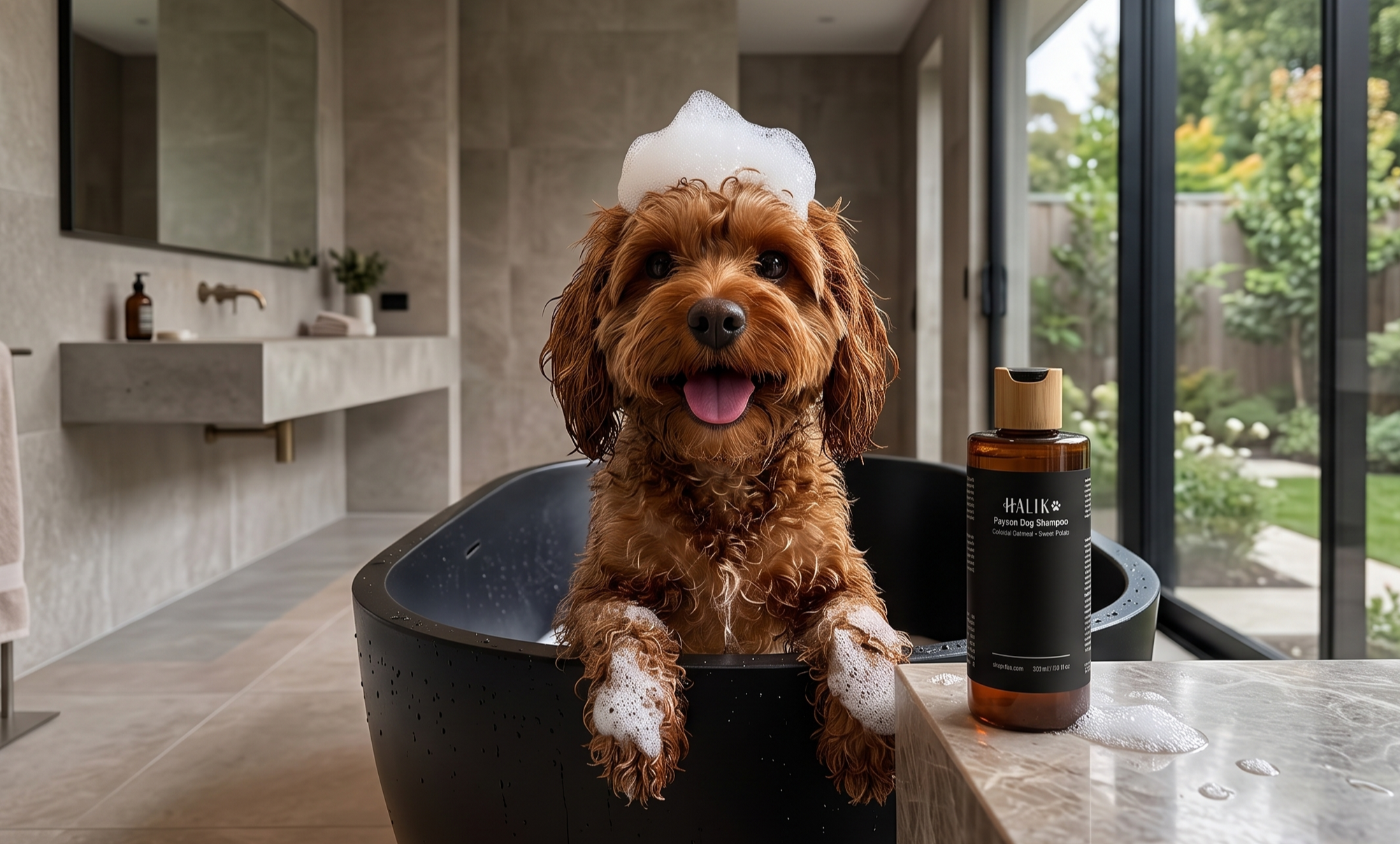
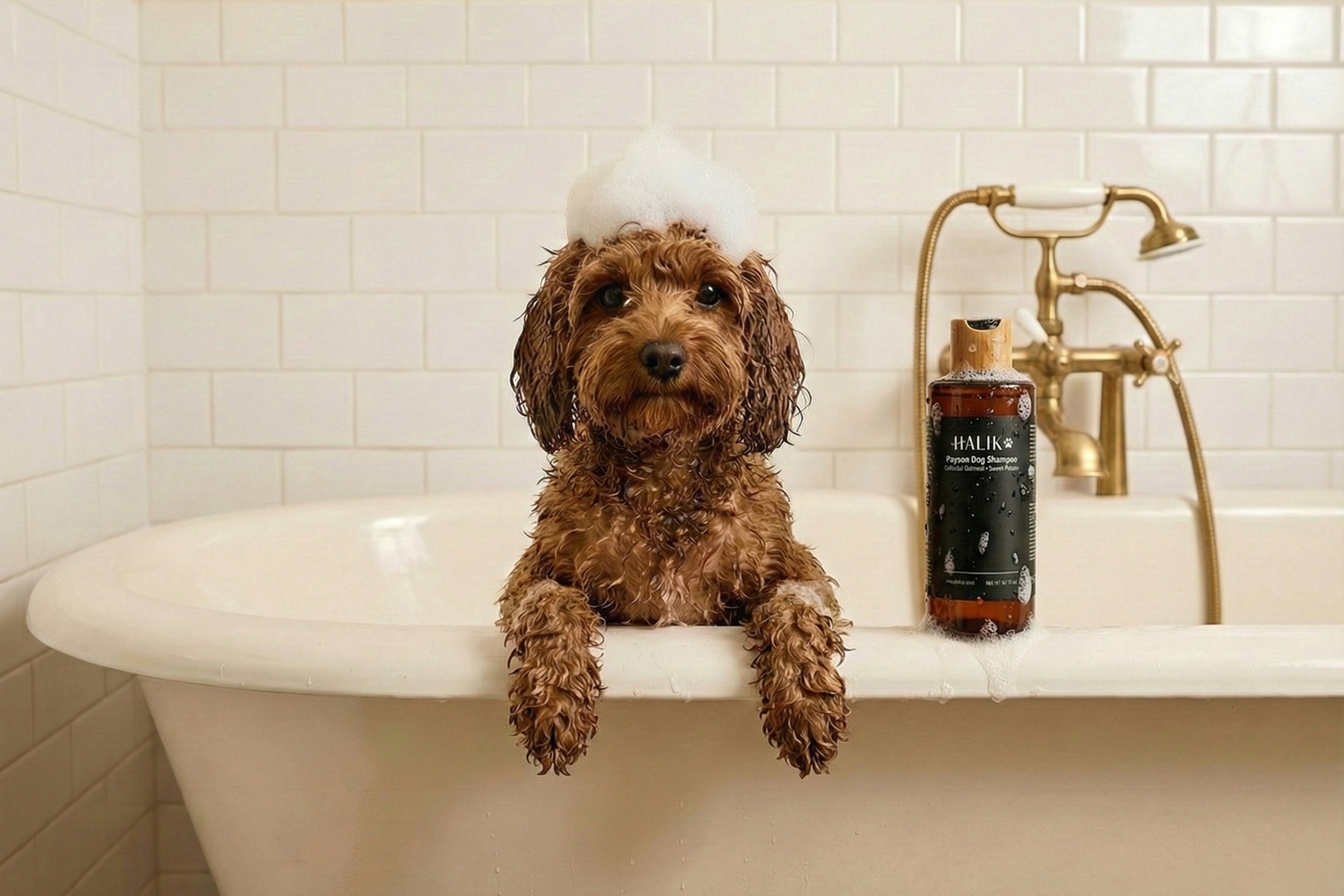
That extension shows up across a full coat care lineup built the same way. Payson Dog Shampoo leans on colloidal oatmeal and neem to cleanse without stripping. Harry Deodorizing & Detangling Spray uses cedarwood and lavender between baths to freshen and detangle without synthetic fragrance. Charlie Paw & Snout Balm turns to calendula and rosemary for the paw pads and noses that meet pavement, salt, and heat every day. Bernie Grooming Wipes bring chamomile and cedarwood to the folds, ears, and tear-stained corners that need daily attention but not a full bath. Every formula answers the same underlying question: what does this specific patch of skin actually need, given how differently it is built from ours.
FAQ
-
Human shampoo is formulated for skin that sits in a more acidic pH range, generally 4.5 to 5.5. Dog skin runs more alkaline, typically 6.2 to 7.4, and is also much thinner. Using a human formula on a dog can strip the skin's natural oils and disrupt a barrier that already has far less margin for error.
-
They offer real, research-supported repellent benefits, but studies show they generally fall short of the near-total efficacy seen with veterinary-grade acaricides. They work best as a supportive layer of daily care alongside a vet-guided flea and tick prevention plan, not as a standalone replacement.
-
No. Federal cosmetic regulations apply only to products intended for human use. Pet shampoos and grooming aids fall outside that category entirely unless they make drug, food, or pesticide claims, which means formulators carry more responsibility for ingredient safety than the law requires.
-
It's genuinely research-supported. Colloidal oatmeal contains beta-glucans, lipids, proteins, and polyphenols that form a protective film on skin, calming irritation and supporting the moisture barrier. It's one of the most consistently validated ingredients in topical pet skin care.
-
Concentration is what matters most. Reports of serious essential oil toxicity in dogs come almost entirely from exposure to concentrated, undiluted oils rather than the low concentrations used in properly formulated shampoos or sprays. Tea tree oil in particular should never appear at meaningful concentration in a pet product.
Sources: Vetwest Animal Hospitals; Dorwest; PubMed (Rhipicephalus sanguineus neem efficacy study); Pet Poison Helpline; PetMD; U.S. Food and Drug Administration; American Pet Products Association; Future Market Insights; American Kennel Club consumer survey data.
This article is for general educational purposes and is not a substitute for veterinary care. If your dog shows signs of skin irritation, infection, or a flea or tick infestation, consult your veterinarian.
About Halik
Halik is a clean, premium skincare brand inspired by Filipino botanicals and the healing power of natural ingredients. All Halik products are formulated without parabens, PEGs, phthalates, silicones, sulfates and synthetic fragrances.
Related Reading