
Ingredient Spotlight: Guava Seed Oil – The Botanical Secret Behind the Bayabas Nourishing Face Cream
Guava seed oil, cold-pressed from the seeds of psidium guajava (known as bayabas in Tagalog), is a lightweight botanical oil prized in clean beauty for its high linoleic acid content (60–70%), antioxidant density (Vitamin C precursors, Vitamin E, lycopene), and non-comedogenic profile. It supports the skin barrier, promotes a more even tone over time, and contains no known endocrine-disrupting compounds, making it a key ingredient in Halik's Bayabas Nourishing Face Cream, a clean, heritage-rooted formulation.
Some of the most powerful gifts from the earth arrive in the smallest packages. Nestled inside the sun-ripened fruit of the guava tree – known as bayabas in Tagalog – are seeds so dense with restorative potential that the beauty world is only beginning to understand what traditional Filipino culture has long held sacred: this plant is extraordinary.
This is the story of guava seed oil. And why it is the heart of our Bayabas Nourishing Face Cream.
What Is Guava Seed Oil?
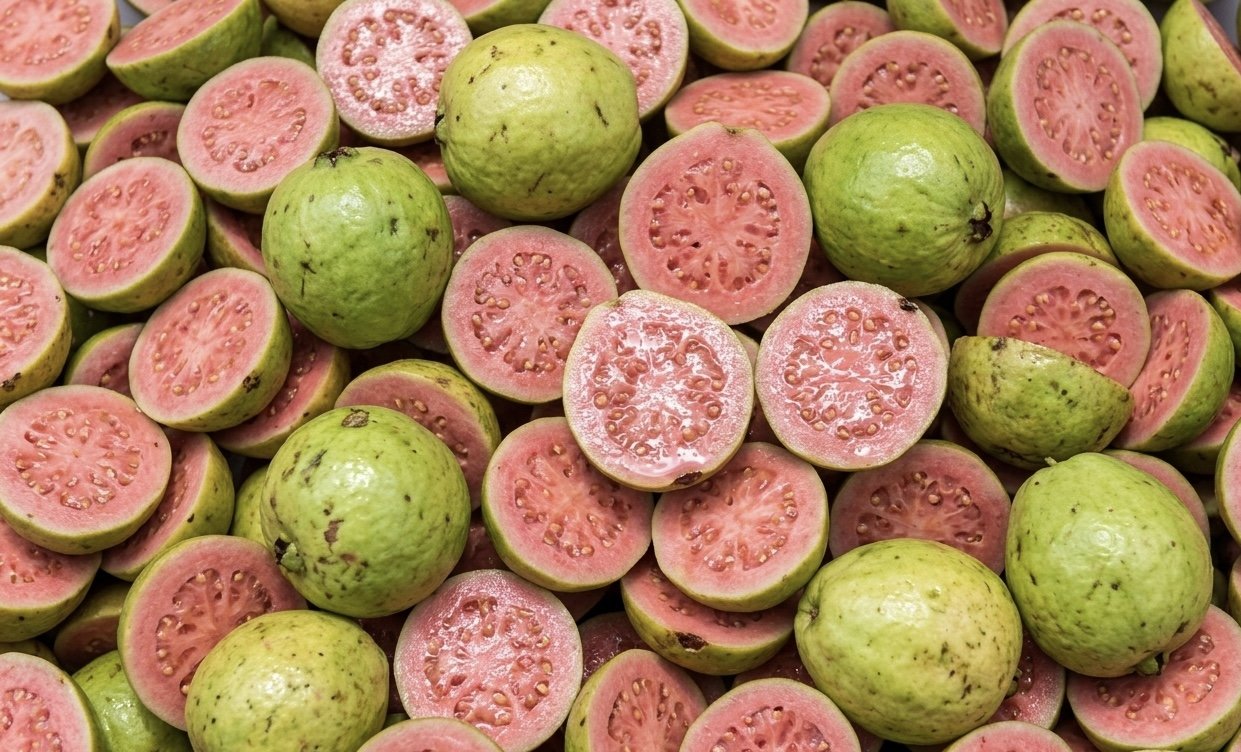
Guava seed oil is a cold-pressed botanical oil extracted from the seeds of Psidium guajava, a tropical fruit tree native to Central America and Southeast Asia. In the Philippines, the bayabas tree is deeply woven into everyday life – its leaves used in folk healing, its fruit a symbol of abundance, its seeds discarded by most and treasured by those who know better.
The oil itself is delicate in color, light in texture, and staggering in its bioactive profile. It is what we would call bio-compatible – formulated by nature to work with your skin's own biology rather than override it.
Why We Chose It
At Halik, every ingredient earns its place. Our formulation philosophy begins not with what is trending, but with what is endocrine-safe, barrier-supporting, and genuinely restorative. When we encountered guava seed oil during our deep dive into botanical actives rooted in Filipino heritage, the answer was clear.
Bayabas belongs here.
The Science, Simply Told
1. An Exceptionally High Linoleic Acid Content
Guava seed oil is one of the richest plant sources of linoleic acid (Omega-6), typically comprising 60–70% of its fatty acid profile. Why does this matter for your skin?
Linoleic acid is a component your skin barrier needs but cannot synthesize on its own. When the barrier is depleted of it — through stress, harsh cleansers, environmental exposure, or simply the passage of time — the result is the kind of skin most of us know too well: congested, reactive, dry in some places and oily in others, prone to that dull, tired appearance that no amount of concealer quite corrects.
Topical application of linoleic-rich oils has been studied for its role in reinforcing the skin's ceramide matrix, calming inflammatory responses, and rebalancing sebum composition. For those prone to sensitivity or breakouts, this is significant: linoleic acid is lightweight, deeply restorative, and notably non-comedogenic.
2. A Potent Antioxidant Constellation
Guava seed oil carries a remarkable concentration of antioxidants, including Vitamin C precursors, Vitamin E (tocopherols), and beta-carotene, the same family of compounds that give the guava fruit its vivid, sun-warmed color. Together, these work to neutralize free radicals: the oxidative stress contributors responsible for accelerated collagen degradation, uneven tone, and the gradual loss of that quality we simply call luminosity.
This antioxidant density makes guava seed oil a quiet but formidable ally in any ritual oriented toward long-term skin vitality – not just surface-level radiance, but the kind of systemic wellness that shows up in your complexion over months and years.
3. Lycopene: Nature's Most Underrated Skin Ally
Beyond the better-known vitamins, guava seed oil is one of the few botanical oils with a meaningful concentration of lycopene, a carotenoid antioxidant more commonly associated with tomatoes and watermelon. In skincare, lycopene has been studied for its ability to support photoprotection at the cellular level and its role in neutralizing singlet oxygen, one of the more aggressive forms of oxidative damage caused by UV exposure.
It will not replace your SPF. But paired with a conscientious sun care practice, it is the kind of ingredient that quietly works in the background, supporting your skin's resilience from within.
4. Endocrine Integrity, Preserved
This is where Halik's formulation philosophy speaks most clearly. Many conventional face creams rely on occlusive silicones, synthetic preservatives, and penetration enhancers that may interfere with the body's hormonal signaling over time. Guava seed oil requires none of those compromises. It is inherently stable, naturally preserved by its own antioxidant content, and structurally suited to skin absorption without the use of synthetic emulsifiers that burden the endocrine system.
For those of us who have spent years untangling the relationship between what we put on our bodies and how our bodies feel from the inside; the clarity of an ingredient like this is, honestly, a relief.
The Ritual of Bayabas
The Bayabas Nourishing Face Cream is not simply a moisturizer. It is an invitation to slow down; to bring intention to the part of your day when you look at yourself in the mirror and choose care over correction.
Guava seed oil, as the cream's hero botanical, was selected not because it performs dramatic, overnight transformations. It was selected because it is the kind of ingredient that honours your skin's intelligence. It replenishes what has been lost. It works in harmony with your barrier rather than bypassing it. It brings the nurturing essence of bayabas, a fruit that has grown in Philippine soil for centuries, directly into your ritual.
A kiss from Mother Earth. And she's been waiting to give it.
FAQ
-
Yes. Its high linoleic acid content and lightweight texture make it well-tolerated across skin types, including oily, acne-prone, sensitive, and mature skin. It absorbs readily without leaving a heavy residue, and its barrier-supporting properties make it particularly beneficial for those whose skin tends toward reactivity or imbalance.
-
No. Guava seed oil scores very low on the comedogenicity scale, making it a thoughtful choice for those who are cautious about pore congestion. Its linoleic acid-dominant profile is associated with non-clogging, balancing effects on sebum production.
-
Over time and with consistent use, yes. Its antioxidant profile, particularly the Vitamin C precursors, lycopene, and beta-carotene, contributes to a more even, luminous complexion by addressing oxidative stress and supporting cellular renewal. It is a restorative brightening, not an artificial one.
-
Endocrine safety is central to how we formulate everything at Halik. Guava seed oil is a naturally occurring botanical ingredient with no known endocrine-disrupting properties. It requires no synthetic stabilizers or emulsifiers to perform, keeping the formulation clean at every level.
-
Bayabas is the Tagalog word for guava. It reflects Halik's commitment to honouring the Filipino roots from which this brand was born – naming our products in the language of their botanical origins, not simply for aesthetics, but as an act of respect for heritage.
Related Reading:

About Halik
Halik is a clean luxury skincare brand inspired by Filipino botanicals and the healing power of natural ingredients.
All Halik products are formulated without harmful chemicals, parabens, phthalates, sulfates and synthetic fragrance
