
What Are Endocrine Disruptors in Skincare, and Why Do They Matter More During Perimenopause?
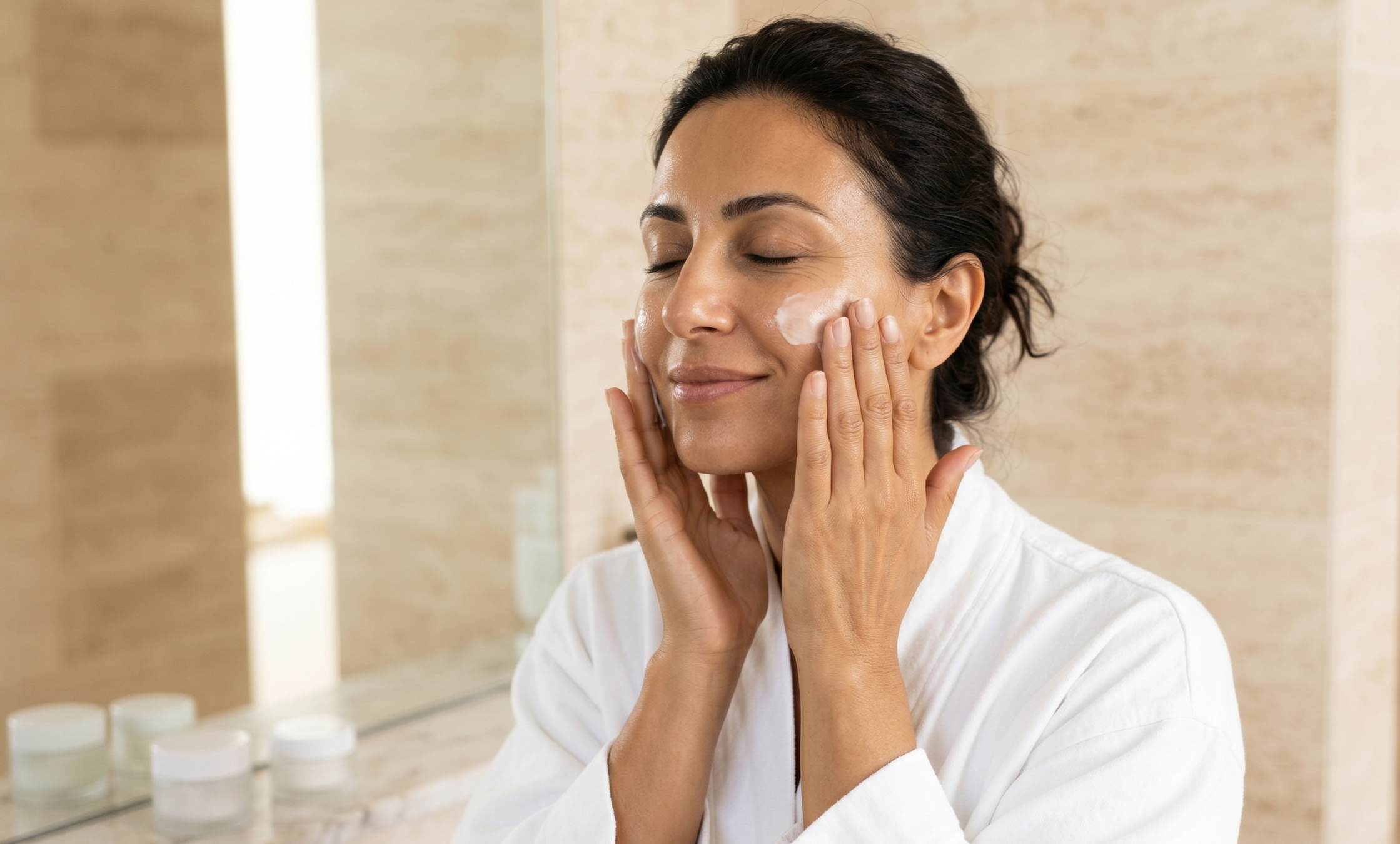
Endocrine disruptors in skincare are chemicals that interfere with hormonal signaling, including parabens, synthetic fragrance, oxybenzone, and BHA/BHT. During perimenopause, fluctuating estrogen levels and a more permeable skin barrier make the body more vulnerable to these compounds. Choosing products with full ingredient disclosure and botanical preservation is especially important during this transitional phase.
There is a particular kind of awareness that arrives in your forties, sometimes your late thirties, when your body starts communicating in new frequencies. Sleep shifts. Skin that once held moisture effortlessly now asks for more. Energy moves differently. Moods arrive without the familiar cues. And if you have ever stood in front of a bathroom shelf lined with serums, creams, and oils and thought, something in here might be making this worse, you were asking exactly the right question.
Perimenopause is the body's long prologue to menopause; a transitional phase that can last anywhere from two to twelve years, during which estrogen and progesterone levels fluctuate unpredictably before beginning their gradual decline. It is a period of genuine hormonal sensitivity. And it is the period during which the ingredients in your skincare ritual matter most.
This is the conversation about endocrine disruptors: what they are, where they hide, and why the perimenopausal body is uniquely vulnerable to their presence.
What Is the Endocrine System, and What Can Disrupt It?
The endocrine system is the body's chemical messaging network, a constellation of glands including the thyroid, adrenal glands, ovaries, and pituitary that communicate through hormones. These hormones govern nearly everything: metabolism, mood, reproduction, sleep, immune response, and the condition of your skin.
Endocrine disruptors are substances that interfere with this system. Some mimic hormones, particularly estrogen, binding to the same receptors and triggering responses the body never intended. Others block hormonal signals entirely. Still others alter the rate at which hormones are produced or broken down.
In small, infrequent exposures, the body often manages. The issue is that we are rarely in small or infrequent contact with these substances. The average person applies multiple products to their skin each day, and the skin, particularly during perimenopause, absorbs what it is given.
The Ingredients to Know
Endocrine-disrupting compounds appear across conventional personal care products with a regularity that warrants attention. These are among the most common.
Parabens (methylparaben, propylparaben, butylparaben, ethylparaben) are synthetic preservatives used widely in conventional moisturizers, cleansers, and hair products. They are known xenoestrogens; compounds that mimic estrogen in the body and bind to estrogen receptors. Studies have detected parabens in breast tissue, raising ongoing questions about their long-term accumulation.
Synthetic fragrance is perhaps the most opaque category in personal care. The word "fragrance" or "parfum" on an ingredient list can represent dozens or hundreds of individual compounds, including phthalates, which are known endocrine disruptors linked to hormonal imbalance, and benzophenone derivatives. Because fragrance formulas are protected as trade secrets, brands are not required to disclose what they contain.
Oxybenzone, a UV filter common in chemical sunscreens, has been shown in studies to act as an estrogen mimic and to penetrate the skin in measurable amounts. The FDA has called for further safety data on this ingredient; it has already been banned from use in several regions.
BHA (butylated hydroxyanisole) and BHT (butylated hydroxytoluene) are synthetic antioxidants used as preservatives in lipsticks, moisturizers, and diaper creams. Both have demonstrated endocrine-disrupting activity in animal studies, and BHA is classified as a possible human carcinogen by the International Agency for Research on Cancer.
Triclosan, an antimicrobial agent once common in hand soaps and toothpaste, has been detected in blood and breast milk and is associated with thyroid hormone disruption. While its use has declined following regulatory action in rinse-off products, it persists in some leave-on formulas.
Formaldehyde-releasing preservatives, including DMDM hydantoin, diazolidinyl urea, and quaternium-15, are added to products to extend shelf life. They release small amounts of formaldehyde over time, a compound classified as a known human carcinogen and suspected endocrine disruptor.
Why Perimenopause Changes Everything
The answer is, simply, that the hormonal system is already under strain.
During perimenopause, estrogen production becomes erratic before it declines. The body's receptor sites are more sensitized, searching for hormonal signals that are arriving less consistently than before. When xenoestrogens from external sources enter this environment, they do not merely pass through; they bind to the same receptor sites estrogen would, sending signals the body reads as real.
The cumulative effect of this kind of interference, what researchers call the "total load" or "body burden," is still being studied. What is increasingly clear is that the perimenopausal body has less hormonal reserve to absorb and correct for disruption.
There is also the matter of the skin barrier itself. Estrogen plays a significant role in skin integrity, collagen production, and the health of the lipid barrier that regulates what enters and what stays out. As estrogen levels shift during perimenopause, the barrier becomes more permeable. Products that once sat at the surface are now absorbed more readily, delivering their full ingredient list into the body's circulation.
This means the products you choose during perimenopause are not just a matter of skincare efficacy. They are a matter of what your body is processing at one of its most sensitive hormonal junctures.
Reading the Label Differently
Ingredient transparency is not a luxury. During perimenopause, it is an act of care.
A few principles worth building into how you shop:
Treat "fragrance" as a question mark. If a product lists fragrance or parfum without further disclosure, the formula may contain phthalates or other hidden compounds. Seek products that specify their fragrance sources, use essential oils, or are genuinely fragrance-free.
Look for the full INCI list. The International Nomenclature of Cosmetic Ingredients (INCI) format is the standardized naming convention for cosmetic ingredients globally. A brand that publishes its full INCI list is a brand that has nothing to conceal.
Prioritize botanical preservation. Products preserved with plant-derived alternatives, such as vitamin E (tocopherol), rosemary extract, or phenethyl alcohol, deliver the shelf stability you need without synthetic preservatives that accumulate in tissue.
Consider the whole shelf, not just one product. Hormonal disruption is a cumulative phenomenon. One product with trace parabens may be low risk; ten products, applied twice daily over months, begin to represent a meaningful body burden.
Formulated Without Compromise
At Halik, the decision to formulate without parabens, phthalates, sulfates, and synthetic fragrance was not a marketing choice. It was the origin of the brand.
Halik was born from a personal reckoning with hormonal health, from the recognition that what we apply to our skin is not separate from our biology, but part of it. Every formula in our catalog is ingredient-transparent by design, because we believe the person using a product has the right to know exactly what they are bringing into their ritual.
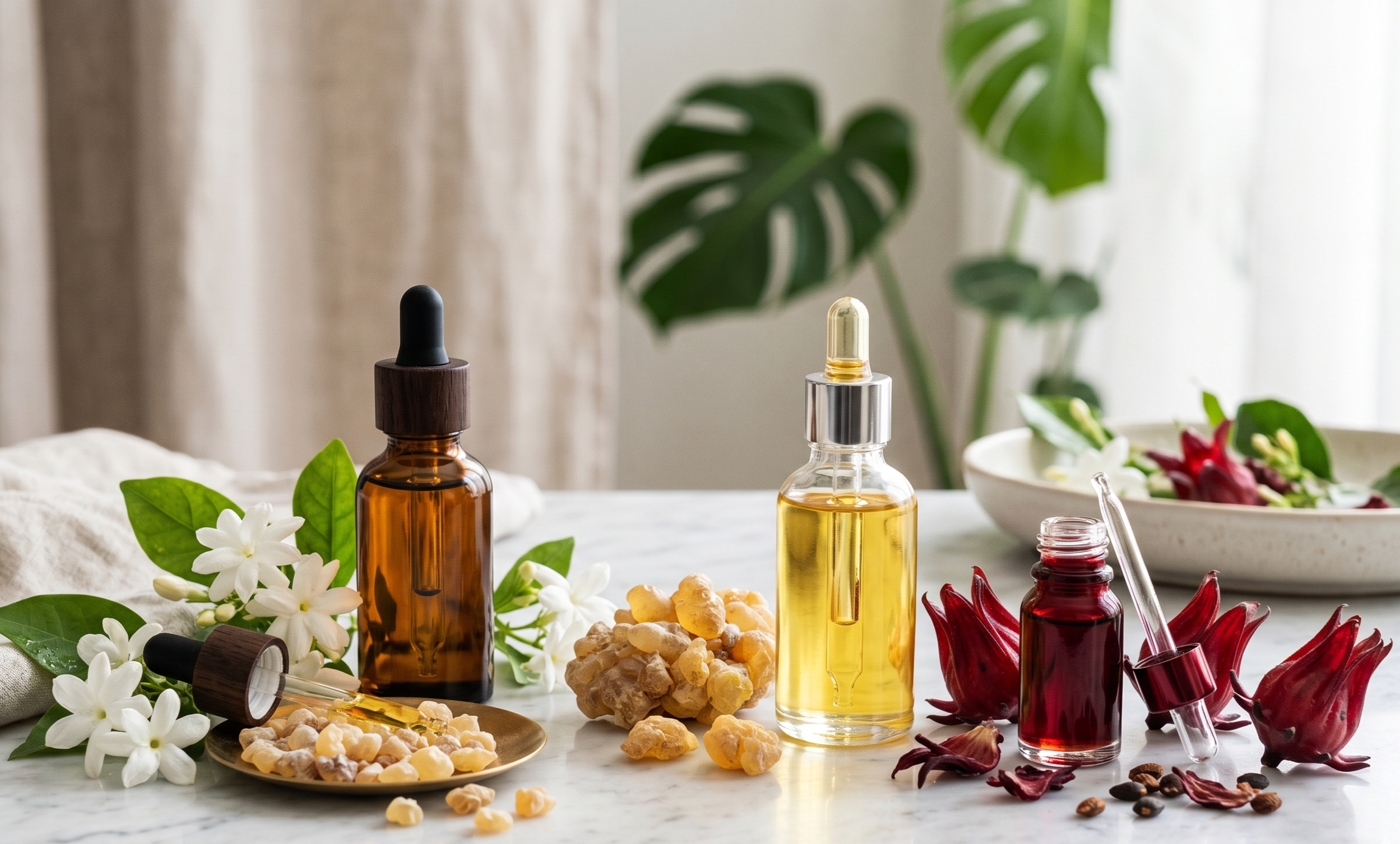
Our Bayabas Nourishing Face Cream uses a ceramide complex and daikon seed extract to reinforce the barrier that perimenopause can compromise. Our Sampaguita Anti-Aging Face Oil delivers squalane, papaya, and frankincense without a single synthetic preservative. Our Sugarcane Smoothing Hair Serum is built on bio-compatible botanicals, preserved with tocopherol, and free from olive eco silicone's synthetic counterparts.
Clean formulation is not a trend at Halik. It is the thesis.
A Note on Bioaccumulation
One of the more uncomfortable truths about endocrine disruptors is that many of them do not simply pass through the body. Parabens have been found in adipose tissue and breast milk. Phthalates appear in urine samples across population studies. Oxybenzone has been detected in blood days after a single sunscreen application.
This is not cause for alarm. It is cause for discernment. The body is resilient, and its detoxification systems are sophisticated. But discernment, especially during a time when the hormonal system is already recalibrating, is among the quietest and most meaningful forms of self-care.
What you reach for each morning is part of a conversation your body is always having with its environment. Perimenopause is simply the season in which that conversation deserves more of your attention.
Frequently Asked Questions
-
Endocrine disruptors are chemical compounds that interfere with the body's hormonal system. They can mimic hormones (particularly estrogen), block hormonal receptors, or alter the production and breakdown of hormones. They are found in pesticides, plastics, and, commonly, conventional personal care products.
-
The most widely studied endocrine-disrupting ingredients in personal care include parabens (methylparaben, propylparaben, butylparaben), phthalates (often hidden under "fragrance"), oxybenzone, BHA and BHT, triclosan, and certain formaldehyde-releasing preservatives such as DMDM hydantoin and diazolidinyl urea.
-
During perimenopause, estrogen levels fluctuate before declining, leaving hormonal receptor sites more sensitized and reactive. The skin barrier also becomes more permeable as estrogen decreases, allowing greater absorption of topically applied products. Simultaneously, the body's capacity to buffer external hormonal interference is reduced, making cumulative exposure to xenoestrogens and other disruptors more consequential.
-
Look for the full ingredient list on the product packaging or brand website, using the INCI (International Nomenclature of Cosmetic Ingredients) format. Cross-reference ingredients against databases such as the Environmental Working Group's Skin Deep database, which provides safety assessments for cosmetic ingredients. Be especially cautious of products listing "fragrance" or "parfum" without further disclosure.
-
Seek products that disclose their full ingredient list, use botanical or food-grade preservation methods (such as tocopherol or rosemary extract), and avoid synthetic fragrance. Certifications from organizations such as MADE SAFE or EWG Verified can provide additional third-party assurance. Brands that build their formulation philosophy around endocrine safety, rather than treating it as an afterthought, will communicate that clearly across their product descriptions and brand story.
Related Reading



At Halik, every formula is crafted without parabens, phthalates, sulfates, or synthetic fragrances. Explore our full ingredient-transparent catalog at shophalik.com.
