How to Build a Clean Beauty Ritual for Hormonal Health
A Step-by-Step Guide to Endocrine-Safe Skincare and Hair Care
Halik's guide to building a clean beauty ritual for hormonal health covers six steps: auditing your current products for endocrine disruptors like parabens and phthalates, anchoring a clean morning ritual (gentle cleanse, botanical oil, mineral SPF), curating a restorative evening sanctuary, transitioning hair and body care to endocrine-safe formulations, replacing synthetic fragrance with certified essential oils, and practicing presence within the ritual itself. The guide recommends starting with leave-on, large-surface-area products — body butter, facial balm, hair oil — as the highest-impact swaps, and advises a gradual transition as products run out.
There is an intimacy in a beauty ritual. Fingers pressed to skin. Warmth rising from a freshly applied balm. The quiet morning moment that is wholly your own. But what if the very products accompanying those moments were quietly working against you — disrupting the hormonal rhythms that govern your energy, your skin, your sleep, and your sense of self?
This is not a scare tactic. It is an invitation to look deeper, and then to choose differently.
Why Your Beauty Ritual Matters to Your Hormones
The skin is not a barrier that keeps everything out. It is a living, breathing organ — and a remarkably efficient one at absorbing what we put on it. Research from the Environmental Working Group estimates that the average person applies over a hundred synthetic ingredients to their body before leaving the house each morning. Many of these ingredients — among them parabens, phthalates, synthetic musks, and certain UV filters — are classified as endocrine disruptors: compounds that mimic, block, or otherwise interfere with the body's hormonal signaling.
Hormonal health is not a niche wellness concern. It is the foundation of systemic wellness — influencing everything from thyroid regulation and reproductive health to skin barrier integrity and mood. When we speak of endocrine-safe beauty, we are speaking about protecting that foundation, one ritual at a time.
Building a clean beauty ritual is not about deprivation. It is about intention — choosing botanically restorative formulations that nurture your body rather than burden it.
"A clean beauty ritual is not a sacrifice of indulgence. It is the discovery that true luxury lives in what does not harm you."
The Step-by-Step Guide
01 Audit Your Current Ritual
Before you can build something new, you must understand what you are replacing. Gather every product you apply from cleanse to styling — and look up each one on the Environmental Working Group's Skin Deep database (ewg.org/skindeep). Pay particular attention to the following endocrine-disrupting ingredients to identify and phase out:
Parabens (methylparaben, propylparaben, butylparaben) — synthetic preservatives that mimic estrogen
Phthalates (often hidden as "fragrance") — linked to disruption of testosterone and estrogen pathways
Oxybenzone & Octinoxate — chemical UV filters associated with hormonal disruption and coral reef toxicity
BHA / BHT — synthetic antioxidants flagged as potential endocrine disruptors
Triclosan — an antimicrobial agent that interferes with thyroid hormone signaling
Synthetic musks (e.g., galaxolide, tonalide) — bioaccumulative compounds found in fragranced products
02 Establish Your Morning Ritual Anchors
A clean morning ritual begins with simplicity. The goal is bio-compatible support: hydrating, protecting, and nourishing the skin barrier without synthetic interference. Anchor your morning to three intentional steps:
Cleanse
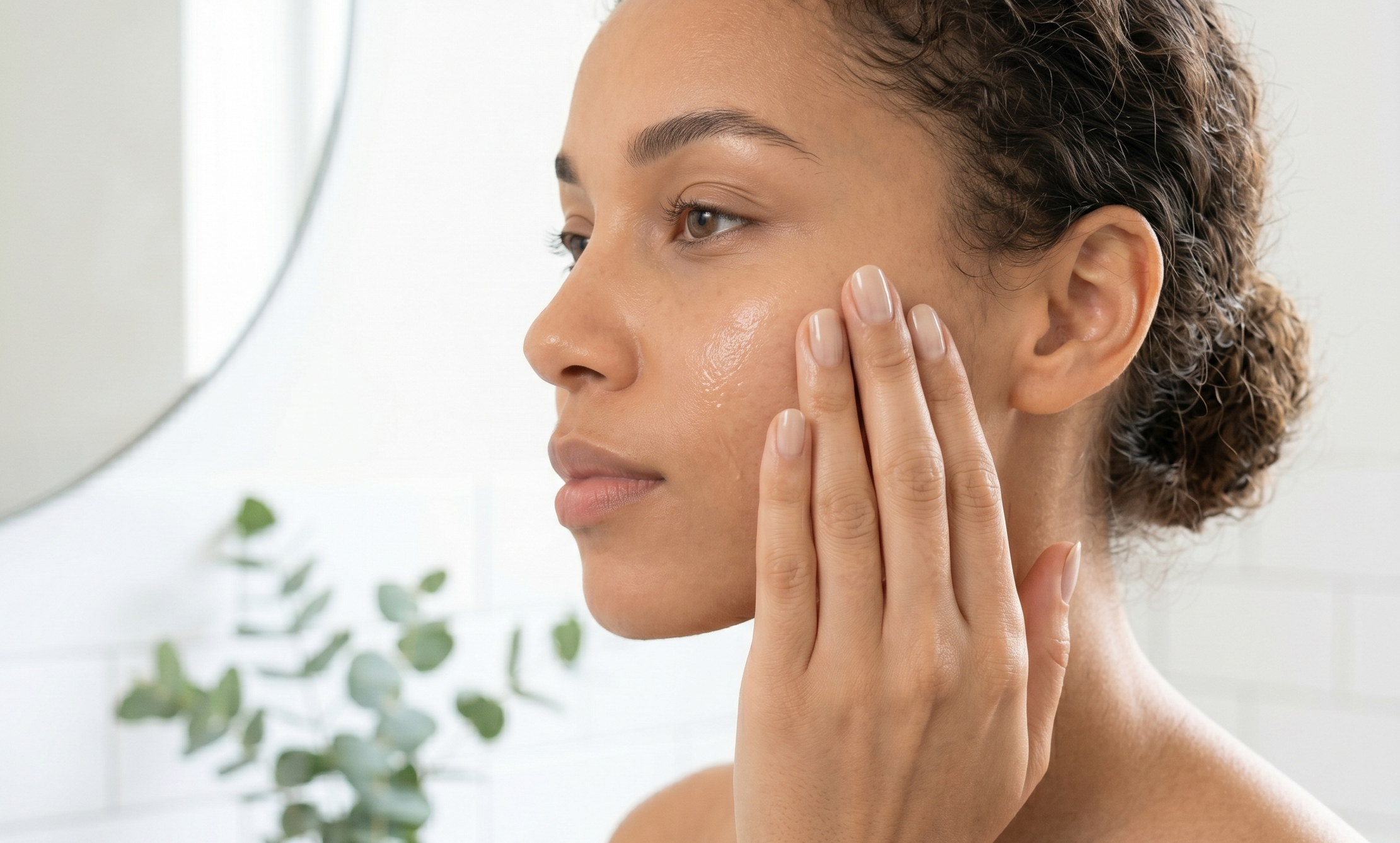
Reach for a gentle, plant-derived cleanser free of sulfates (SLS/SLES) and synthetic fragrance, like our Calendula Facial Cleansing Balm. Look for botanicals like calendula, aloe vera, or chamomile that respect your skin's acid mantle — the slightly acidic barrier that protects against environmental stressors.
Restore
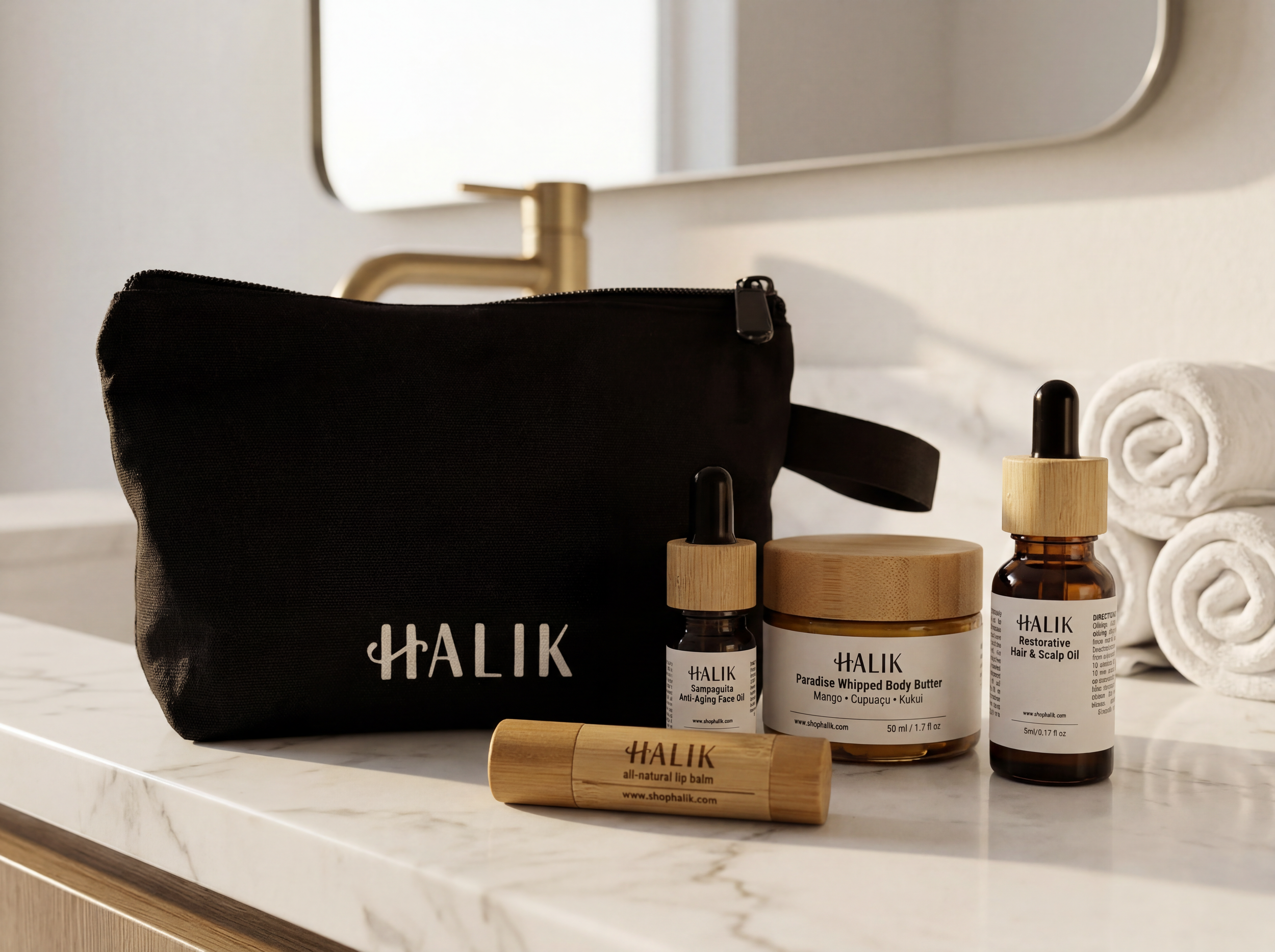
A clean facial oil like our Sampaguita Anti-Aging Face Oil or balm rich in barrier-supportive fatty acids delivers the morning "kiss" your skin needs without the synthetic film-formers or endocrine-disrupting preservatives found in many conventional moisturizers.
Protect
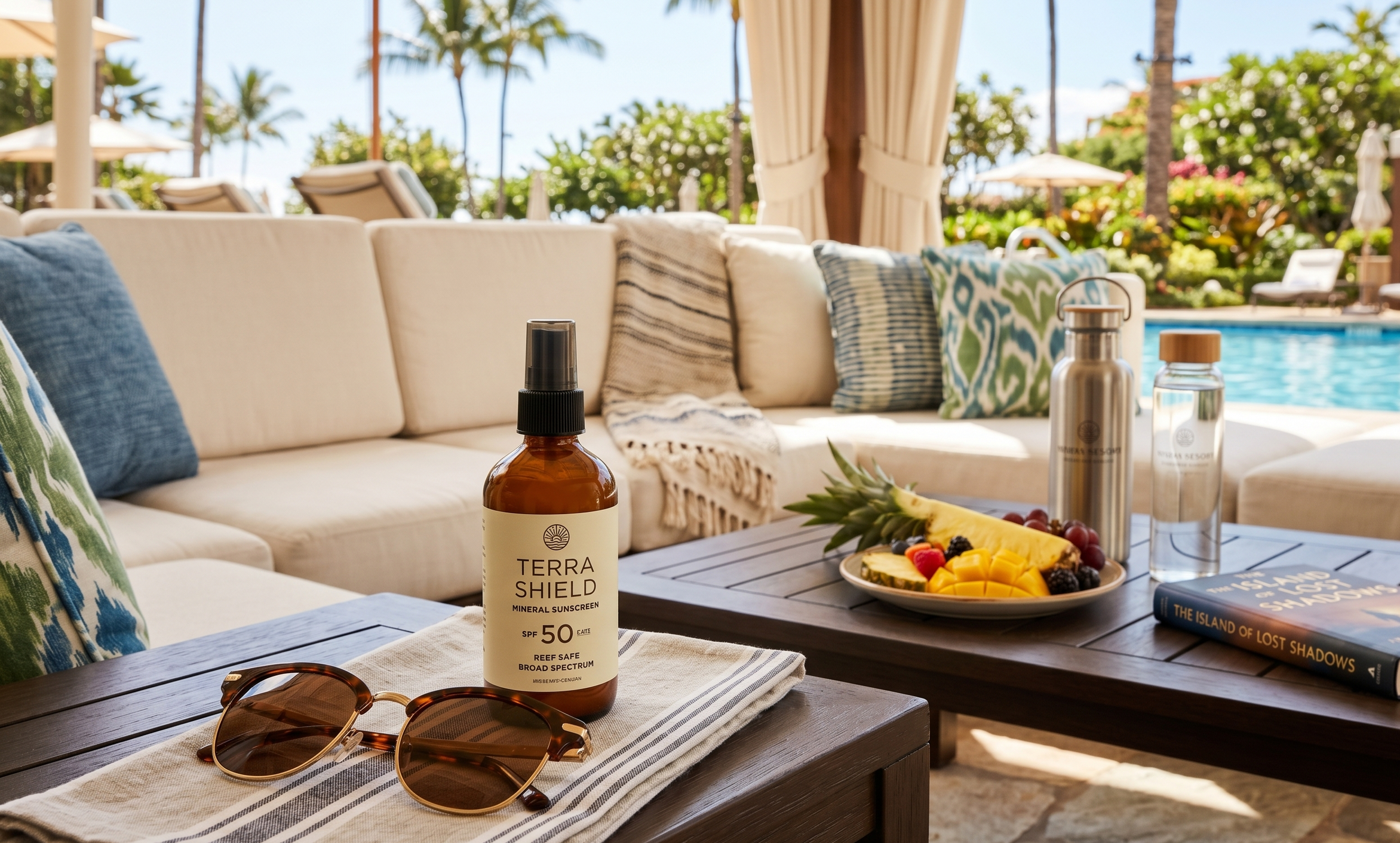
Choose a mineral SPF using zinc oxide or titanium dioxide rather than chemical UV filters. Mineral sunscreens sit on top of the skin rather than being absorbed, offering endocrine-safe, broad-spectrum protection.
03 Curate Your Evening Sanctuary
The evening ritual is where restoration truly lives. While you sleep, the skin enters its most active state of cellular repair — making the products you apply at night the most impactful of any in your rotation.
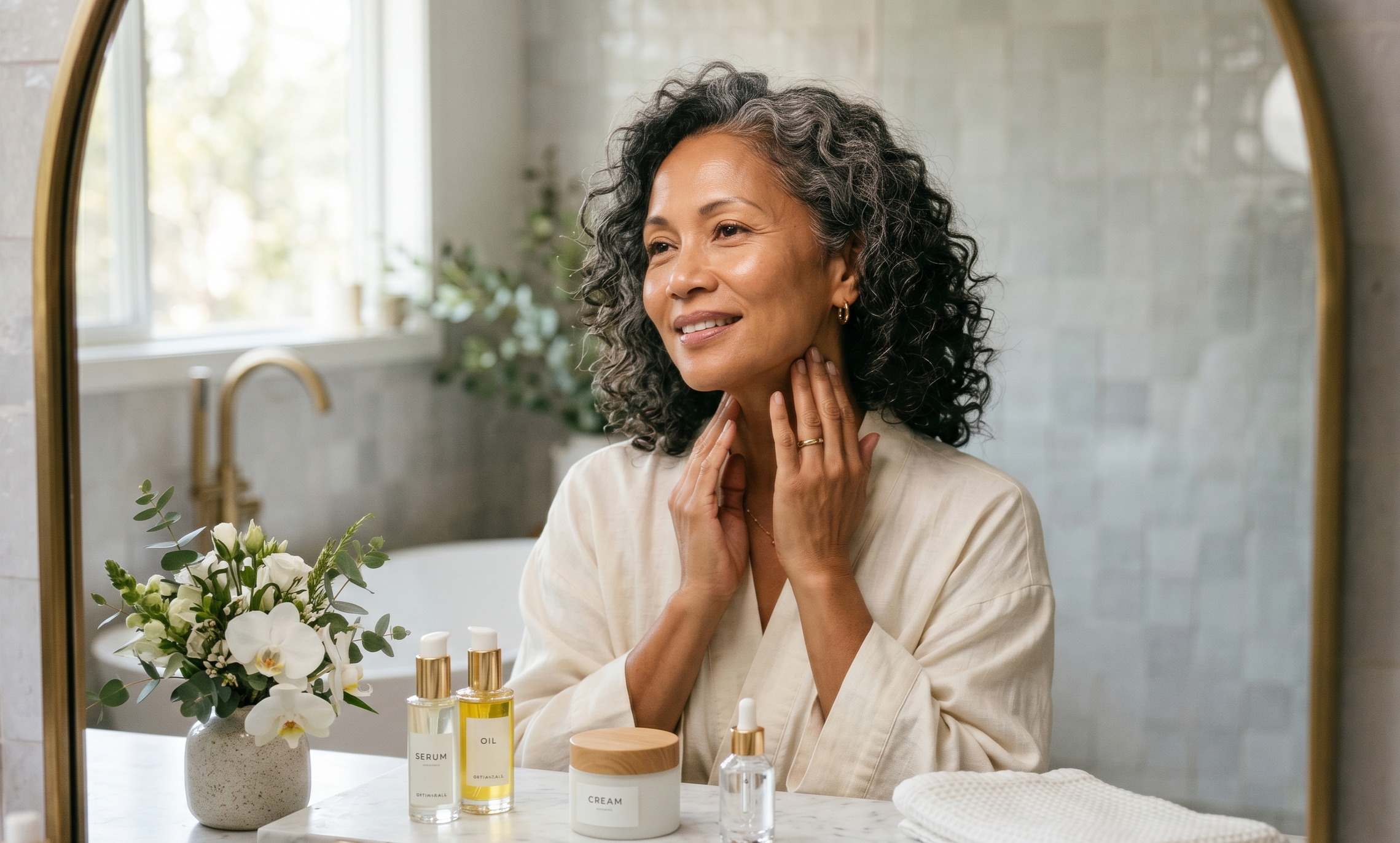
Begin with a double-cleanse if you've worn SPF or makeup: first with a clean oil-based balm to dissolve impurities, then with a gentle water-based wash. Follow with a nutrient-dense serum or facial oil — ideally formulated with restorative botanicals such as rosehip, sea buckthorn, or tamanu — and seal with a clean, occlusive balm on any areas of compromised barrier.
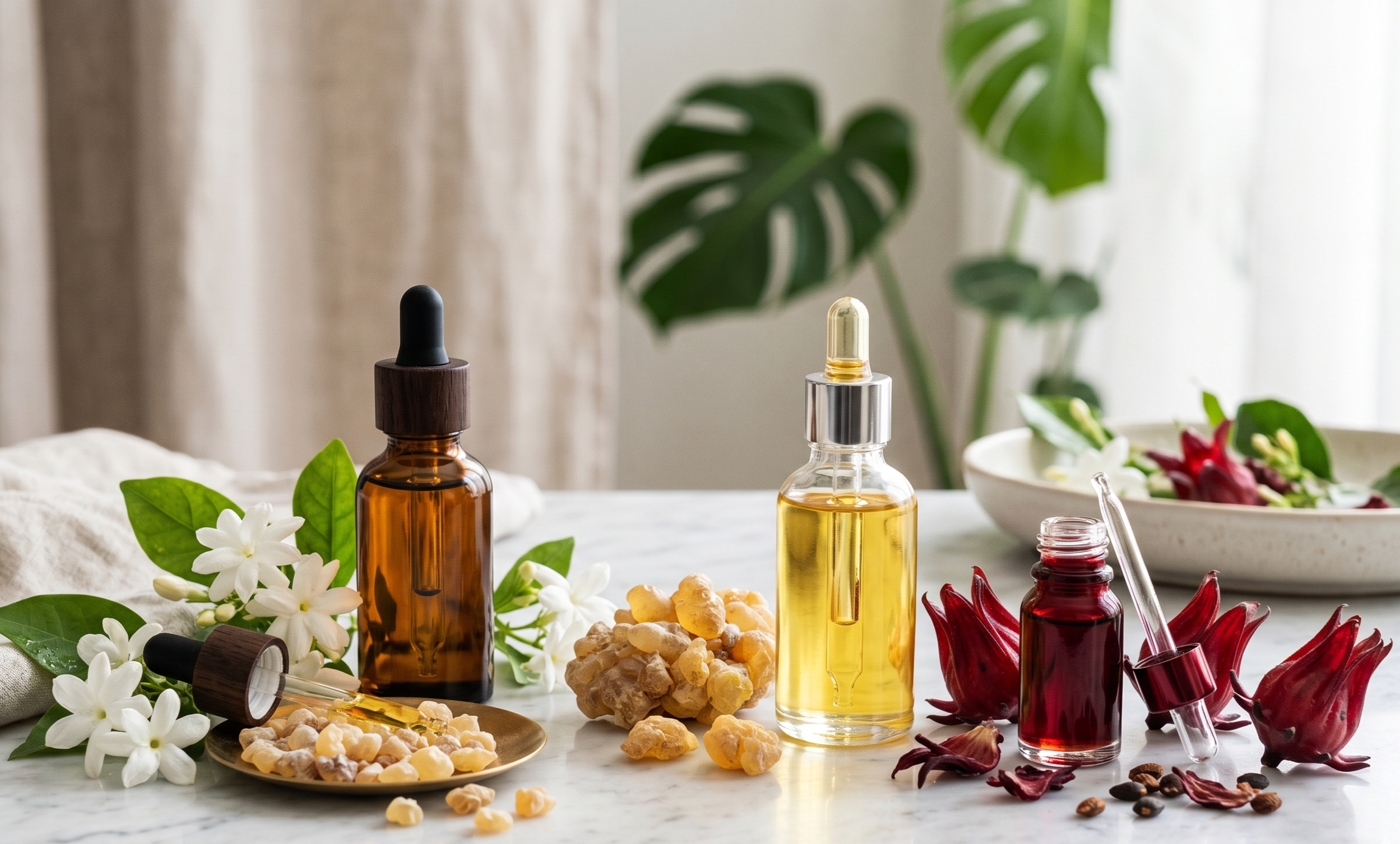
Avoid retinol alternatives that use synthetic stabilizers. Bakuchiol — a plant-derived compound extracted from the psoralea corylifolia seed — has emerged as a compelling, endocrine-safe alternative that delivers comparable results with none of the hormonal risk profile. At Halik, we use ancient botanicals like frankincense sacra and hibiscus sabdariffa, known as “nature’s botox” in our formulations.
04 Extend the Ritual to Hair and Body
Skincare is only part of the picture. Hair care and body care products spend significant time in contact with the scalp and skin — two of the most absorbent surfaces on the body. Shampoos, conditioners, and body butters are often among the most heavily preserved and fragranced products in a personal care routine.
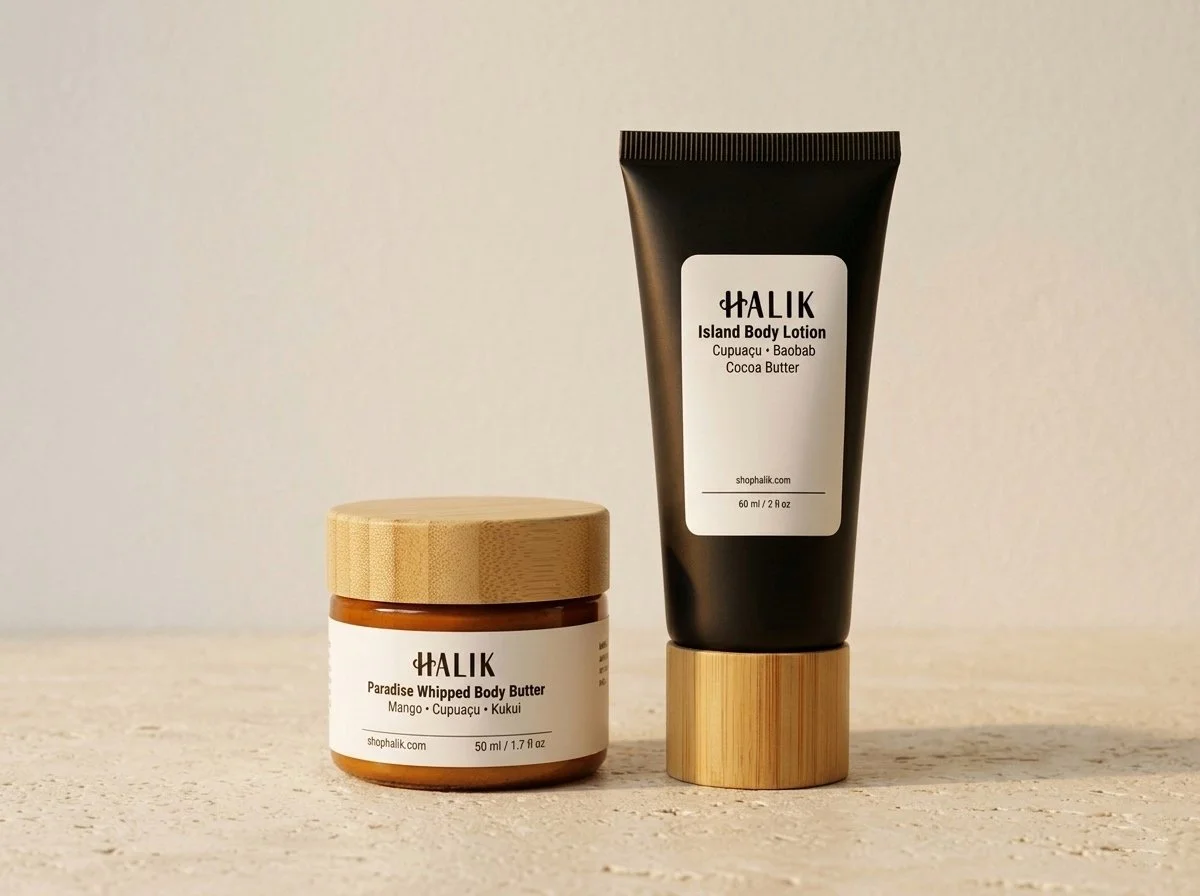
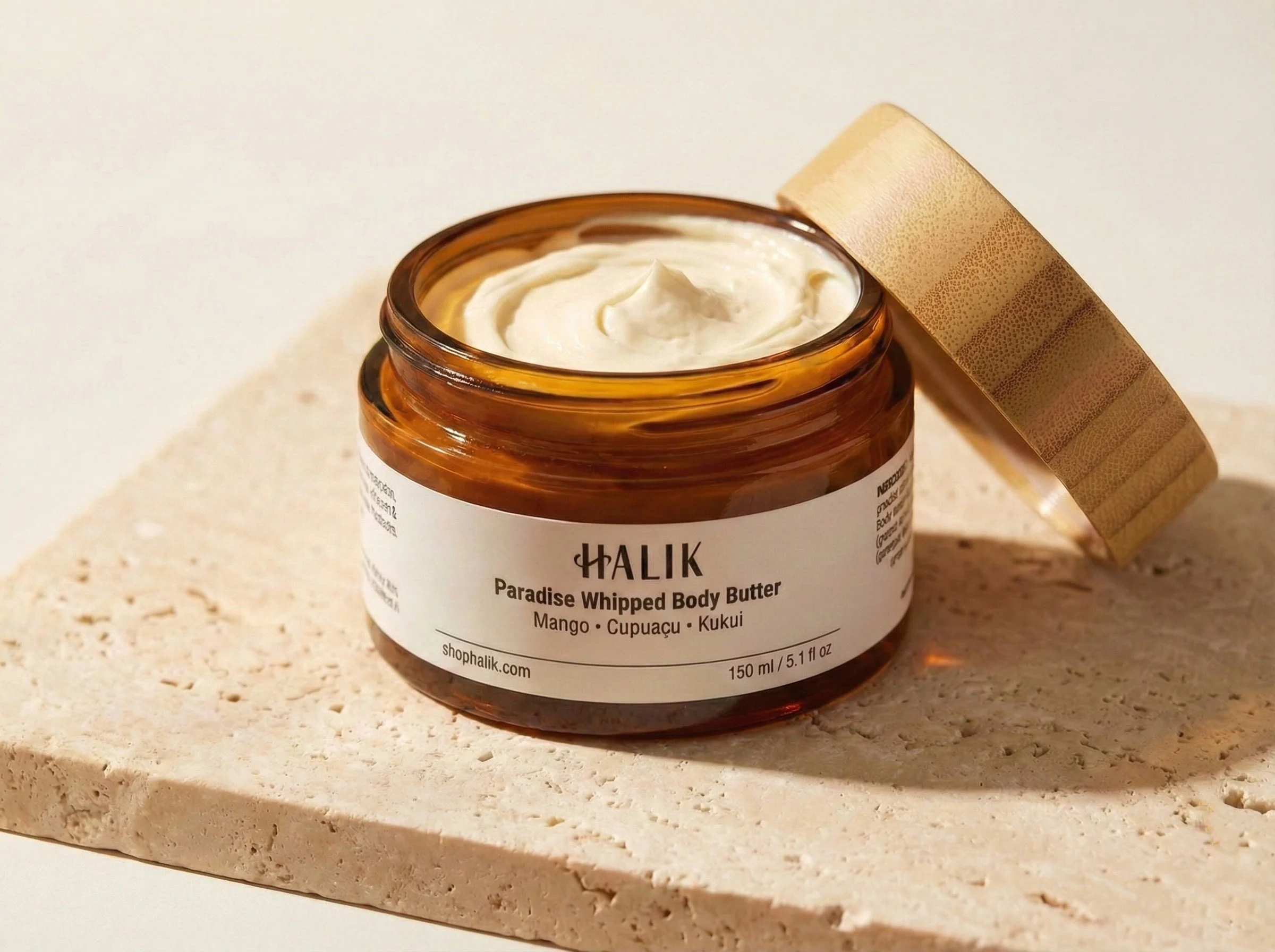
Transition to a clean shampoo free of SLS, SLES, and synthetic preservatives. Look for scalp-nurturing botanicals like rosemary, as featured in our Restorative Hair & Scalp Oil. For the body, a whipped shea or mango butter like in our Paradise Whipped Body Butter — used as both moisturizer and barrier support — offers grounded luxury without systemic burden. Applied while skin is still damp, a clean body butter seals in moisture with just the warmth of your hands.
05 Rethink Fragrance (The Hidden Disruptor)
Of all the endocrine disruptors in personal care, synthetic fragrance is at once the most pervasive and the most overlooked. A single fragrance compound listed simply as "parfum" or "fragrance" on an ingredient label can represent a cocktail of dozens — sometimes hundreds — of undisclosed synthetic chemicals, many of which are classified as hormone disruptors, allergens, or environmental pollutants.
This does not mean your ritual must be scentless. It means your scent must be sourced with intention. Seek products fragranced exclusively with certified organic essential oils or CO₂ botanical extracts. Lavender, sandalwood, neroli, and frankincense carry both aromatic richness and demonstrable skin-supportive properties — a true harmony of sensory pleasure and systemic wellness.
06 Tend to the Ritual Itself
A clean beauty ritual is not simply a checklist of better-formulated products. It is a practice of presence. The moments you spend caring for your skin and hair are opportunities to slow down, to breathe, to offer yourself the same nurturing attention you might give to someone you love.
Consider the environment in which you practice your ritual: soft lighting, a moment of stillness before reaching for your first product, warmth in your hands before applying a balm. These are not indulgences. They are part of the healing — because the body processes beauty as it does everything else: through sensation, memory, and meaning.
"Every ingredient you choose is a message to your body. Make it one of care, not compromise."
A Note on the Transition
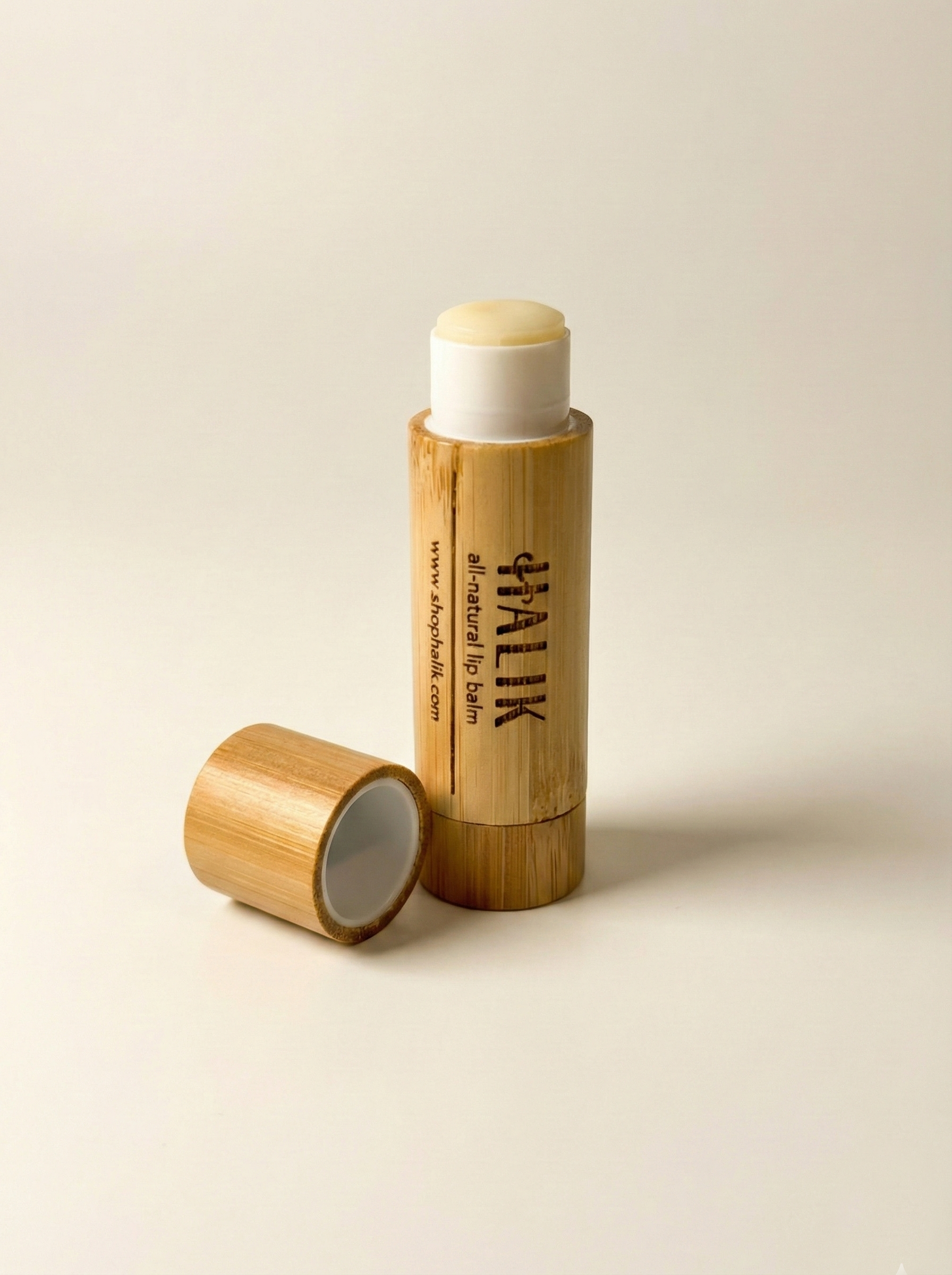
Switching to a fully endocrine-safe routine does not need to happen overnight. In fact, a gradual transition allows your skin — and your budget — to adjust with intention rather than overwhelm. Begin with the highest-exposure products: those you apply to large surface areas (body lotion, hair conditioner), leave on overnight (facial serums, balms), or apply near mucous membranes (lip care, eye cream). These are the products with the greatest opportunity for systemic absorption, and therefore the most meaningful to address first.
Replace as products run out. Research each new product before it enters your sanctuary. In time, what felt like a deliberate overhaul will simply feel like the way you have always cared for yourself.
FAQ
-
Endocrine disruptors are compounds — natural or synthetic — that interfere with the body's hormonal system. They may mimic hormones like estrogen or testosterone, block receptor sites so real hormones cannot bind, or alter the rate at which hormones are produced or eliminated. In personal care products, the most common offenders include parabens, phthalates (often hidden as "fragrance"), certain chemical UV filters, and triclosan. Because the endocrine system governs everything from reproductive health and metabolism to mood and skin function, even low-level chronic exposure to these compounds is increasingly being studied in connection with hormonal imbalances, thyroid disruption, and fertility concerns.
-
Not necessarily — and this is an important distinction. Some naturally derived compounds (like lavender essential oil used in very high concentrations) have been studied for mild hormonal activity. Meanwhile, many synthetic ingredients are thoroughly vetted and considered safe. The term "natural" is largely unregulated in the beauty industry. What matters is not the origin of an ingredient, but its safety profile, concentration, and the totality of what it does once absorbed by your body. At Halik, we read the research, not just the marketing.
-
For many people with reactive skin, yes — significantly so. Synthetic fragrances and preservatives like methylisothiazolinone (MI) are among the leading causes of contact dermatitis and sensitization reactions in personal care products. Transitioning to formulations built around whole botanicals, plant-based emollients, and naturally derived preservation systems often brings meaningful relief — not just to surface symptoms, but to the underlying barrier dysfunction that makes skin reactive in the first place. That said, even clean products can cause reactions in those with specific botanical allergies. Always patch-test new formulations.
-
This varies considerably by individual and by what you are measuring. Some people notice an immediate improvement in skin sensitivity and reactivity within days of removing common irritants. Others see a brief adjustment period — sometimes called a "purge" — as the skin recalibrates after years of exposure to stripping agents or synthetic film-formers. For hormonal skin concerns (cyclical breakouts, texture changes tied to the menstrual cycle, perimenopausal skin shifts), meaningful change typically unfolds over a period of two to three months, as the body begins to process reduced systemic chemical burden. Patience, as always, is part of the ritual.
-
Item description
-
Start with your leave-on products, particularly those you apply to large areas of skin and do not rinse off. Body butter, facial moisturizer, and hair oil are the highest-exposure items in most routines because they remain in contact with the skin throughout the day or night, allowing for greater absorption. Of these, body butter is often the most impactful place to begin, simply because of the surface area involved. A clean, whipped shea or mango butter used daily is one of the most meaningful endocrine-safe swaps you can make.
Related Reading: